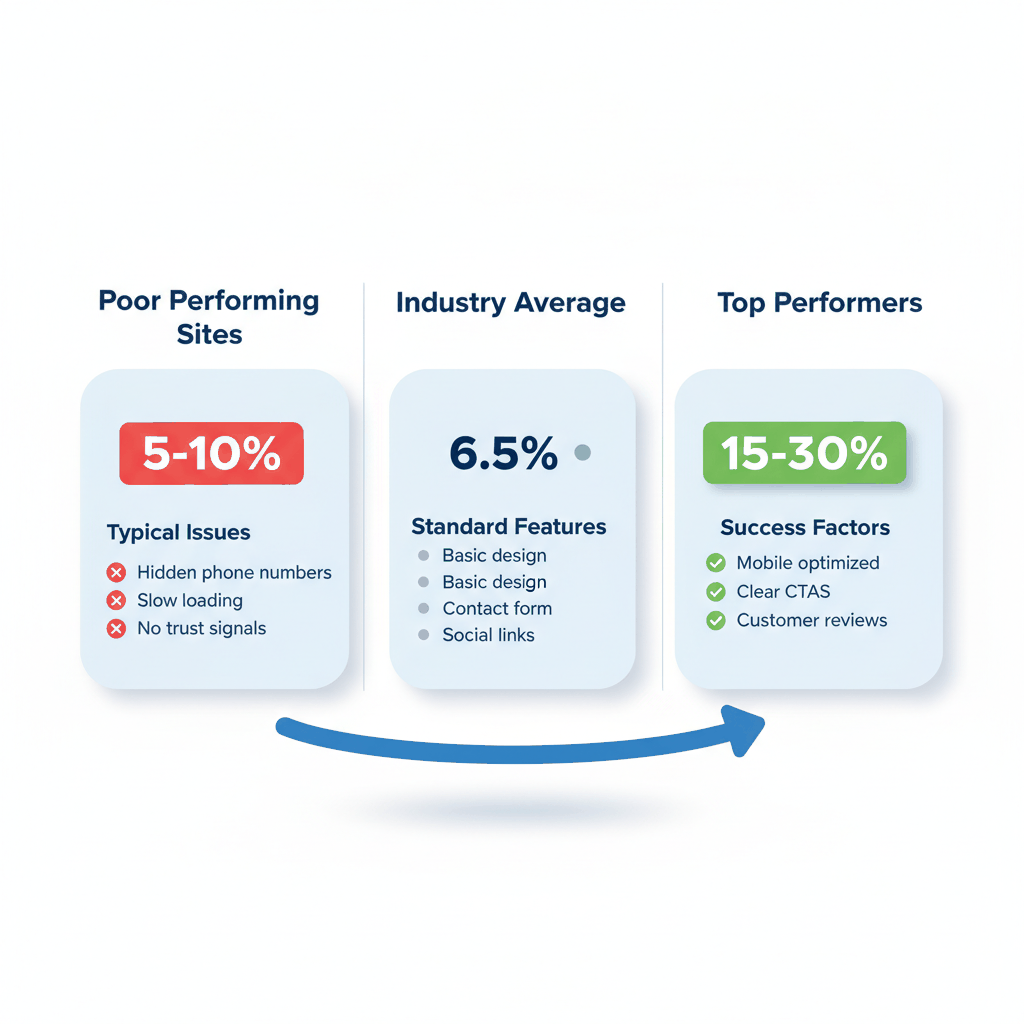
Your HVAC website gets plenty of traffic. But how many visitors actually call you? If you're like most contractors, the answer might disappoint you. Most HVAC websites convert just 5-10% of visitors into leads.
Here's the problem: homeowners are searching for HVAC services online more than ever. They visit your website when their AC breaks down or their furnace stops working. But if your website doesn't guide them to call you, they'll move on to your competitors.
The good news? Top-performing HVAC websites achieve 15-30% conversion rates. This means you can potentially triple your leads from the same traffic. With the right strategies, your website becomes a lead-generating machine.
You'll learn proven tactics that turn browsers into buyers. From mobile optimization to trust signals, we'll show you how to make your phone ring more often.
Table of Contents
Most HVAC contractors build websites that look professional but don't generate phone calls. The biggest issue? They focus on appearance instead of conversion.
Your website might be driving customers away without you knowing it. Poor navigation confuses visitors who need emergency service. Hidden phone numbers frustrate homeowners with urgent HVAC problems.
Many HVAC sites bury important information in menus or footers. When someone's air conditioner breaks on a hot summer day, they want to find your phone number immediately. If they have to hunt for it, they'll call your competitor instead.
Forms that ask for too much information also kill conversions. Click-to-call buttons that are hard to find make mobile users frustrated. These issues drastically reduce your conversion rate, especially on mobile devices.
Homeowners visit HVAC websites in different situations. Some need emergency repairs. Others want routine maintenance. A few are shopping for new systems.
Each visitor has different needs and urgency levels. Emergency customers need your phone number fast. Maintenance shoppers want to see your services and pricing. New system buyers need trust signals and testimonials.
Your website must serve all these visitor types effectively. This means clear navigation, multiple contact options, and relevant information that matches their search intent.
Website speed directly impacts your conversion rate. Studies show that 47% of users expect websites to load in under 2 seconds. A delay of just one second can reduce conversions by 7%.
More than 60% of HVAC searches happen on mobile devices. If your site isn't mobile-friendly, you're losing customers instantly. Mobile users need large, easy-to-tap buttons and simple navigation.
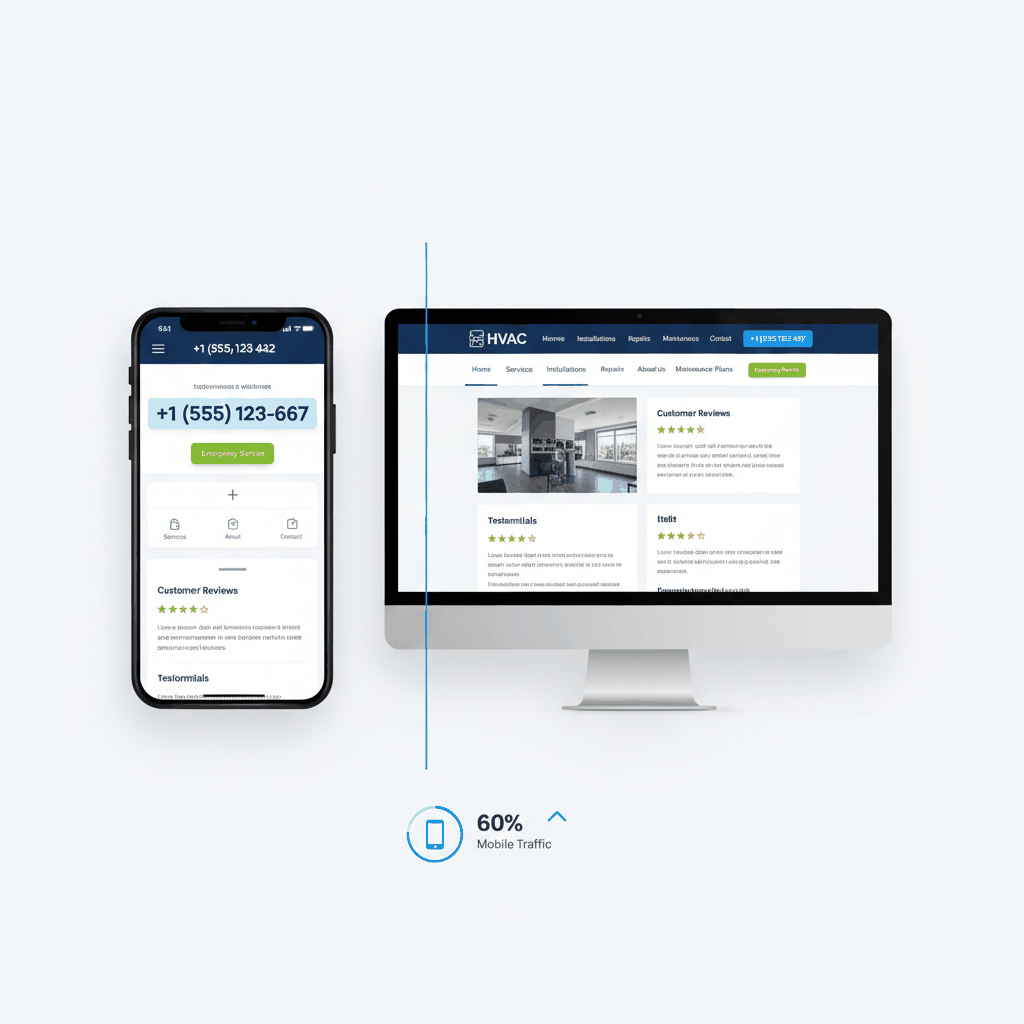
Your phone number should be clickable and visible at the top of every mobile page. Emergency service buttons need to be prominent and easy to find. Forms should be simple to fill out on small screens.
Test your website on different mobile devices regularly. What looks good on your computer might be unusable on a smartphone. Make sure all contact forms work properly on mobile devices.
Google's Core Web Vitals directly influence your search rankings. Keep your Largest Contentful Paint under 2.5 seconds. Use tools like Google PageSpeed Insights to identify problems.
Many HVAC companies see instant improvements by compressing images. Large photos of equipment or technicians can slow down your site significantly. Optimize all images before uploading them to your website.
Choose faster hosting and clean up unnecessary plugins. These simple changes can dramatically improve your site speed and conversion rates.
Trust is crucial in the HVAC industry. Homeowners invite your technicians into their homes and spend thousands on new systems. Your website must establish credibility immediately.
Display industry certifications prominently on your homepage. NATE certification and EPA credentials show you're trained and qualified. State licensing information builds confidence in your legitimacy.
BBB accreditation and the Google Guarantee badge are also valuable trust signals. Don't hide these credentials in your footer. Make them visible where visitors can see them immediately.
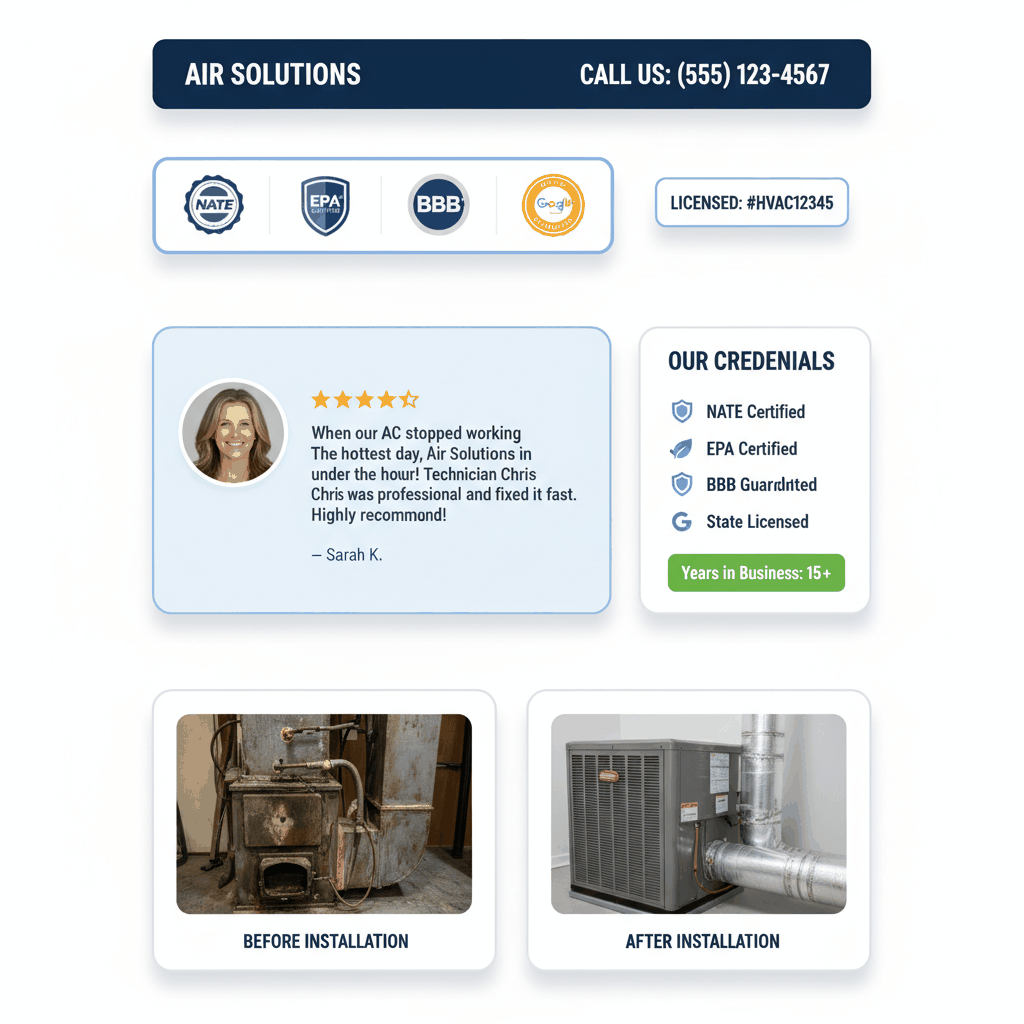
Adding customer testimonials and social proof can increase credibility by 35%. Since 90% of customers check reviews before buying, displaying positive reviews is essential.
Feature real photos of your technicians, trucks, and office. This makes your business feel approachable and authentic. Avoid stock photos that make your company seem fake or impersonal.
Showcase before-and-after project photos to demonstrate quality workmanship. Show a dirty, broken AC unit and the clean, fixed system after your service. These visual testimonials prove your expertise.
Include specific details in customer reviews. Generic testimonials like "great service" don't build trust. Reviews that mention emergency response times or specific technician names carry more weight.
Your call-to-action buttons determine whether visitors become customers. Most HVAC websites have weak CTAs that don't compel action. Your CTA needs to be obvious, repeated often, and tell visitors exactly what happens next.
Place your primary phone number at the top of every page. Use a contrasting color that stands out from your website design. Make it large enough to easily tap on mobile devices.
For mobile users, create a sticky call button that follows them while they scroll. This ensures your phone number stays visible throughout their browsing session. Emergency service buttons should be even more prominent.
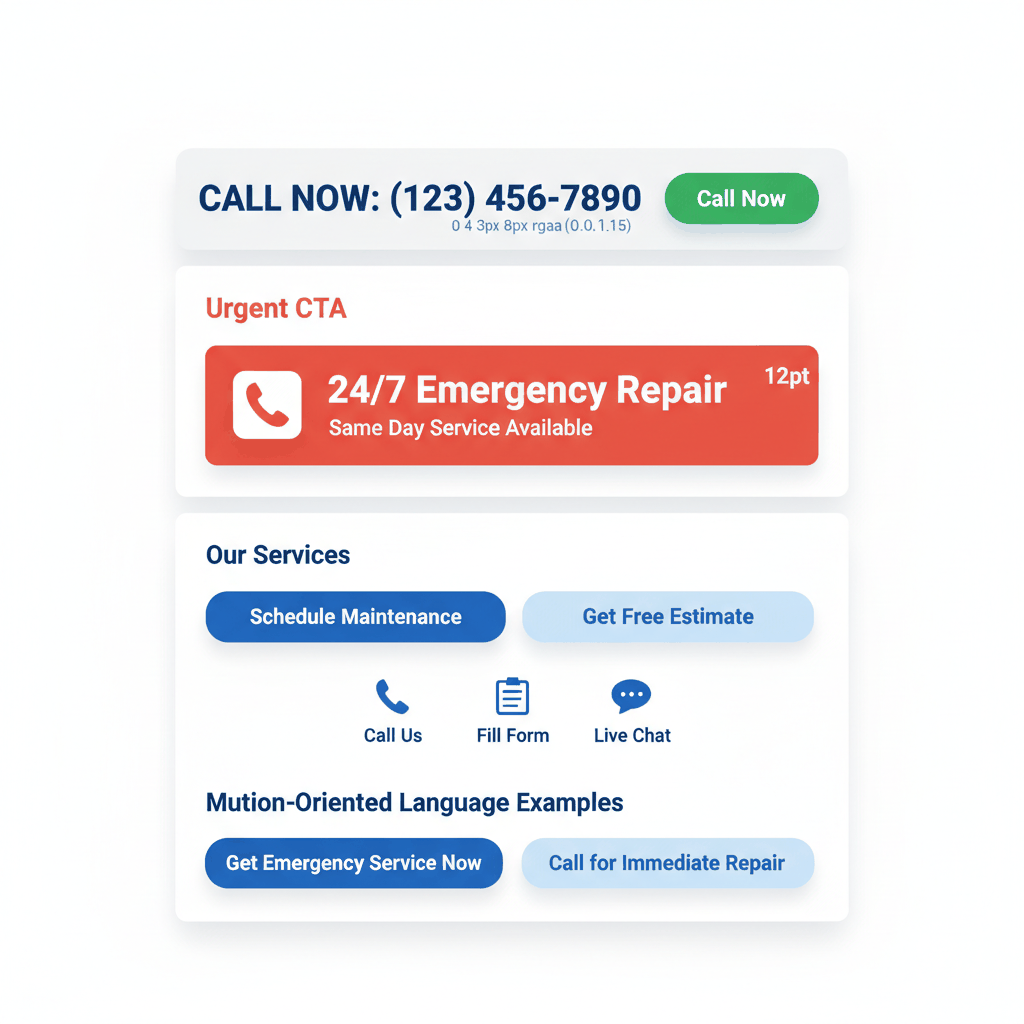
Add multiple CTAs throughout longer pages. Don't make visitors scroll back to the top to find your contact information. Place relevant CTAs after service descriptions and customer testimonials.
HVAC emergencies create urgent buying situations. Your emergency messaging needs to address this urgency immediately. Use phrases like "24/7 Emergency Service" and "Same-Day Repairs Available."
Create a separate emergency hotline if possible. This shows you take urgent situations seriously. Display emergency response times prominently on your homepage and service pages.
Use action-oriented language in your CTAs. Instead of "Contact Us," try "Get Emergency Service Now" or "Call for Immediate Repair." These phrases create urgency and encourage immediate action.
Complex contact forms kill conversions. Simplify your forms to include only essential information. The more fields you require, the fewer people will complete your form.
Ask for name, phone number, and brief service description only. You can gather additional details when they call or when you arrive for service. Long forms create friction and reduce completion rates.
Use smart form features like auto-fill for addresses and phone number formatting. Make it as easy as possible for customers to reach out. Test your forms regularly to ensure they work properly.
Provide clear expectations about response times. Tell visitors when they can expect a call back. This reduces anxiety and increases form submissions from qualified prospects.
Different customers prefer different contact methods. Some want to call immediately. Others prefer online forms or text messaging. Offer multiple ways for customers to reach you.
Consider adding live chat for immediate questions. Many HVAC companies use chat features to capture leads outside business hours. Even a simple contact form can work if it's easy to find and use.
Make your business hours clearly visible. If you offer emergency service, make that distinction clear. Customers need to know when they can expect regular service versus emergency response.
You can't improve what you don't measure. Tracking your website conversion rate helps you understand which changes actually increase phone calls and leads.
Start with your basic conversion rate: total leads divided by total website visitors. HVAC companies typically see conversion rates between 2-6%. Top performers achieve 15-30% conversion rates.
Track phone calls separately from form submissions. Many HVAC customers prefer to call directly, especially for emergency services. Use call tracking software to identify which marketing channels drive phone calls.
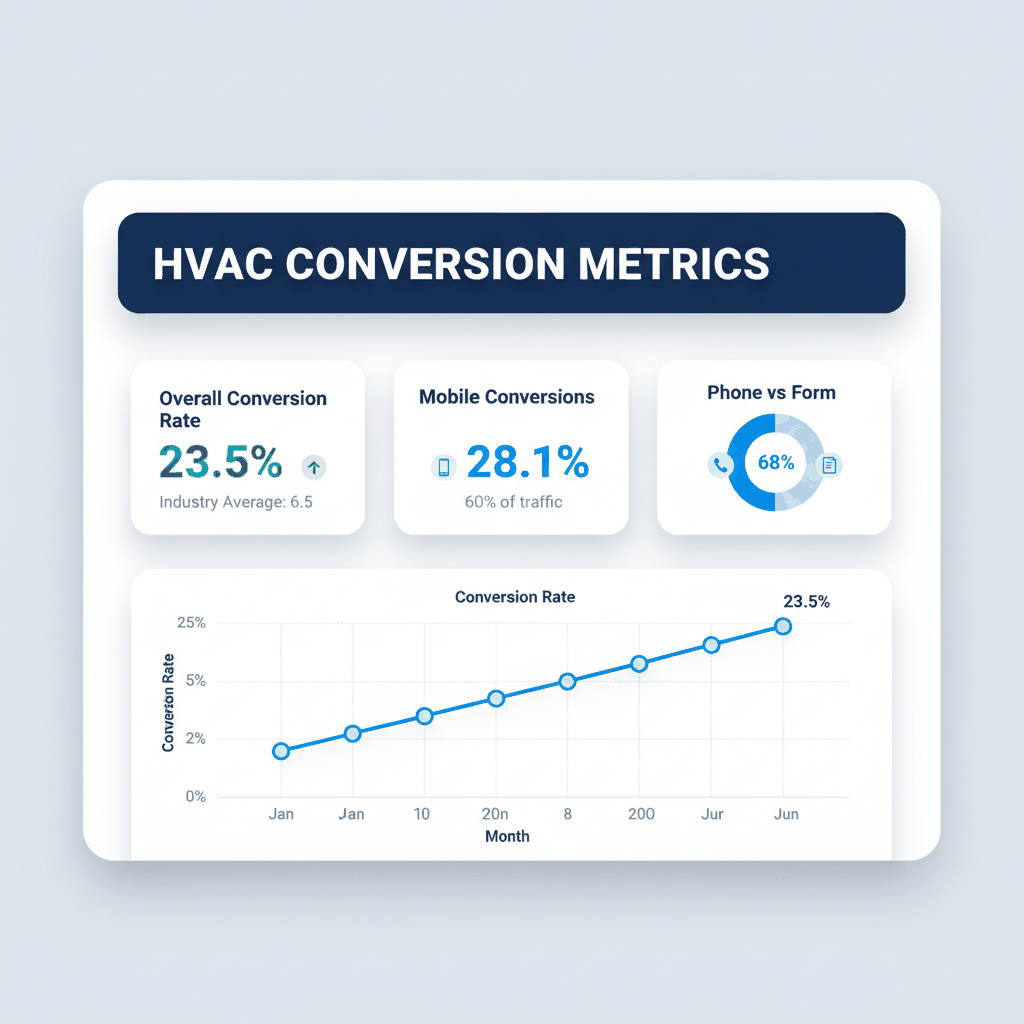
Monitor mobile versus desktop conversion rates. If mobile conversions are significantly lower, focus on improving your mobile user experience first.
Google Analytics provides basic conversion tracking for free. Set up goals to track form submissions and phone clicks. This shows you which pages generate the most leads.
Call tracking tools like AvidTrak assign unique phone numbers to different marketing campaigns. When someone calls, you know exactly which website page or ad drove the call.
Heat mapping tools show where visitors click on your website. This reveals whether your CTA buttons are in the right locations and if visitors can find your contact information easily.
Test different versions of your key pages to see what works best. Try different headlines, CTA button colors, or form lengths. Small changes can produce significant improvements in conversion rates.
Focus on testing one element at a time. If you change multiple things simultaneously, you won't know which change improved your results. Keep successful changes and continue testing other elements.
Set up proper testing periods to get statistically significant results. Don't make changes based on just a few days of data. Give each test enough time to account for daily and weekly traffic variations.
What's a good HVAC website conversion rate?
Most HVAC websites convert 5-10% of visitors into leads. However, top-performing HVAC sites achieve 15-30% conversion rates. The industry average is around 6.5%, which is actually higher than many other industries.
How can I improve my HVAC website conversion rate quickly?
Start with mobile optimization and page speed improvements. Make your phone number prominent and clickable on all pages. Add customer reviews and trust signals like certifications to your homepage. These changes can improve conversions within weeks.
Why don't visitors call after visiting my HVAC website?
Common issues include slow loading times, hidden contact information, complex forms, and lack of trust signals. Many HVAC sites also fail to address emergency service needs prominently, which drives away urgent customers.
Should HVAC companies focus more on phone calls or online forms?
Both are important, but phone calls often convert better for HVAC services. Emergency situations typically require immediate phone contact. However, maintenance and non-urgent services work well with online forms. Offer both options to maximize conversions.
How long does it take to see improved HVAC website conversions?
With proper implementation, you can see conversion rate improvements within 2-4 weeks. Major improvements often happen within 3 months. Focus on quick wins like mobile optimization and clear CTAs first, then work on longer-term strategies like content and trust building.
Ready to buy HVAC leads? Sign up for free with ResultCalls today!

Hello everyone! My name is Alex and I write these blogs to help educate small business owners on different ways to grow their business. My goal is to make lead generation as easy as possible for you. After reading these blogs, I hope you leave with some actionable steps that will get you closer to growing your business :)