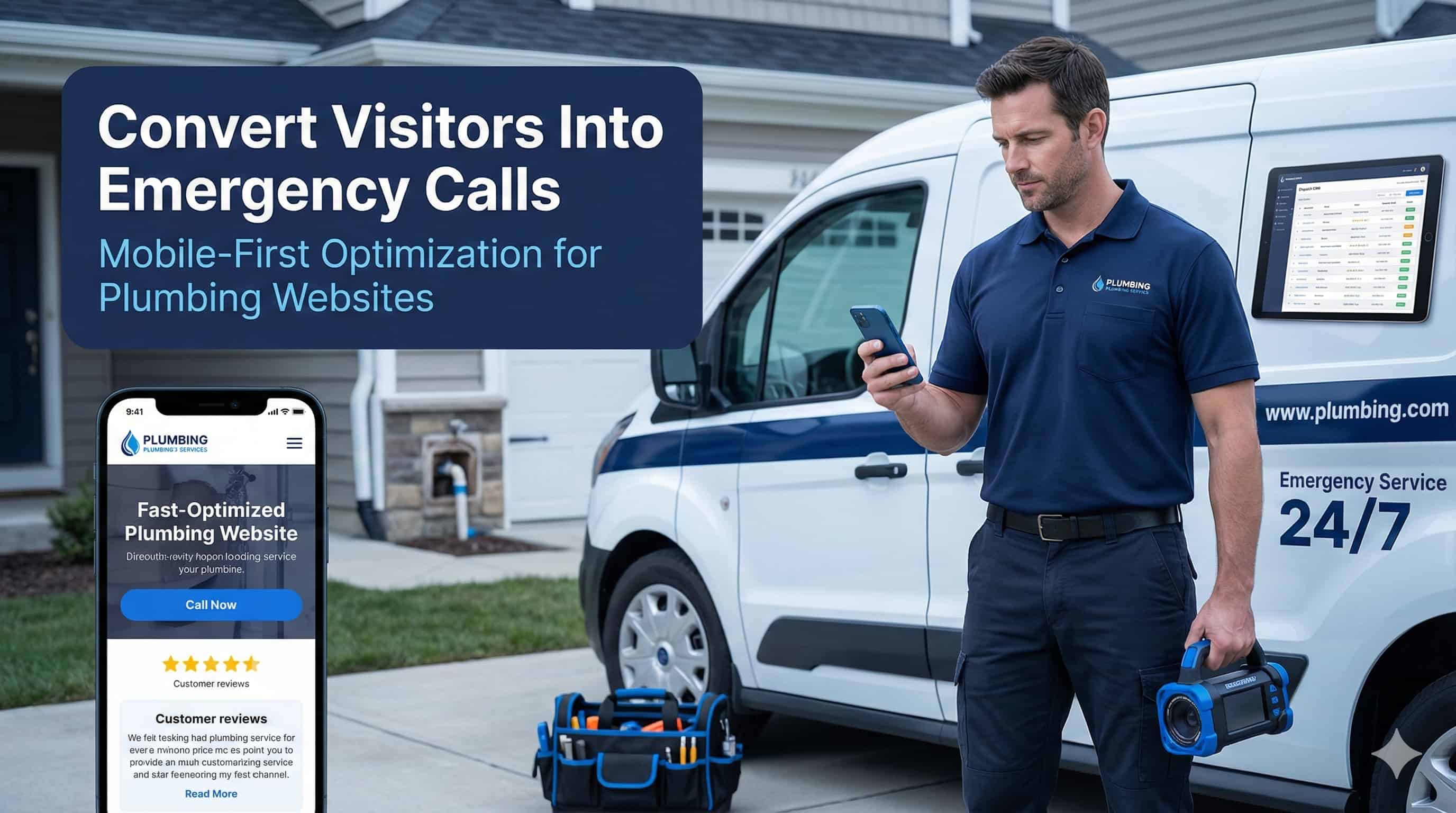
Your plumbing website gets plenty of traffic. But something's wrong. Visitors come to your site and leave without calling or booking a service.
This frustrating problem affects most plumbing businesses. The average website converts just 2-5% of visitors. That means 95 out of 100 potential customers slip away without contacting you.
The good news? Your plumbing website conversion can improve dramatically with the right approach. Home service businesses like yours should see conversion rates above 15%. This guide shows you exactly how to get there.
You'll discover proven mobile optimization techniques, trust-building strategies, and conversion tactics that turn website visitors into paying customers. These methods have helped plumbing businesses triple their leads and increase revenue by 500%.
What You'll Learn
Conversion Problems Costing You Leads
Mobile-First Plumber Website Design
Website Optimization: Plumbing CTAs That Work
Trust Signals for Plumbing Websites
Plumber Lead Conversion Tools
Plumbing Landing Pages That Convert
Measuring Your Conversion Success
Most plumbing websites make critical mistakes that drive customers away. These problems are easy to fix once you know what to look for.
Over 60% of plumbing searches happen on mobile phones. Emergency calls especially come from smartphones. If your site doesn't work perfectly on mobile, you lose customers instantly.
Non-responsive sites are deal-breakers for smartphone users. Your competition knows this. They're capturing the customers you're losing to mobile problems.
Check your site on different phone sizes. Does everything load quickly? Can users tap your phone number easily? If not, you're bleeding leads every day.
Here's a shocking fact: 70% of small business websites lack clear call-to-action buttons. Your competitors probably make this mistake too.
Generic "Contact Us" buttons don't create urgency. Emergency plumbing customers need immediate solutions. They want to see "Call Now for Emergency Service" or "Get Same-Day Plumbing Repair."
Button design matters too. Research shows CTA buttons get 45% more clicks than text links. Use contrasting colors that stand out on every page.
People research plumbers carefully before calling. They want proof you're legitimate and skilled. Without visible customer feedback, your credibility drops dramatically.
92% of consumers hesitate to hire services without customer reviews. Even worse, 97% say reviews factor into their buying decisions.
Your website needs Google reviews, licensing information, and photos of real team members. These trust signals convince visitors you're the right choice for their plumbing emergency.
Successful plumbing websites in 2025 start with mobile design first. Then they adapt to larger screens. This ensures everything works perfectly where most emergency customers find you.
Your mobile site needs three critical elements. Fast loading times under 3 seconds come first. 40% of visitors leave sites that take longer to load.
Touch-friendly navigation comes next. Buttons need minimum 44x44 pixel sizing. Users should tap your phone number, service pages, and contact forms easily with their thumbs.
Responsive design automatically adjusts your layout to fit any screen size. Your content stays readable whether customers use phones, tablets, or desktop computers.
Phone numbers on plumbing websites should be clickable links. When mobile users tap your number, their phone immediately starts calling your business.
This creates instant connection with interested customers. They've read your content and decided to call. That makes them high-quality leads ready to book services.
Place click-to-call numbers prominently on every service page. Emergency plumbing customers want immediate contact options when they're dealing with burst pipes or clogged drains.
Top-ranking websites load in just 1.65 seconds. Compress your images, choose fast hosting, and minimize plugins to achieve these speeds.
Slow websites frustrate emergency customers who need immediate solutions. Every second of delay reduces your conversion rates and sends customers to faster competitors.
Your call-to-action buttons determine whether visitors become customers. The right CTA approach can double or triple your plumbing website conversion rates.
Replace generic phrases with urgent, specific language. Instead of "Contact Us," use "Call Now for Emergency Plumbing" or "Schedule Same-Day Repair Service."
Emergency plumbing customers want immediate solutions. Your CTAs should match their urgency and promise quick response times.
Test different CTA phrases to see what works best for your market. Some areas respond better to "Free Estimate" while others prefer "Emergency Service Available."
Place your primary CTA "above the fold" where visitors see it without scrolling. Research shows above-the-fold CTAs get significantly more clicks.
Add secondary CTAs throughout your content too. After describing each service, include a relevant call-to-action that relates to that specific problem.
For most plumbing businesses, one prominent phone number works better than multiple contact options. Too many choices create confusion and decision paralysis.
Red CTA buttons often outperform other colors in testing. The contrast draws attention and creates urgency that matches emergency plumbing situations.
Make buttons large enough for easy mobile tapping. Use white text on colored backgrounds for maximum readability.
Test button colors, sizes, and placement regularly. Small changes can produce significant improvements in your conversion rates.
Trust signals convince visitors you're a legitimate, skilled plumbing business. These elements can dramatically increase your plumbing website conversion rates.
Display Google reviews prominently on your homepage. At least some social proof must be visible without scrolling on both mobile and desktop versions.
Use review slider plugins that connect to Google and Yelp through APIs. This shows real, verified customer feedback that visitors can trust.
Update reviews regularly to keep content fresh. Recent reviews carry more weight with potential customers than old testimonials.
Show your plumbing license numbers, insurance information, and professional certifications prominently on every page. Customers want proof you're qualified and protected.
Include photos of your actual team members and service vehicles. Real faces and branded trucks build credibility better than stock photos.
List your years in business, service areas, and any industry awards or recognition you've received.
Visual proof of your work quality builds confidence in your skills. Show challenging repairs you've completed successfully.
Include brief descriptions of each project. Explain the problem, your solution, and the final results for homeowners.
Update project galleries regularly with recent work. Fresh content shows you're actively serving customers and growing your business.
The right tools help you track visitor behavior, optimize your site, and convert more prospects into paying customers.
ServiceTitan offers web scheduling widgets and chat-to-text features for your website. Customers can book services online or start text conversations with your team.
FieldEdge provides complete business management capabilities starting at $125 per technician monthly. The platform includes customer databases and efficient dispatch software.
Housecall Pro starts at just $49 monthly and offers 14-day free trials. This CRM helps small plumbing businesses manage customers and increase productivity.
Hotjar reveals how visitors interact with your website through heat maps and user recordings. You'll see where people click, scroll, and abandon your site.
Crazy Egg offers similar heat mapping features plus A/B testing capabilities. Compare different versions of pages to see which converts better.
Both tools help identify conversion problems you might miss otherwise. Watch real user sessions to understand why visitors leave without calling.
Google Analytics 4 tracks phone clicks, form submissions, and other important conversion actions. Set up custom events for your most valuable customer behaviors.
Google Tag Manager enables more advanced tracking for conditional conversions and complex user interactions.
Proper tracking shows which marketing efforts produce the best results. Focus your budget on channels that generate the most qualified leads.
Dedicated landing pages for specific services convert better than generic contact pages. Each plumbing service needs its own optimized page.
Create separate pages for emergency repairs, drain cleaning, water heater installation, and other key services. Target specific keywords like "burst pipe repair" or "clogged drain cleaning."
Each page should address the specific problems and concerns related to that service. Emergency repair pages need different messaging than routine maintenance pages.
Include relevant photos, pricing information, and clear next steps for each service type.
Emergency pages need immediate urgency. Use headlines like "24/7 Emergency Plumbing Service - We're On Our Way" or "Stop Water Damage Now - Call Immediately."
List common emergency situations like burst pipes, sewer backups, and water heater failures. Customers want to see their specific problem addressed.
Emphasize response time, availability, and emergency contact methods. Worried customers need reassurance you'll solve their crisis quickly.
Include your service area cities and neighborhoods throughout your content. Local searchers want confirmation you serve their specific location.
Add your Google Maps listing, service area descriptions, and local customer testimonials to build geographic relevance.
Optimize for "plumber near me" and city-specific searches like "Phoenix emergency plumber" or "Dallas drain cleaning service."
Track the right metrics to understand what's working and where you need improvement. Focus on measurements that directly impact your revenue.
Website conversion rate shows the percentage of visitors who contact you. Calculate this by dividing total conversions by total website visitors.
Phone call conversions often outperform form submissions for plumbing businesses. Track both but expect 8:1 ratios favoring phone calls.
Cost per lead helps you understand which traffic sources provide the best value. Organic search typically converts better than paid advertising for local plumbers.
Google Maps clicks convert at up to 80% rates because users are actively seeking local services.
Organic search traffic converts much better than PPC ads. Some studies show 21x better conversion rates for organic visitors.
Focus your SEO efforts on local search optimization. This produces the highest-quality leads at the lowest cost.
Test one element at a time to isolate what improves conversions. Try different CTA button colors, headlines, or phone number placement.
Run tests long enough to get statistically significant results. Usually 2-4 weeks minimum depending on your traffic volume.
Document what works and what doesn't. Build a library of successful conversion tactics you can apply to new pages.
What's a good plumbing website conversion rate?
Home service businesses should achieve 15% or higher conversion rates. If your plumbing website converts less than 10%, you're missing significant revenue opportunities that optimization can fix.
How do I optimize my plumber website design for mobile users?
Start with fast loading speeds under 3 seconds, click-to-call phone numbers, and touch-friendly navigation. Make sure all buttons are large enough for thumbs and your content reads clearly on small screens.
Which plumbing landing pages convert best for lead generation?
Emergency service pages and specific problem-focused pages like "burst pipe repair" or "water heater replacement" typically convert highest. Local customers want immediate solutions to specific problems.
How can I improve plumber lead conversion from website visitors?
Add prominent click-to-call buttons, display customer reviews above the fold, show your licensing and insurance information, and create urgency with phrases like "24/7 Emergency Service Available."
What website optimization techniques work best for plumbing companies?
Focus on mobile-first design, strategic CTA placement, trust signal integration, and service-specific landing pages. Heat mapping tools help identify exactly where visitors abandon your conversion process.
Ready to get plumbing marketing leads? Sign up for free with ResultCalls today!

Hello everyone! My name is Alex and I write these blogs to help educate small business owners on different ways to grow their business. My goal is to make lead generation as easy as possible for you. After reading these blogs, I hope you leave with some actionable steps that will get you closer to growing your business :)