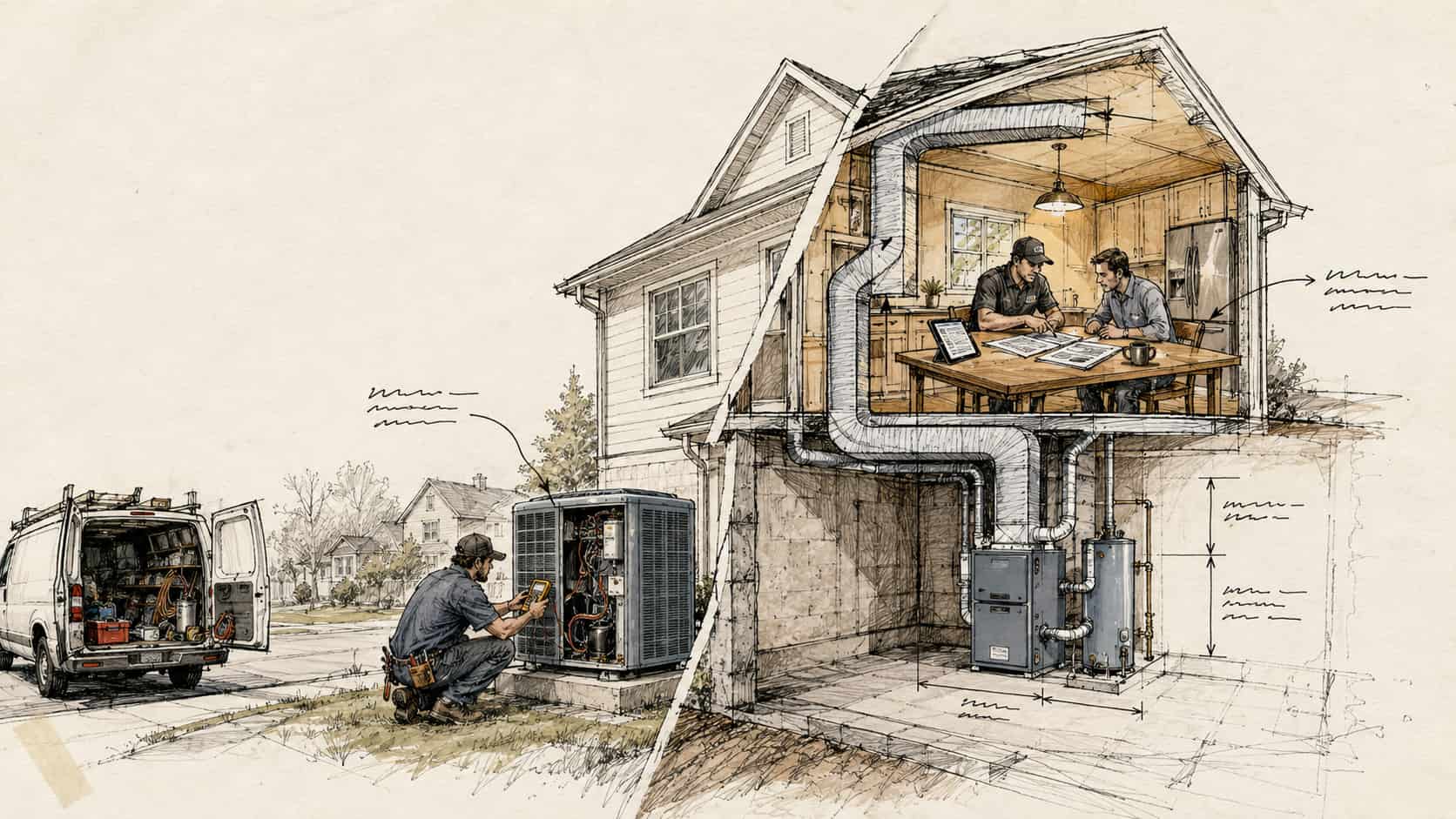
The average HVAC system replacement runs $11,590 to $14,100 in 2026. A standard service call fee runs $89 to $149. Same truck, same technician, same phone line. The revenue gap between those two calls is roughly 100 to 1.
Most contractors buy leads as if that gap does not exist. HVAC leads cost anywhere from $25 to $230 depending on channel and exclusivity, and the average across all channels lands near $153. If you pay the same price for a capacitor call and a full system replacement call, one of those purchases is quietly funding the other.
Here is the good news. Once you separate the two lead types and price them apart, the math gets simple fast. This guide defines both, compares them on cost, job value, close rate, and risk, then gives you a straight verdict on which to buy and when.
Which lead type actually makes you money? Should you pay triple for an install call? And how do you stop paying install prices for repair work? ResultCalls sells HVAC calls by intent, not by the batch, and you can see how that works at ResultCalls.
What HVAC Service Leads Actually Are
Cost Per Lead: Sales vs Service
Job Value: What Each Call Pays
Close Rates and Time to Close
Risk, Seasonality, and Shared Competition
The Verdict: Which Leads to Buy
Building Your 2026 Strategy
Frequently Asked Questions

HVAC service leads are homeowners whose system is broken right now. The job is a diagnostic and a repair, with service call fees of $75 to $200 and repairs averaging $150 to $450. These callers are not comparing. They want the first company that answers.
The work is predictable. Capacitor replacement alone accounts for roughly 25 to 30 percent of all residential HVAC service calls, followed by refrigerant recharges and contactor failures. Most of these are one-visit jobs with a two-hour window and a known parts list.
Urgency is the whole value here. After-hours and weekend calls run $125 to $400 before parts, and the homeowner rarely shops that number when the house is 88 degrees. Emergency service leads close at 70% or better, which is a number no install lead will ever touch.
Service calls also do a second job that never shows up in the lead cost. They put a technician in front of an aging system. A shop with a real conversion process turns a meaningful share of repair visits into replacement quotes, and a maintenance plan at $180 to $300 per household per year turns that same visit into recurring revenue.
ResultCalls lets HVAC contractors buy calls, so you are not paying replacement prices for capacitor work. Every call is exclusive to your company, with no setup fee and no monthly minimum, and you can see current call types on the HVAC leads page.

Sales leads cost roughly two to four times what service leads cost. Exclusive residential HVAC leads run $75 to $150, with commercial and install-intent calls reaching $100 to $300 or more, while shared repair leads can be found for $12 to $80. Across all channels, the blended HVAC cost per lead sits near $153.
Channel matters as much as intent. Organic search delivers leads at $10 to $30 once rankings mature, Google Local Services Ads run $25 to $75, and Google Ads PPC lands at $75 to $200 per lead. The Home and Home Improvement category average across Google and Microsoft Ads is $90.92 per lead.
Marketplace pricing has moved fast. HVAC leads that ran about $40 on Angi in 2022 now cost $65 to $85 in major metros, on top of an annual membership near $300 and a lead credit deposit of $300 to $1,500. HomeAdvisor sits inside the same network with similar pricing, and Thumbtack and Networx price by job type in the same general band.
Here is the trap. Because most platforms price by category and not by intent, a repair call and a replacement call often cost you the same. A $25 lead that does not close costs you almost nothing. A $60 lead that does not close is a much bigger miss against a much bigger payoff, which is why buying the two types on the same terms quietly erodes margin.
This is where the two lead types stop being comparable. Service jobs carry an average order value of $300 to $600. Install jobs carry an average order value of $4,000 to $15,000. That is a 10x to 25x spread on the same phone line.
Run it as revenue per lead instead of cost per lead and the picture flips. Ten service leads at a 70% close rate and a $450 average ticket produce about $3,150. Ten install leads at a 20% close rate and a $9,800 average ticket produce about $19,600. The install leads cost more per lead and still return five to six times the revenue.
Repairs are not the weak link, though. They are the steadier one. Repairs average $150 to $450 and arrive year round, which covers payroll in the shoulder months when nobody is replacing anything. High value HVAC jobs pay the year; service work pays the week.
Do not forget the downstream value either. A service visit on a 15-year-old system is a replacement quote waiting to happen, and a maintenance plan attached to that visit produces $180 to $300 per household every year with no lead cost at all.

Service leads close fast and often. Emergency calls close at 70% or better, usually same day, because the homeowner has one goal and no patience for a second quote. Install leads close at 15 to 25% and take days or weeks, because the homeowner is collecting three estimates and often waiting on financing.
Exclusivity swings both numbers hard. Exclusive HVAC leads convert at 40 to 60% compared with 10 to 20% for shared leads. On the install side, where the ticket is five figures, that gap is the difference between a profitable channel and a leaky one.
Speed matters differently for each. On a service call, the first company to answer usually wins, so a missed call is a lost job. On a sales call, answering fast gets you into the running, but the close depends on the quote, the financing options, and the follow-up over the next two weeks.
Measure both types by cost per booked job, not cost per lead. Google Local Services Ads leads averaged $51 each at a 44% book rate in early 2026, which works out to about $116 per booked appointment. Shared marketplace leads at $25 to $100 close at 9 to 15%, which pushes the real cost per booked job far past the sticker.

Sales leads carry more risk per dollar. You are spending $100 to $300 on a lead that closes one time in five, against a job that takes a crew, a permit, and equipment you may have to float. Service leads spread that risk across many small, fast, cheap-to-fulfill jobs.
Shared distribution makes install leads worse, not better. When a replacement lead goes to four or five contractors at once, you are quoting against three other companies on a job that already takes weeks to close. That is why exclusive leads at a higher sticker price usually win on cost per signed contract.
Seasonality hits the two types on opposite schedules. Service volume spikes during heat waves and cold snaps, and lead prices climb right along with demand. Replacement demand builds in the shoulder seasons, when homeowners have time to compare and installers have open calendars. A shop that buys only one type will feel every swing.
The last risk is the one contractors underrate: capacity. An install lead you cannot schedule for six weeks is a lead you paid for and lost. Buy sales leads against the crew hours you actually have, not the crew hours you wish you had.
Buy service leads for cash flow and buy sales leads for profit. If you have one truck and tight cash, weight 70% toward service. If you have install crews sitting idle and 25% or better gross margin on replacements, weight 60% toward sales. Most shops running two to five trucks land near a 50/50 split.
Service leads suit newer shops, single-truck operations, and anyone whose technicians have open hours this week. They pay quickly, they build reviews fast, and they feed replacement quotes down the line.
Sales leads suit shops with install crews, financing partners, and a sales process that survives a two-week follow-up. They will not save a slow week, but they are where the margin lives.
Do these three things in order over the next 60 days.
First, split your lead spend by type in your books this month. Pull last month's invoices and separate service spend from install spend. Most contractors have never seen those two numbers apart, and the split usually surprises them.
Second, calculate cost per booked job for each type, not cost per lead. Take total spend divided by signed jobs. If your service number is over $250 or your install number is over $1,500, the channel is the problem, not the price.
Third, move your install budget toward exclusive calls first. Exclusive leads convert at 40 to 60% against 10 to 20% for shared, and that gap matters most on a $9,800 ticket. Test 20 calls before you move the whole budget.

Sales leads are homeowners buying a new system, worth $4,000 to $15,000 per job, while service leads are homeowners needing a repair, worth $300 to $600. Sales leads cost two to four times more and close at 15 to 25%. Service leads close at 40 to 70% and usually the same day.
Expect $100 to $300 for an exclusive install lead in most markets. That works out to $500 to $1,500 per booked install at a 20% close rate, which is healthy against a $9,800 average ticket. If you are paying more than $1,500 per signed install, the lead source or your follow-up is the issue.
They can work for service volume and rarely work for installs. HVAC leads on Angi run $65 to $85 in major metros plus a roughly $300 annual membership and a $300 to $1,500 deposit, and those leads go to four or five contractors at once. Shared leads close at 9 to 15%, so the real cost per booked job runs several times the sticker price.
Start with service leads if you have fewer than three trucks. They close at 40 to 70%, pay within a week, and build the review count you need to compete. Add install leads once you have crew hours you cannot fill and a follow-up process that survives two weeks.
Quote the replacement on the same visit whenever the system is over 12 years old or the repair exceeds 30% of a new system cost. Give the homeowner a written good-better-best option and a financing number before you leave. Shops that do this consistently convert a meaningful share of $450 repair calls into $9,800 installs.
The point of separating HVAC sales leads from service leads is not to pick a winner. It is to stop paying one price for two products. Once you track them apart, you can spend against your actual capacity instead of guessing, and you stop funding install losses with repair profit.
The fastest way to test that is with calls you own outright, since exclusivity is what moves close rates from 15% to 40% on a five-figure job. With ResultCalls there are no setup fees, no monthly fees, and no cancellation fees, so testing a lead type costs you nothing but the calls you take. Start with a small batch of exclusive HVAC calls and let your own close rate tell you where the budget belongs.

Hello everyone! My name is Alex and I write these blogs to help educate small business owners on different ways to grow their business. My goal is to make lead generation as easy as possible for you. After reading these blogs, I hope you leave with some actionable steps that will get you closer to growing your business :)