
Solar companies face a unique challenge in digital marketing. Your customers spend months researching before buying. They visit dozens of websites. They compare options carefully.
Yet most solar SEO advice comes from generic marketing agencies. These agencies don't understand solar customer behavior. They apply tactics that work for plumbers to solar companies. The result? Wasted marketing budgets and fewer qualified leads.
Solar SEO requires specialized strategies. The solar buyer's journey is longer than other home services. Homeowners research costs, incentives, and payback periods. They need different content at each stage.
This guide reveals the most damaging solar SEO myths. You'll learn why generic SEO advice fails for solar companies. Plus, you'll discover proven strategies that actually generate qualified solar leads.
Table of Contents
Solar companies can't use generic SEO strategies. Your customers behave differently than other home service buyers. They research for months before making a decision.
The average solar purchase involves 6-12 months of research. Compare this to plumbing repairs where customers need immediate help. Solar buyers visit multiple websites. They read dozens of articles. They calculate payback periods and compare financing options.
Search volume varies dramatically by location. Solar searches spike in states with good incentive programs. California generates 40% more solar searches than Texas. This means your keyword strategy must account for local policies.
Solar customers also search differently at each stage. Early researchers look for basic information like "how do solar panels work." Later searches focus on "solar installation cost in Phoenix" or "best solar financing options."
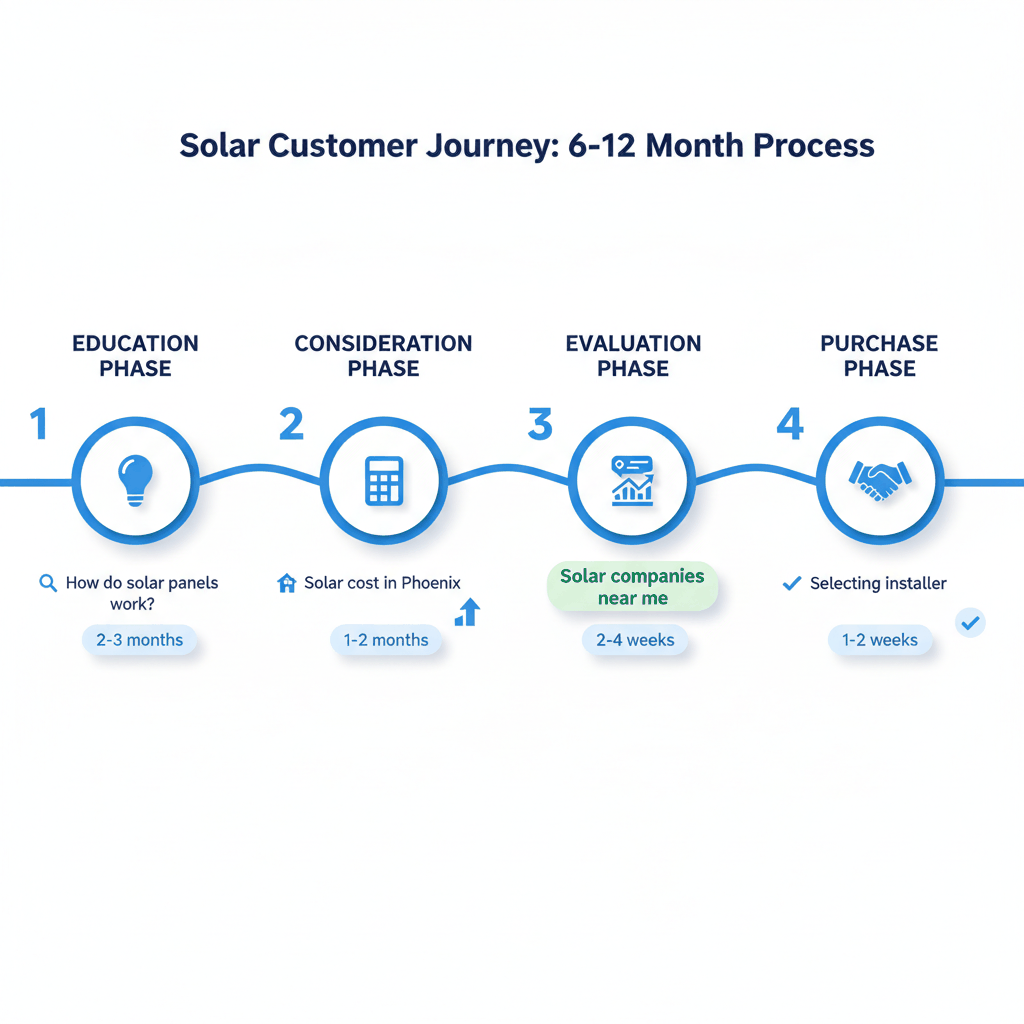
Understanding the solar buyer journey changes everything about your SEO approach. Most solar customers follow these stages:
Education phase: Learning about solar basics and benefits
Consideration phase: Comparing costs, incentives, and installers
Evaluation phase: Getting quotes and making final decisions
Purchase phase: Selecting an installer and signing contracts
Each phase requires different content and keywords. Generic SEO misses these nuances completely.
Several dangerous myths plague the solar industry. These misconceptions waste marketing budgets and hurt lead generation. Let's debunk the most damaging ones.
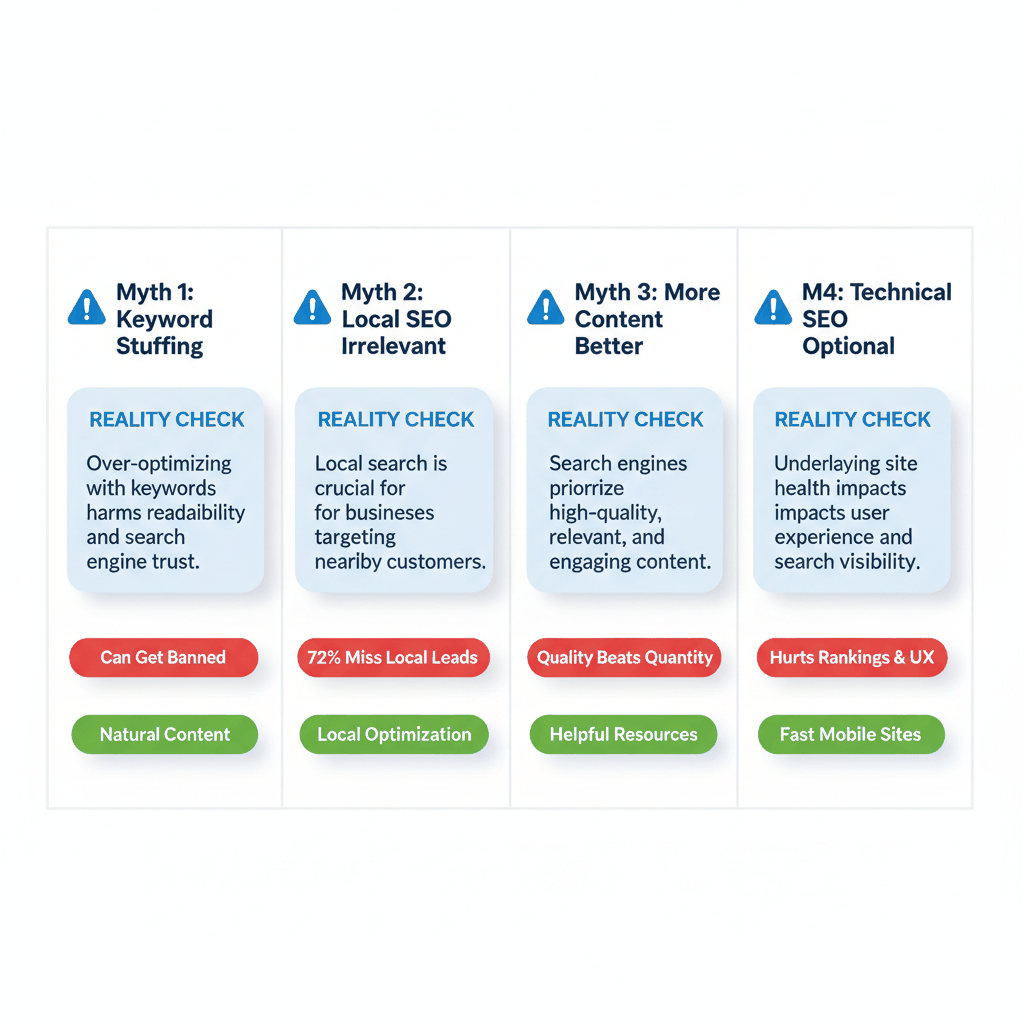
Many solar companies still believe more keywords equal better rankings. This outdated tactic can actually get your site banned from Google. Modern SEO rewards natural, helpful content over keyword density.
Instead of stuffing "solar panels" into every sentence, focus on answering real customer questions. Write naturally. Google's algorithm recognizes when content serves readers versus search engines.
For example, don't write: "Solar panels are great solar panels for solar panel installation by our solar panel company." Instead, write: "Our solar installation team helps homeowners reduce energy bills with high-quality panels."
Some solar companies think local SEO only helps brick-and-mortar stores. This costs them valuable local leads. Research shows 72% of consumers search for business locations on Google Maps.
Solar customers want local installers. They search for "solar companies near me" or "solar installation in Dallas." Without local SEO optimization, you miss these high-intent searches.
Your Google Business Profile matters more than you think. Complete profiles with customer reviews rank higher in local searches. This directly impacts your lead generation.
Quality beats quantity every time. Many solar companies publish endless blog posts thinking volume improves rankings. Google rewards helpful, relevant content over word count.
One comprehensive guide about solar costs in your area works better than ten generic articles. Focus on creating resources your customers actually need. Answer their specific questions with detailed, accurate information.
Solar customers want cost calculators, payback period guides, and local incentive information. Create these valuable resources instead of generic content.
Some agencies claim technical SEO is less important than content. This dangerous myth hurts your rankings and user experience. Technical SEO includes site speed, mobile optimization, and proper site structure.
Solar customers research on mobile devices. Sites that load slowly lose potential leads. Google's mobile-first indexing means mobile performance directly affects rankings.
Check your site speed with Google PageSpeed Insights. Fix loading issues immediately. Your competitors with faster sites will rank higher and capture your leads.
Solar customers search differently than other home service buyers. Understanding these patterns helps you create better content and target the right keywords.
The most common solar searches focus on costs and ROI calculations. Phrases like "solar panel cost in Phoenix" and "solar payback period" attract serious buyers. These searches indicate customers who are ready to evaluate their options.
Regional differences matter tremendously. California customers search for "solar rebates" while Texas customers look for "solar tax credits." Understanding regional behavior ensures your content matches local interests.
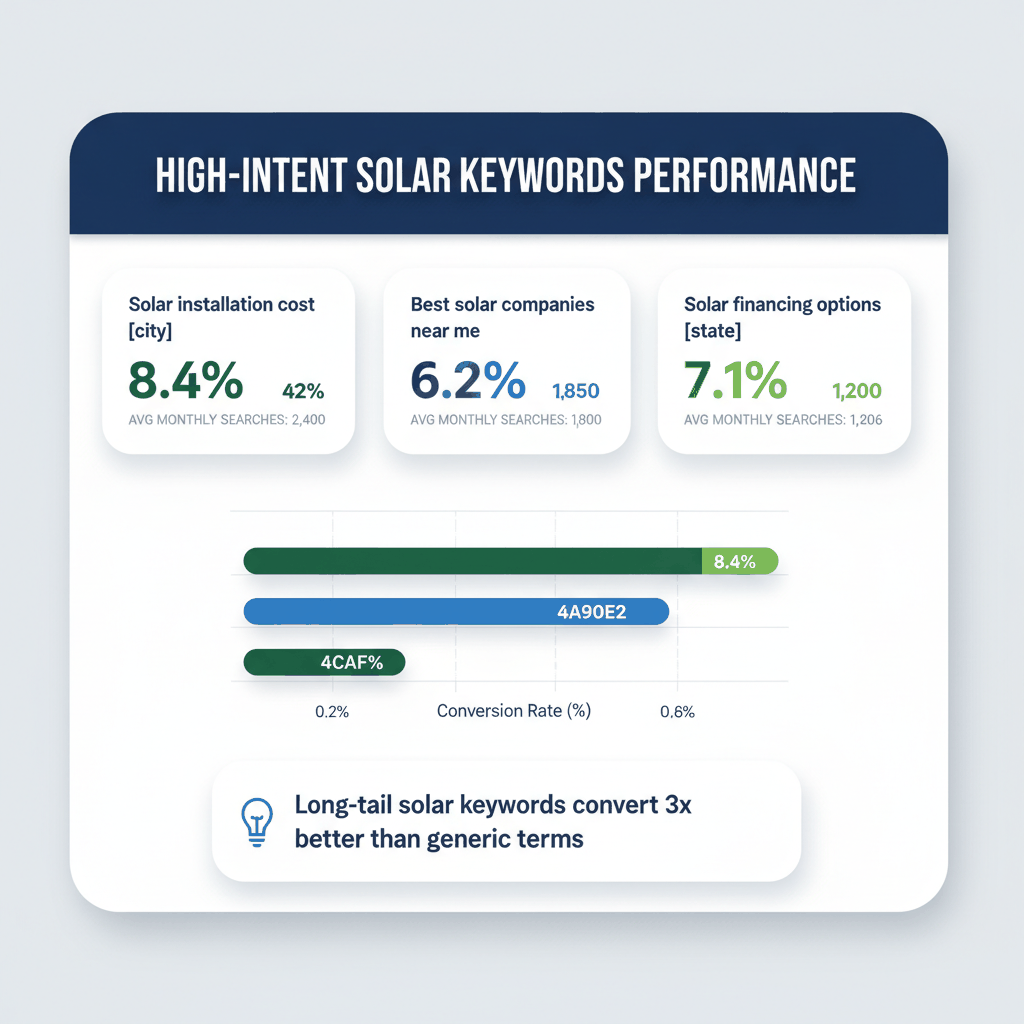
Focus on keywords that indicate purchase intent. These phrases attract qualified leads who are ready to take action:
"Solar installation cost in [city]"
"Best solar companies near me"
"Solar financing options [state]"
"Solar panel quotes [city]"
"Solar incentives [state] 2025"
These long-tail keywords have lower competition but higher conversion rates. They attract homeowners who are seriously considering solar installation.
Early-stage researchers need educational content. Create comprehensive guides that establish your expertise:
How solar panels work and their benefits
Solar installation process and timeline
Available financing and incentive programs
Maintenance requirements and warranties
This content builds trust with potential customers. When they're ready to buy, they'll remember your helpful resources.
Effective solar SEO requires specialized strategies that account for the unique solar buyer journey. These proven tactics generate qualified leads consistently.
Cost calculators attract high-intent traffic and provide immediate value. Create calculators for each service area that factor in local electricity rates, incentives, and average home sizes.
These tools generate significant organic traffic. They also capture lead information when visitors request detailed calculations. Professional solar lead generation services can help you optimize these tools for maximum conversions.
Include local data in your calculators. Reference specific utility companies, local incentive programs, and regional installation costs. This local relevance improves both SEO performance and user experience.
Create detailed guides for each market you serve. Cover local electricity rates, available incentives, permit requirements, and average installation costs. These guides attract organic traffic and establish local authority.
For example, create a "Complete Guide to Solar Installation in Austin, Texas" that covers everything local homeowners need to know. Include specific information about Austin Energy's solar programs and local permit processes.
Update these guides regularly as incentives and policies change. Fresh, accurate content ranks better and provides more value to potential customers.
More customers use voice search for initial solar research. Optimize content for conversational queries like "How much do solar panels cost?" or "What solar incentives are available in California?"
Voice searches tend to be longer and more specific. Create FAQ sections that directly answer common questions. Use natural language that matches how people speak.
Include local business information in structured data markup. This helps voice assistants find and recommend your business for local solar searches.
Case studies and customer testimonials build trust and attract organic traffic. Create detailed stories that include specific results like energy savings and payback periods.
Optimize these stories for local search by including customer locations and specific project details. "How Sarah in Scottsdale Saved $2,400 in Year One with Solar" attracts local searches and builds credibility.
Include photos, energy production data, and customer quotes. Rich, detailed case studies rank well for long-tail keywords and convert visitors into leads.
Local SEO is crucial for solar companies. Most customers prefer local installers and search for companies in their area. These tactics improve your local search visibility.
Start with your Google Business Profile. Complete all sections including services, service areas, hours, and contact information. Add high-quality photos of your team and completed installations.
Encourage satisfied customers to leave Google reviews. Reviews improve local rankings and build trust with potential customers. Response to reviews shows you value customer feedback.
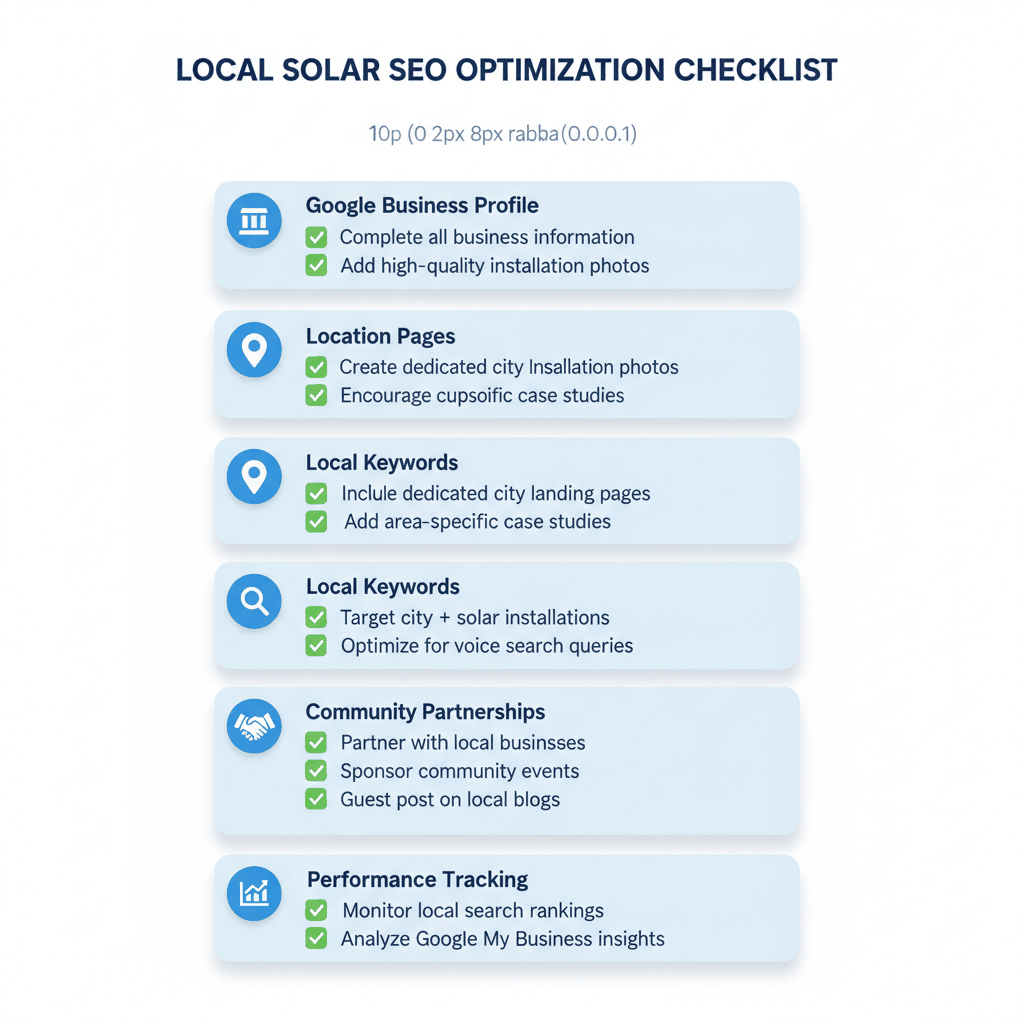
Build dedicated landing pages for each service area. Include local keywords, area-specific information, and customer testimonials from that location.
Each page should cover unique local factors like utility companies, permit processes, and available incentives. Avoid duplicate content by focusing on genuinely local information.
Include local business citations and links to relevant local resources. This strengthens your local SEO signals and provides additional value to visitors.
Partner with local businesses and organizations for content opportunities and backlinks. Home improvement stores, real estate agents, and environmental groups make natural partners.
Guest posting on local business blogs or contributing to community websites builds local authority. Focus on providing valuable information rather than promotional content.
Participate in local events and sponsor community organizations. These activities generate local publicity and natural backlinks from local websites.
Research what local competitors are doing for SEO. Identify content gaps you can fill and keywords they're missing.
Use tools like Ahrefs or SEMrush to analyze competitor strategies. Look for opportunities to create better, more comprehensive content on topics they're covering superficially.
Don't copy competitors directly. Instead, identify opportunities to provide more value and better user experience in your content.
Tracking the right metrics helps you improve your solar SEO strategy over time. Focus on metrics that directly impact lead generation and business growth.
Organic traffic growth shows your SEO efforts are working. However, quality matters more than quantity. Track traffic from high-intent keywords that indicate purchase readiness.
Lead generation from organic search is the ultimate success metric. Track which pages and keywords generate the most qualified leads. Professional solar marketing services can help you optimize your tracking and improve conversion rates.
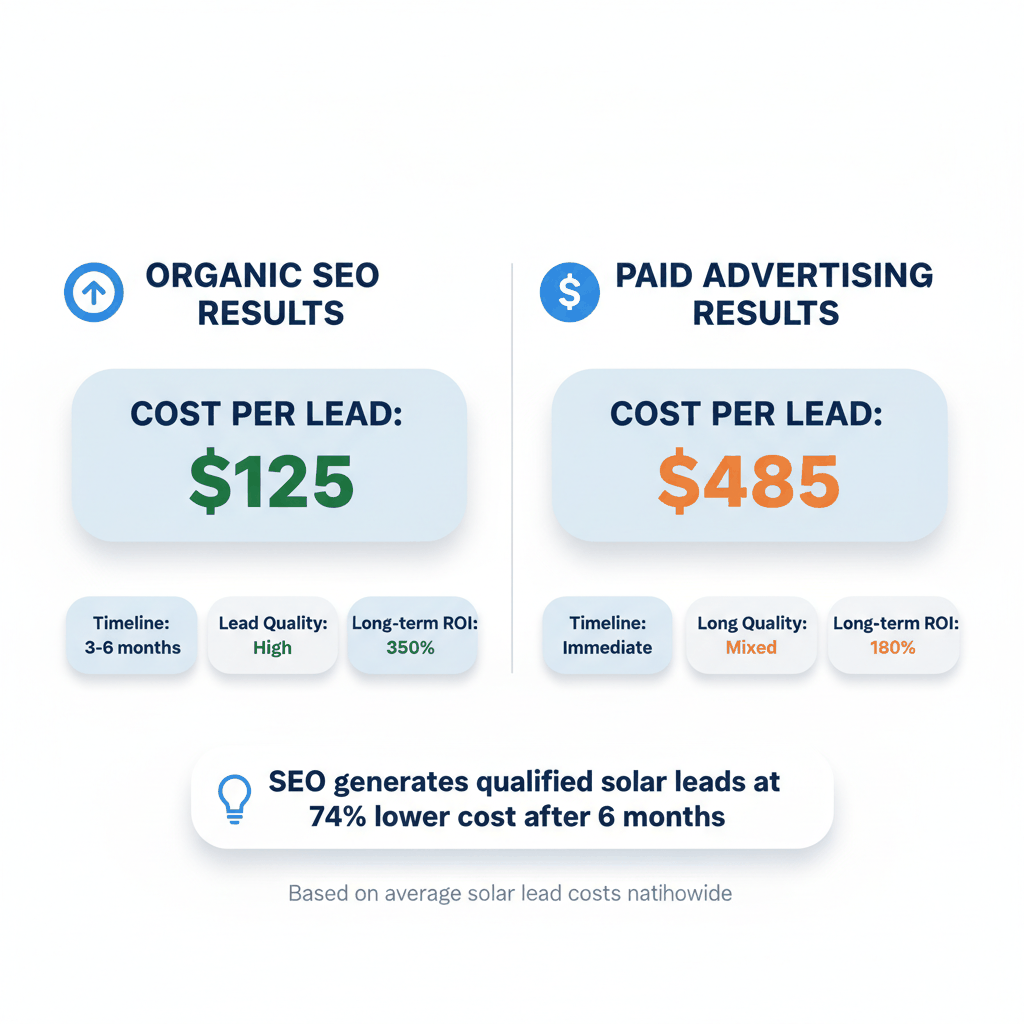
Monitor these essential metrics to measure your solar SEO success:
Organic traffic from high-intent solar keywords
Local search ranking positions for target keywords
Lead generation from organic search traffic
Page loading speed and mobile performance
Click-through rates from search results
Set up Google Analytics to track these metrics automatically. Create custom reports that focus on solar-specific performance indicators.
Use these professional tools to monitor and improve your solar SEO performance:
Google Analytics for traffic and conversion tracking
Google Search Console for search performance data
Ahrefs or SEMrush for keyword ranking and competitor analysis
PageSpeed Insights for site performance monitoring
Local ranking tools for Google Business Profile performance
Regular monitoring helps you identify issues quickly and capitalize on opportunities. Review your performance monthly and adjust your strategy based on the data.
How long does solar SEO take to show results?
Solar SEO typically takes 3-6 months to show significant results. This timeline reflects the competitive nature of solar keywords and the extended solar buyer journey. Consistent effort and quality content creation are essential for long-term success.
What's the most important factor in solar company SEO?
Understanding solar customer search behavior is the most critical factor. Generic SEO tactics fail because solar customers research differently than other home service buyers. Create content that matches the extended solar buyer journey and local market conditions.
Should solar companies focus on local SEO or national keywords?
Local solar SEO generates better results for most companies. Solar customers prefer local installers and search for companies in their area. Focus on local keywords, Google Business Profile optimization, and location-specific content for better lead generation.
How much should solar companies invest in SEO?
Solar companies typically invest 5-10% of revenue in digital marketing, with SEO representing 30-50% of that budget. Given that solar leads can cost $225-$1,929 depending on location, effective SEO provides excellent return on investment compared to paid advertising.
What content works best for solar website optimization?
Cost calculators, local market guides, and customer case studies perform best for solar website optimization. These resources attract high-intent traffic and provide genuine value to potential customers throughout their research process.
Ready to buy solar leads? Sign up for free with ResultCalls today!

Hello everyone! My name is Alex and I write these blogs to help educate small business owners on different ways to grow their business. My goal is to make lead generation as easy as possible for you. After reading these blogs, I hope you leave with some actionable steps that will get you closer to growing your business :)