Here's the problem: Flooring jobs can be worth thousands. The average installation costs around $3,155. Hardwood projects often run $4,700 or more. When leads fall through the cracks, you lose serious money.
The solution is a flooring CRM system. This tracks every lead from first contact to final installation. You'll never miss another opportunity.
In this guide, you'll learn how to set up lead tracking that works. We'll cover the best flooring CRM options. Plus, you'll get templates to start tracking leads today.
The flooring industry is growing fast. The market will reach $301.27 billion by 2029. That's an 8.2% annual growth rate.
But here's the challenge: Competition is fierce. More contractors are fighting for the same customers. The ones who win are those who respond fastest.
Studies show responding within the first hour can increase conversion rates up to 7 times. Compare that to waiting a day or more. Speed matters in flooring sales.
Every lost lead costs you money. Consider these numbers:
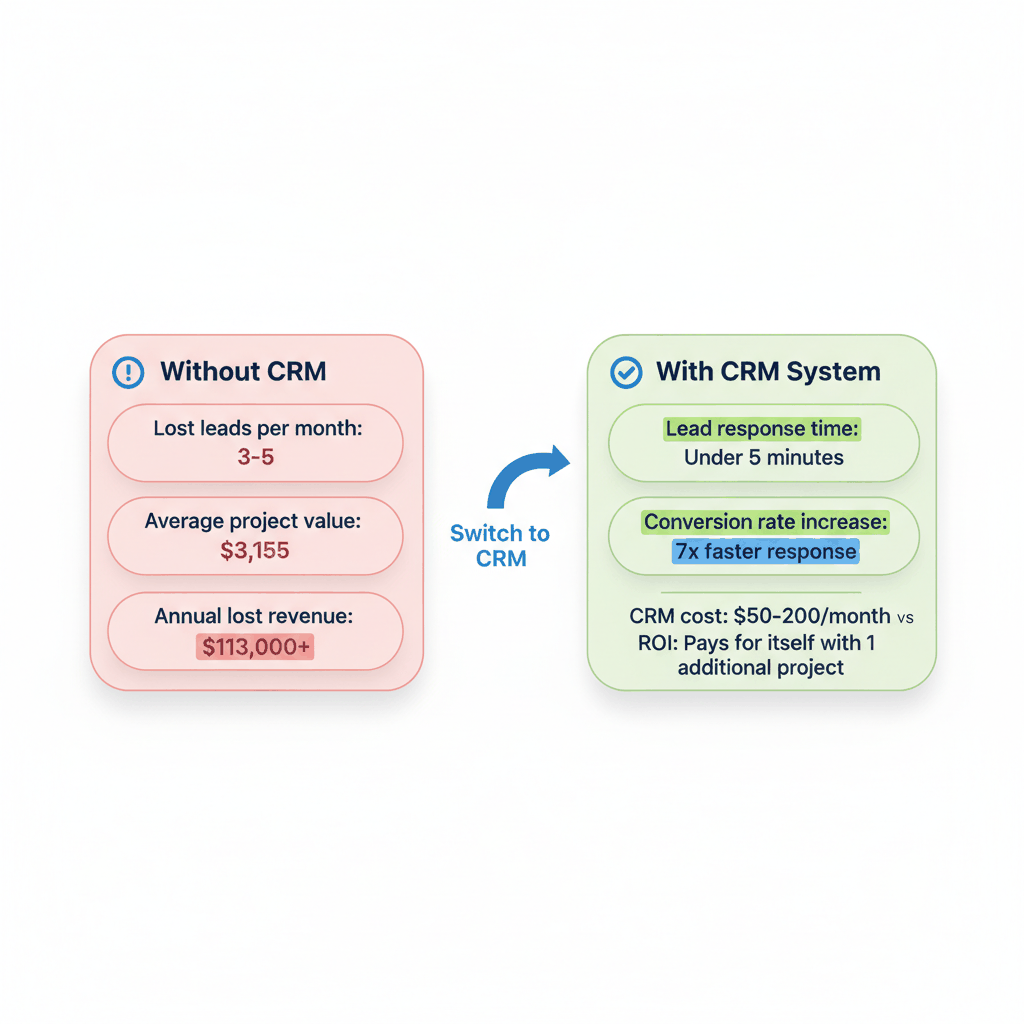
Losing just three leads per month costs you $9,465 in potential revenue. That's over $113,000 per year. A flooring CRM system pays for itself quickly.
Most flooring contractors face these issues:
A CRM solves all these problems. It creates a central hub for all customer information. Everyone on your team can access what they need.
Not all CRMs work well for flooring contractors. You need features specific to your business. Here are the best options:
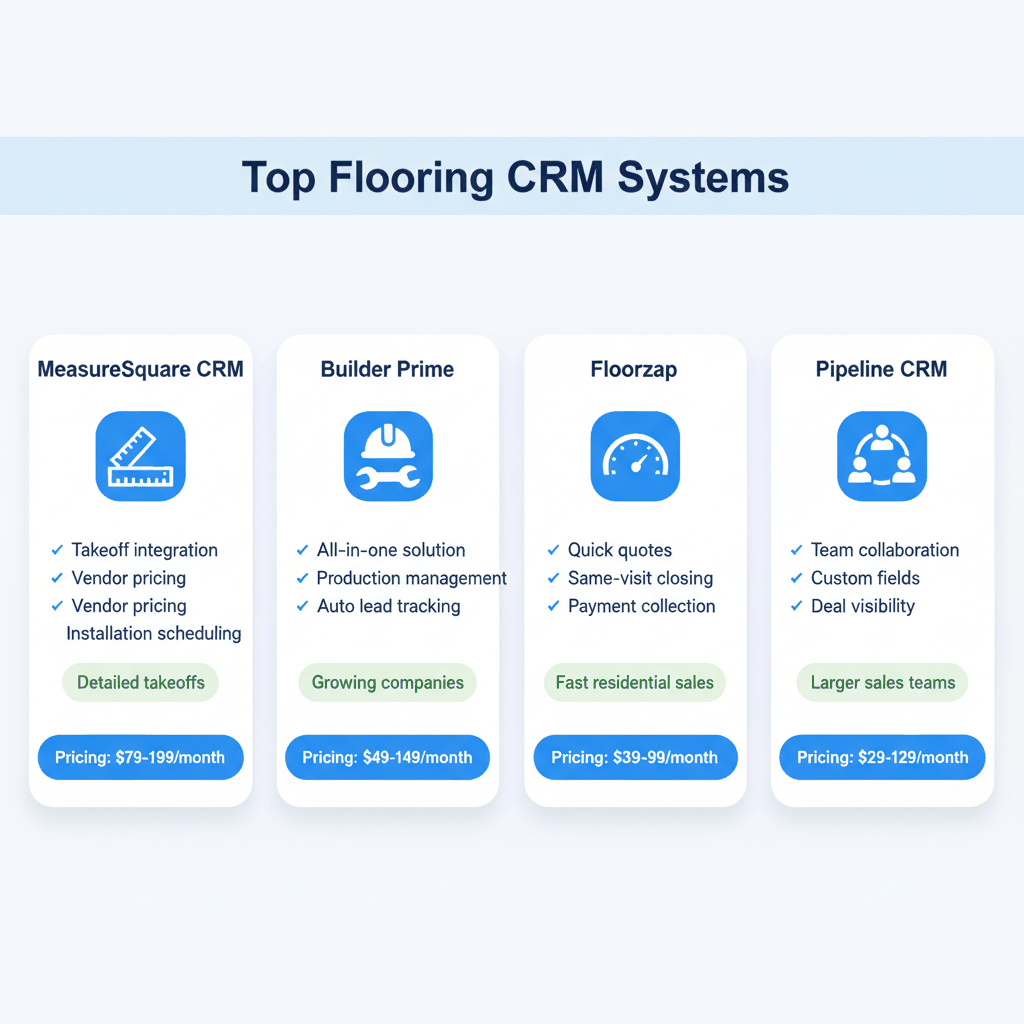
MeasureSquare CRM is built specifically for flooring contractors. It connects takeoff diagrams directly to your estimates. This eliminates double entry work.
Key features include:
Best for: Contractors who do detailed takeoffs and need precise measurements.
Builder Prime offers more than basic CRM. It includes estimating and production management. The system tracks leads automatically as they move through your sales process.
The platform ensures no leads fall through cracks. It prompts you to follow up at the right times. You get exact reporting on all key performance indicators.
Best for: Growing flooring companies that want all-in-one solutions.
Floorzap focuses on speed and simplicity. You can create quotes, get approvals, collect payments, and schedule installations all in one visit.
Customer feedback shows this approach works. Contractors report closing more sales on the first appointment. This reduces follow-up time significantly.
Best for: Residential contractors who want to close deals quickly.
Pipeline CRM gives you complete visibility into every deal. Custom fields let you track project-specific information. Sales reps get access to customer demographics and job sources.
The system works well for teams. Multiple people can collaborate on large projects. Everyone sees the same information in real-time.
Best for: Larger flooring companies with sales teams.
Your sales pipeline is the backbone of your flooring business. It shows every lead from first contact to final payment. Here's how to set it up:
Most flooring contractors use these stages:
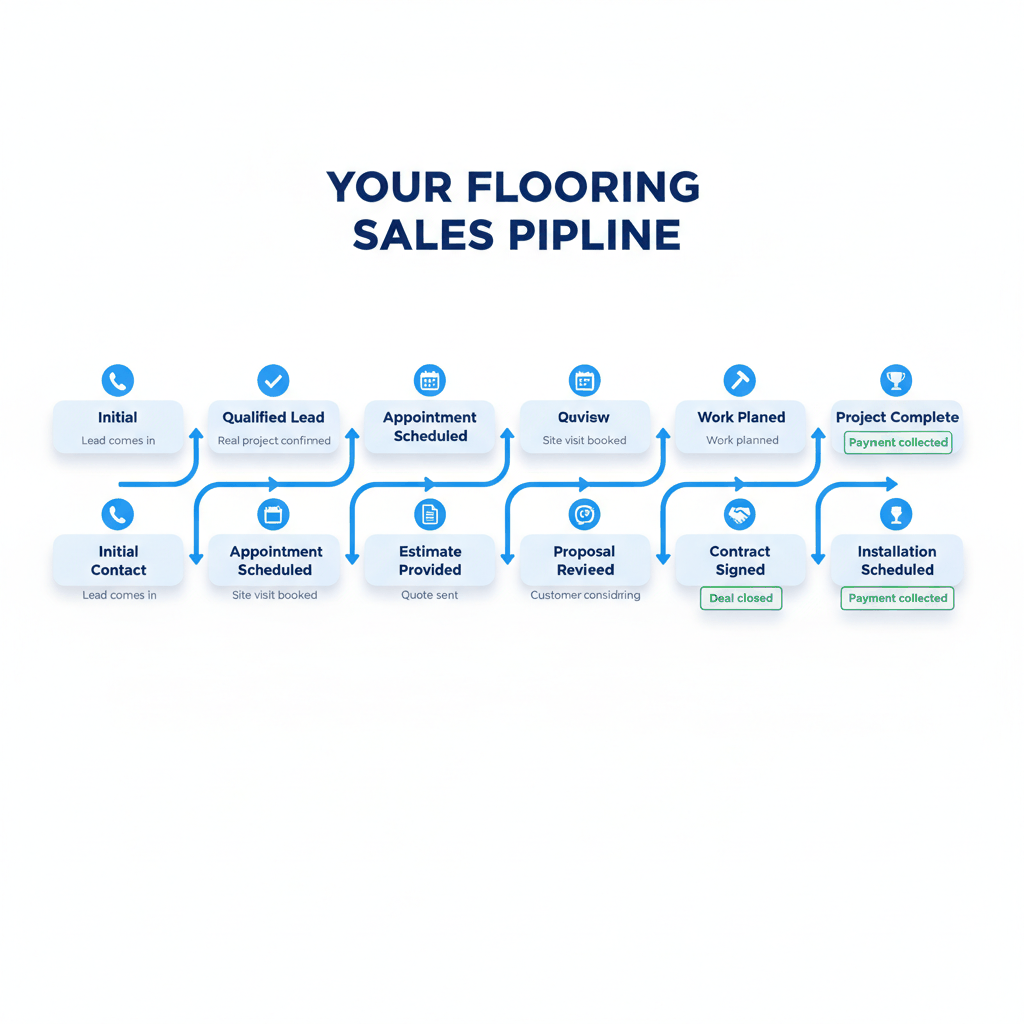
Each stage needs clear criteria. A lead can't move forward without meeting specific requirements.
For example, to move from "Initial Contact" to "Qualified Lead," you need:
This prevents unqualified leads from clogging your pipeline. You focus time on real opportunities.
Track where leads come from. Common sources include:
This data shows which marketing efforts work best. You can invest more in successful channels.
Manual lead tracking doesn't work. You'll forget to follow up. Leads will slip through the cracks. Automation solves this problem.
Your CRM should capture leads automatically from:
When a lead comes in, the system creates a new record. It assigns the lead to the right salesperson. No manual work required.
Speed matters in flooring sales. Set up these automatic responses:
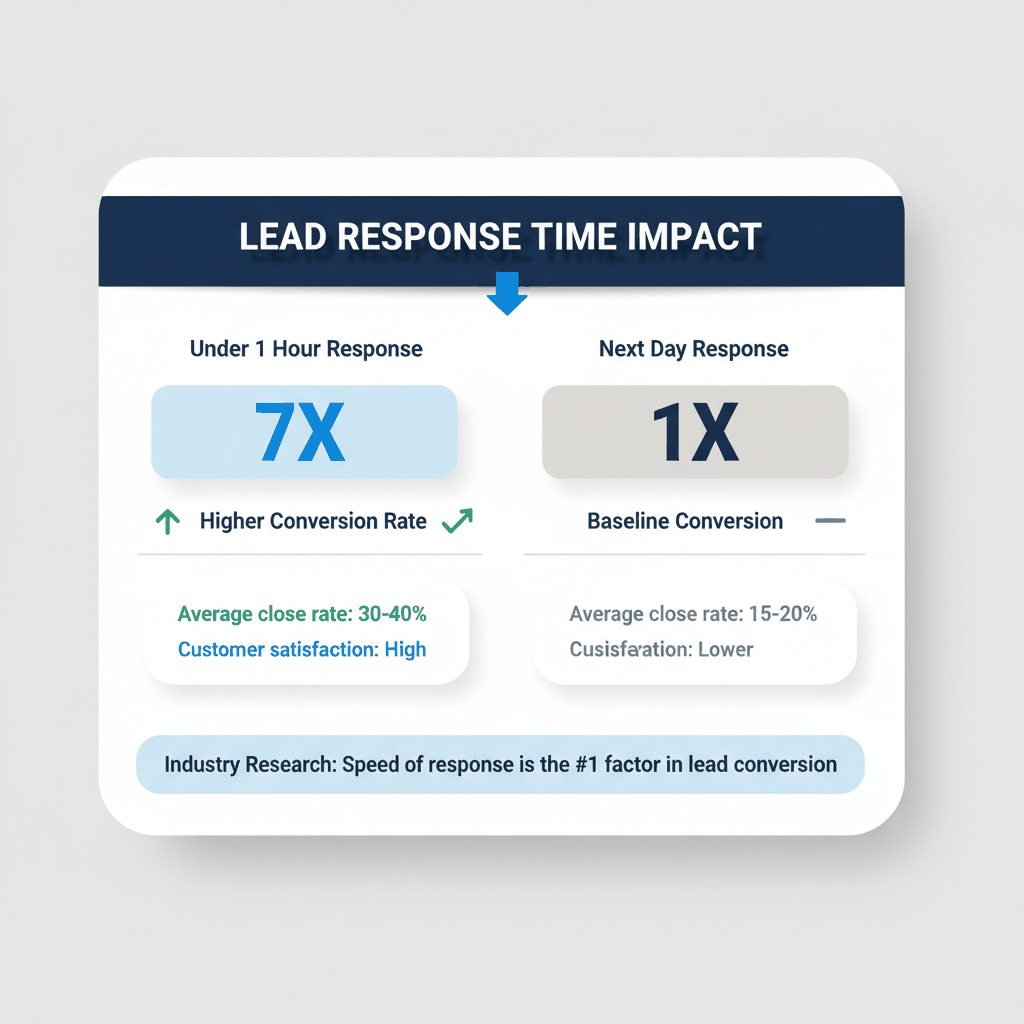
Research shows conversion rates drop dramatically after the first hour. Fast response gives you a huge advantage.
Not every lead closes immediately. Set automatic reminders for:
The system tells you when to follow up. You never forget about a potential customer.
Monitor how quickly you respond to leads. Aim for under 5 minutes for the first contact. Most consumers buy from the first company that responds.
Your CRM should track these metrics:
Your flooring CRM system should handle more than just sales. It needs to track projects through completion. This ensures customer satisfaction and repeat business.
Track all project components:
This data helps you bid more accurately. You'll know your true costs for similar projects.
Coordinate your installation team efficiently:
Good scheduling reduces delays. Customers appreciate reliable timelines.
Keep customers informed throughout the installation:
Regular communication prevents complaints. It also creates opportunities for additional work.
Don't forget the final steps:
Satisfied customers become repeat clients. Referral leads convert 30% higher than other marketing channels.
Your flooring CRM system generates valuable data. Use it to improve your business performance. Track these key metrics:
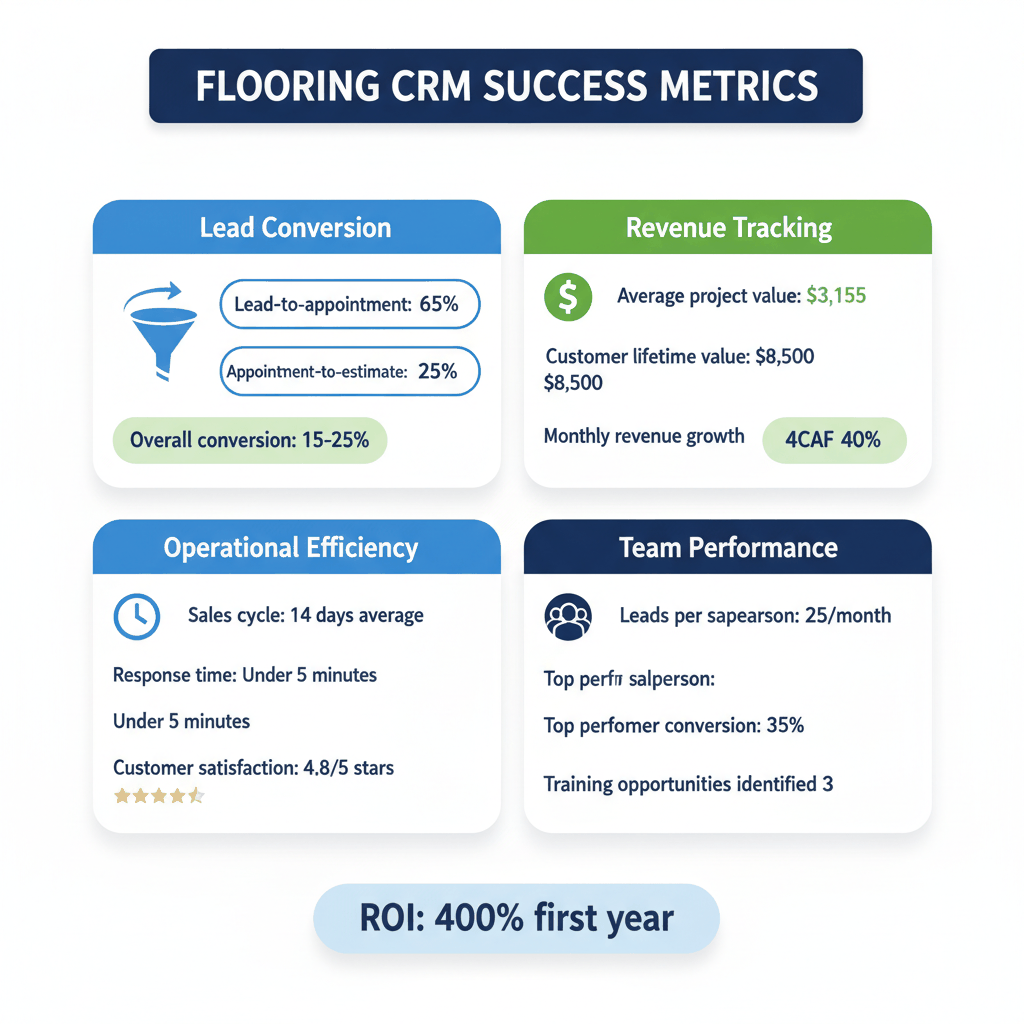
Monitor how well you convert leads to customers:
Industry averages show good contractors convert 15-25% of qualified leads. Track your performance against these benchmarks.
Measure the financial impact:
This data shows which types of work are most profitable. Focus your marketing on high-value opportunities.
Track how well your processes work:
Faster sales cycles mean more revenue. Shorter project times reduce costs.
If you have multiple salespeople or installers, track individual performance:
This identifies training opportunities. It also helps you reward top performers.
Floorzap works well for small flooring contractors. It's simple to use and lets you close deals on the first visit. The pricing is reasonable for smaller businesses just starting with CRM systems.
Flooring CRM systems typically cost $50-200 per user per month. The investment pays for itself quickly when you stop losing leads. Even one additional project per month usually covers the entire cost.
Most modern flooring CRM systems integrate with QuickBooks and other accounting software. This eliminates double data entry and keeps your books accurate. Check integration options before choosing a system.
Basic lead tracking setup takes 1-2 weeks with most flooring CRM systems. Advanced features like automation and project management may take 30-60 days to fully implement. Start with basic tracking first.
Modern flooring CRM systems are designed for contractors, not tech experts. Most offer training and support during setup. Choose a system with good customer service if you're not comfortable with technology.
Ready to get marketing flooring leads? Sign up for free with ResultCalls today!

Hello everyone! My name is Alex and I write these blogs to help educate small business owners on different ways to grow their business. My goal is to make lead generation as easy as possible for you. After reading these blogs, I hope you leave with some actionable steps that will get you closer to growing your business :)