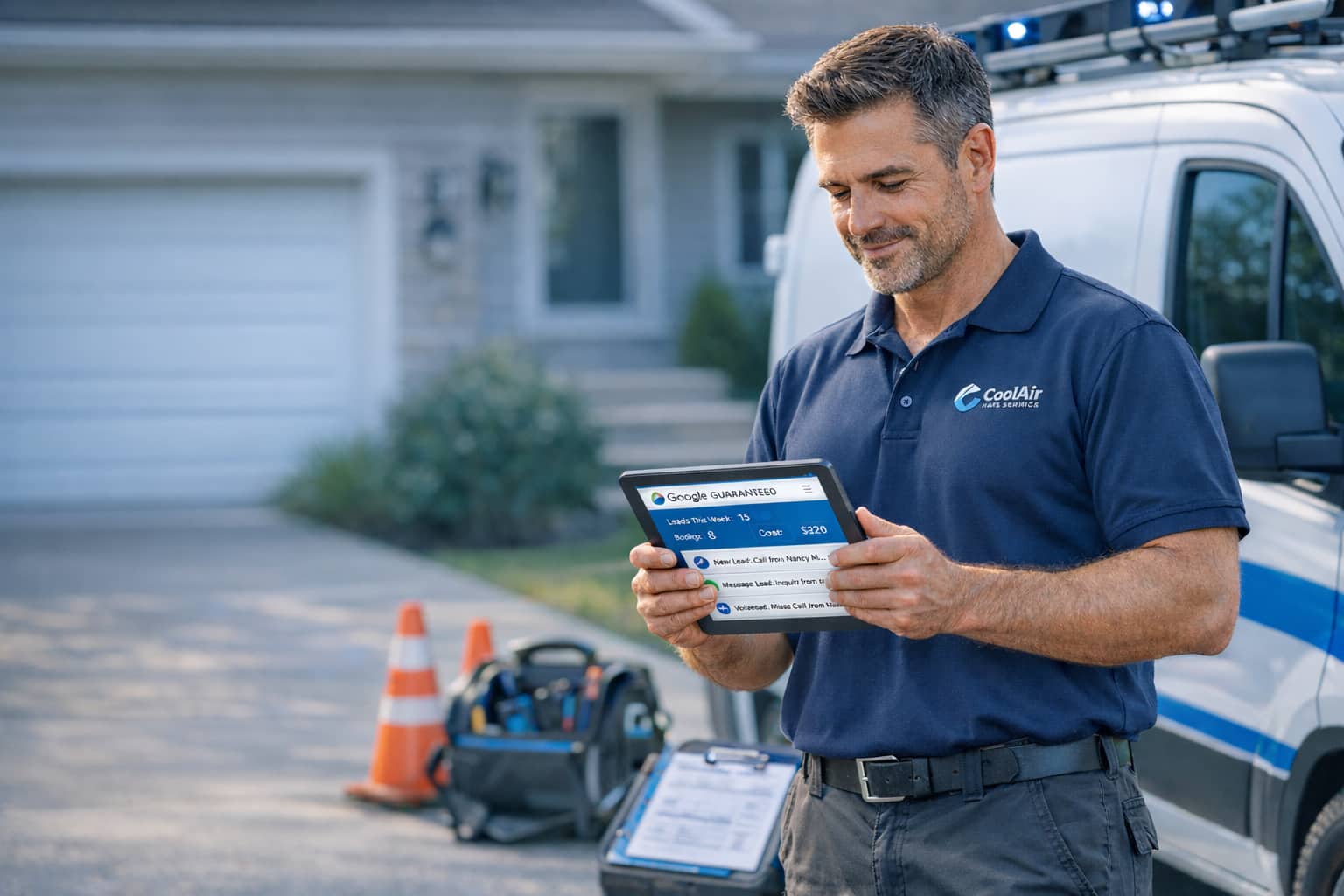
Are you losing customers before they even book an appointment? Every missed call to your HVAC business costs you money. The average HVAC contractor loses $45,000-$120,000 per year just from unanswered phone calls.
Your competitors answer their phones. Your customers expect immediate responses. Every ring that goes unanswered sends potential revenue straight to someone else's bank account.
HVAC call handling is your first line of defense against revenue loss. When done right, every phone interaction becomes a chance to book appointments, build trust, and grow your business. This guide shows you exactly how to transform your phone system from a weak point into your strongest sales tool.
You'll discover proven scripts, booking strategies, and 24/7 solutions that convert more calls into paying customers. Plus, learn how top HVAC companies handle peak season surges without missing a single emergency call.
Table of Contents
Each missed HVAC call costs contractors an average of $180 in lost revenue. That might not sound like much until you realize most HVAC businesses miss around 27% of their calls.
Here's what happens when your phone goes unanswered. About 85% of people who don't get their calls answered won't call back. They'll call your competitor instead. Research shows that 80% of calls going to voicemail don't even result in a message.
You probably get 50 calls a week during busy season. Peak times mean higher call volumes when you're already stretched thin. Emergency calls pile up. Your technicians are swamped. Your office staff can't keep up.
That's exactly when you lose the most valuable calls. If you answer 80% of emergency calls instead of 60%, you just bumped your revenue up by 33%. Average emergency call value hits $500-800. Calls you miss because of bad phone coverage? That's 20-30% right there.
Your customers want immediate responses. They're comparing you to companies that answer within three rings. When they call for emergency heating repair at 9 PM on a Sunday, they're not waiting until Monday morning for a callback.
Agencies that deliver HVAC marketing leads understand this urgency. They capture leads when customers are ready to buy.
Great HVAC phone scripts turn nervous callers into booked appointments. Your staff needs clear guidelines for every type of call they'll receive. No improvising. No awkward pauses. Just smooth conversations that build confidence and close deals.
Answer every call within three rings. Use this proven greeting formula: "Good morning, thank you for calling [Your Company Name], my name is [Name], how may I help you today?"
This simple structure accomplishes three things. It confirms your company name. It introduces your representative. It opens the conversation for the customer to explain their needs.
Every HVAC call needs specific information. Gather customer name, phone number, and service address first. Then get problem description, equipment type and age, and urgency level. Ask about preferred appointment times and how they found your business.
For emergency calls, prioritize safety first. Ask if anyone is in immediate danger. Determine if the problem requires immediate dispatch or can wait for regular business hours. Emergency calls often convert at higher rates because customers need solutions fast.
Upset customers need special handling. Use the HEARD technique when dealing with frustrated callers. Halt what you're doing and listen. Empathize with their situation. Apologize for the inconvenience. Respond with solutions. Diagnose the next steps clearly.
For example: "I understand how frustrating it must be to have your heat go out in December. I apologize that you're dealing with this. Let me get one of our emergency technicians scheduled to come out today. Can you tell me more about what's happening with your system?"
Your booking system makes or breaks your HVAC call conversion rates. Manual scheduling leads to double bookings, missed appointments, and frustrated customers. Smart scheduling systems prevent these problems while maximizing your technicians' time.
Real-time scheduling shows exactly when your technicians are available. No more calling customers back to reschedule. No more promising appointments you can't keep. Effective scheduling can improve job completion rates by up to 30%.
Integration with your existing software eliminates double data entry. When a customer service representative books an appointment, it automatically appears on your technician's schedule. Your dispatcher sees real-time updates. Your customer gets immediate confirmation.
Call ahead before every service visit. This simple 3-minute phone call sets expectations and reduces no-shows. Use this script: "Hi, Mr. Smith. This is [Name] from [Company]. I wanted to let you know our technician [Tech Name] is about 15 minutes away from your home. He'll be arriving in our marked company vehicle. Do you have any questions before he arrives?"
This call accomplishes several goals. It confirms the customer is home and ready. It introduces your technician by name. It demonstrates professionalism and attention to detail.
Don't let weekend calls go to competitors. Many HVAC emergencies happen outside business hours. Set up systems to capture these high-value opportunities.
One Phoenix HVAC company struggled with after-hours emergencies. After implementing 24/7 answering services with proper triage, their weekend bookings jumped 40%. The service separated genuine emergencies from routine requests. Customer complaints about unresponsiveness dropped to zero within three months.
Your team's phone skills directly impact your revenue. Professional HVAC training transforms average employees into revenue-generating phone experts.
Record real customer calls for training purposes with proper permission. Your team can hear exactly what happened and how they responded. Weekly team meetings should include reviewing two recorded calls to identify improvement opportunities.
The Happy Outlet in Nevada uses this approach. Their CSRs meet weekly to review booking rates and listen to recorded calls. This process helps them identify what worked well and discover alternative solutions for challenging situations.
Track your team's call handling performance with specific metrics. Aim for an acceptable callback rate of 2% to 2.5%. Monitor call-to-booking conversion rates. Measure average call handling time without rushing customers.
Companies that track these metrics see immediate improvements. When your team knows their performance is measured, they focus on the behaviors that drive results.
Your customer service team doesn't need to be HVAC experts. They need to know when to involve technicians. Train them to gather basic information and schedule appropriate service calls rather than attempting complex technical diagnosis over the phone.
Create a simple reference guide for common problems. Include basic troubleshooting steps that customers can safely perform. Know when to recommend emergency service versus next-day appointments.
The right tools make HVAC call handling effortless and profitable. Modern software solutions integrate calling, scheduling, customer management, and follow-up into seamless systems that boost conversion rates.
ServiceTitan leads the enterprise market with comprehensive call booking software that automatically records every call. This provides complete records of how your customer service representatives handle each interaction. Pricing ranges from $250 to $400 per managed technician monthly.
Housecall Pro offers a more affordable alternative for mid-market companies. Pricing starts at $59 monthly for single users or $149 monthly for up to five users. This solution works well for smaller teams that need professional features without enterprise complexity.
Jobber serves small HVAC shops with tight budgets. Basic systems start around $39-50 monthly. Perfect for businesses just starting to systematize their call handling processes.
AI technology now handles basic HVAC calls professionally and intelligently. These systems answer instantly, gather customer information, and book appointments without human intervention. Research shows that each missed HVAC call costs contractors an average of $180 in lost revenue.
AI assistants never miss calls, never take breaks, and never have bad days. They follow your scripts perfectly every time. For routine appointment booking and basic information gathering, AI solutions provide consistent results.
78% of people would rather text with a business. Allowing callers to text you saves staff time and avoids spending on live agents for simple questions.
Set up automated text responses for common inquiries. Send appointment confirmations and reminders via text. Allow customers to reschedule appointments through text messaging. This reduces phone call volume while improving customer satisfaction.
HVAC emergencies don't wait for business hours. Your emergency call handling system needs to work perfectly at 2 AM on Christmas morning. Miss these calls and customers will never call you again.
Professional answering services understand HVAC terminology and customer expectations. They know the difference between a genuine emergency and a routine service call. Specialized HVAC services provide trained operators who understand your equipment and can properly triage calls.
These services scale to handle call surges during extreme weather events. When a heat wave hits and your phone rings non-stop, professional operators ensure every caller gets proper attention without overwhelming your internal staff.
Not every after-hours call is a true emergency. Train your answering service to identify situations requiring immediate dispatch versus problems that can wait until morning.
True emergencies include no heat in winter, no cooling with vulnerable residents, gas leaks, and electrical issues with HVAC systems. These calls need immediate technician dispatch. Routine maintenance requests, minor comfort issues, and general questions can wait for regular business hours.
Clear communication prevents emergency call frustration. Explain your emergency service hours, additional fees, and typical response times upfront. Customers appreciate honesty about costs and timing.
Agencies that deliver HVAC marketing leads help establish these systems and train your team to handle emergency situations consistently.
What makes good HVAC call handling different from regular customer service?
HVAC call handling requires technical knowledge, emergency prioritization skills, and the ability to book appointments efficiently. Your team needs to understand equipment terminology, identify safety issues, and convert urgent callers into booked jobs quickly.
How much revenue do HVAC companies lose from poor phone scripts?
Companies with poor HVAC phone scripts lose $45,000-$120,000 annually from missed calls and poor conversion rates. Professional scripts can improve booking rates by 30% or more when properly implemented and trained.
Should HVAC companies use answering services for appointment booking?
Yes, professional answering services specialized in HVAC can handle basic appointment booking, emergency triage, and customer information gathering. This ensures 24/7 availability without overloading your internal staff during peak seasons.
What information should HVAC customer service representatives collect on every call?
Essential information includes customer name, phone number, service address, problem description, equipment type and age, urgency level, and preferred appointment times. Additional details like how they found your business help track marketing effectiveness.
How can HVAC companies reduce callback rates through better call handling?
Reduce callbacks by collecting complete information upfront, setting proper expectations about service timing and costs, and following up with confirmation calls. Aim for callback rates of 2% to 2.5% through improved initial service quality.
Ready to start getting exclusive HVAC leads? Sign up for free with ResultCalls today!

Hello everyone! My name is Alex and I write these blogs to help educate small business owners on different ways to grow their business. My goal is to make lead generation as easy as possible for you. After reading these blogs, I hope you leave with some actionable steps that will get you closer to growing your business :)