
Are you watching the solar industry transform before your eyes? Business owners across every sector are asking the same question. How can they position their companies to benefit from the fastest-growing energy market in history?
The solar industry reached a historic milestone in 2026. Solar accounted for 66% of all new electricity capacity added to the US grid. This represents the second consecutive year of record-breaking growth, with nearly 50 gigawatts of new solar capacity installed.
For the first time ever, solar and wind combined generated more electricity than coal. This shift creates massive opportunities for business owners who understand where the market is heading. You need to know these solar industry trends to stay competitive and identify new revenue streams.
This guide reveals the key trends shaping solar in 2026. You'll discover market opportunities, technology advances, and strategies successful companies are using right now.
Table of Contents
The solar market outlook for 2026 shows unprecedented expansion. The US solar industry installed nearly 50 gigawatts of capacity, marking a 21% increase from 2023. This growth isn't slowing down anytime soon.
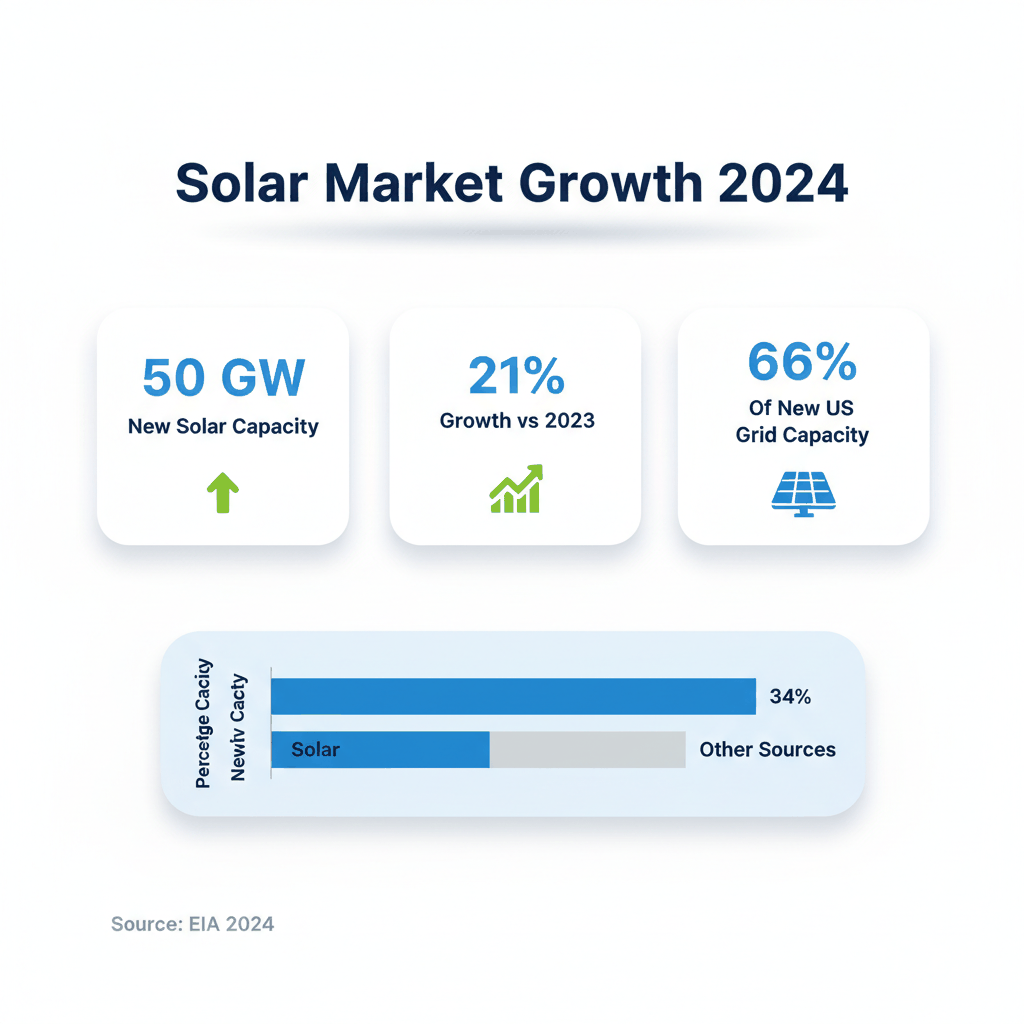
Here's what makes this trend significant for business owners. Solar installations are moving beyond residential rooftops into commercial and industrial applications. Companies are realizing solar offers predictable energy costs and demonstrates environmental leadership to customers.
Solar growth isn't happening everywhere equally. Texas leads with 8.6 GW of manufacturing capacity, followed by Georgia with 8.4 GW. These regions offer the best opportunities for businesses looking to enter the solar market.
The manufacturing boom is particularly impressive. Domestic module manufacturing capacity grew 190% year-over-year, jumping from 14.5 GW to 42.1 GW. This domestic production reduces supply chain risks and creates local business opportunities.
The Inflation Reduction Act continues to fuel solar adoption. These incentives provide up to 40% tax credits for commercial solar projects. Smart business owners are using these policies to reduce their energy costs while building competitive advantages.
Community solar programs also expanded rapidly. The segment completed its largest-ever quarter in Q4 2024, achieving 1,745 MWdc in annual installations. New York, Maine, and Illinois led this growth with innovative program designs.
Solar technology advances are making systems more efficient and cost-effective. These improvements create better value propositions for your customers and higher profit margins for your business.
Bifacial solar panels represent one of the biggest breakthroughs. These panels capture sunlight from both sides, generating up to 30% more energy than traditional panels. In the United States, bifacial panels accounted for nearly 40% of utility-scale solar installations in 2024.
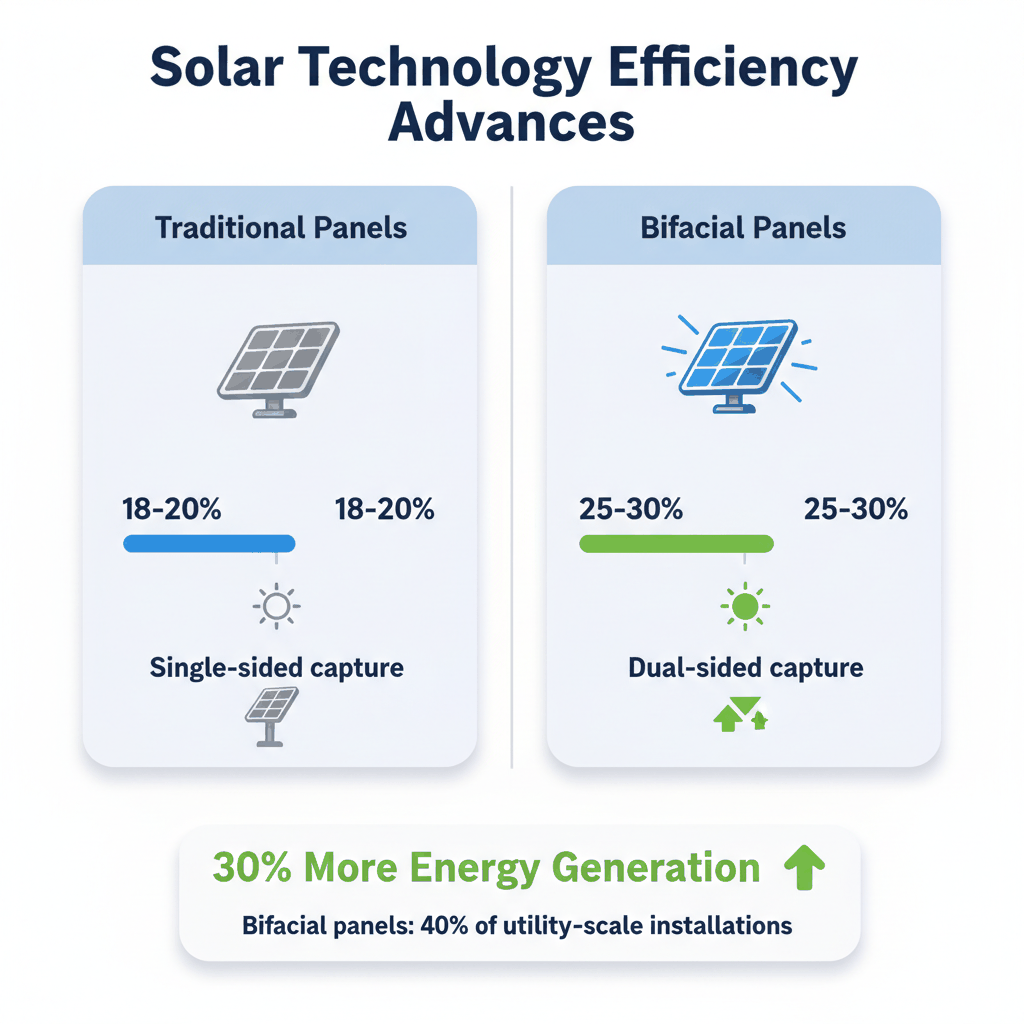
Perovskite solar cells are approaching 30% efficiency rates. This technology promises to make solar more affordable while delivering better performance. Early adopters who understand these advances can position themselves as technology leaders.
Quantum dot solar cells represent another breakthrough. These cells are expected to achieve efficiencies upwards of 20% while reducing manufacturing costs. Business owners should monitor these technologies for future opportunities.
String inverters with UL3740 standards are reducing installation costs. These systems offer improved reliability while simplifying system design. The result is lower costs for customers and faster installations for contractors.
Microinverter technology also continues advancing. Companies like Enphase are developing systems that optimize each panel's performance individually. This maximizes energy production and provides better system monitoring capabilities.
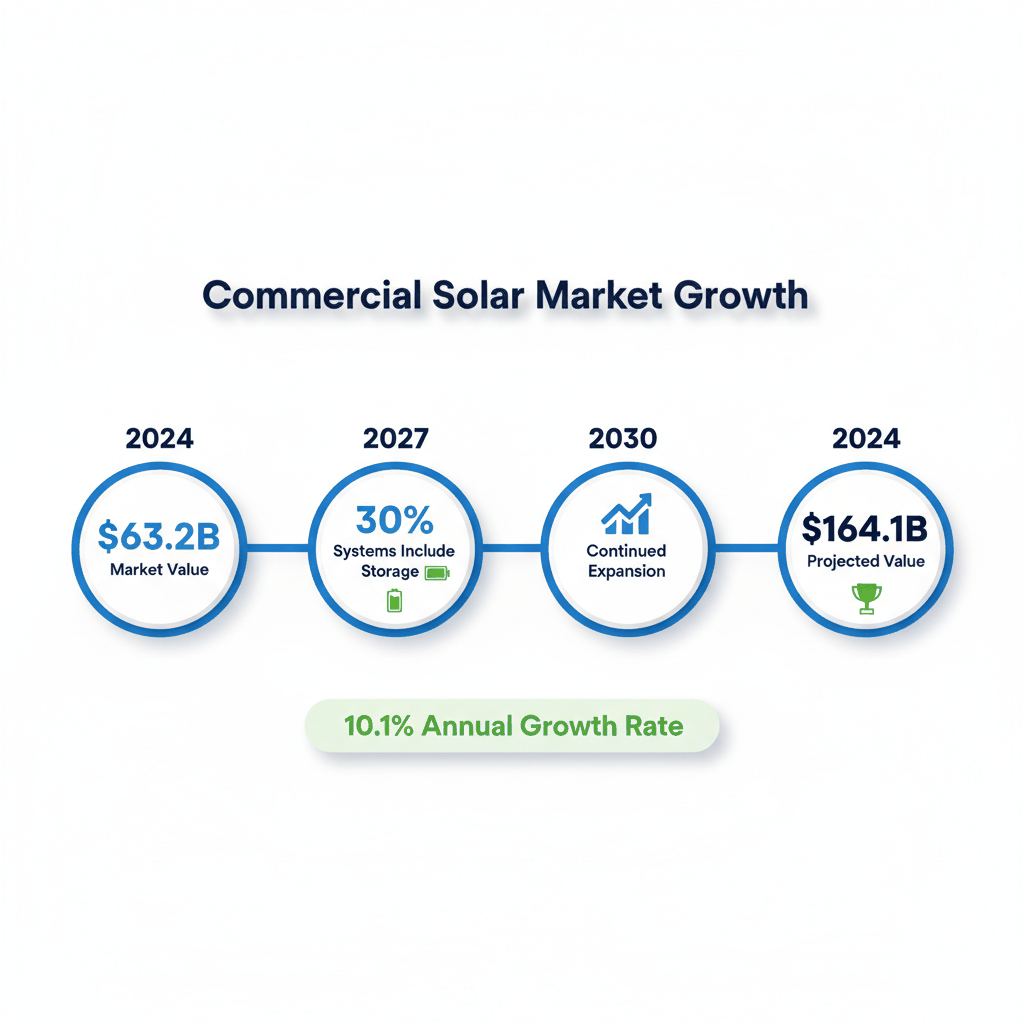
Commercial solar trends show this segment is driving industry growth. Commercial solar installed 2,118 MWdc in 2024, setting an annual record with 8% year-over-year growth. The commercial and industrial solar market was valued at USD 63.2 billion in 2024.
This market is expected to reach USD 164.1 billion by 2034. That represents a compound annual growth rate of 10.1%. Business owners in related industries should pay attention to these numbers.
Several industries are leading commercial solar adoption. Data centers need massive amounts of reliable power, making solar an obvious choice. Warehouses and distribution centers offer large roof spaces perfect for solar installations.
Educational institutions are also major adopters. Schools and universities use solar to reduce operating costs while teaching environmental responsibility. These projects often receive community support and positive media coverage.
Multi-tenant commercial properties present unique opportunities. Property owners can install solar and rent roof space to energy companies. This creates new revenue streams without requiring property owners to manage the solar systems themselves.
Ground-mounted systems captured 53.6% market share in 2024. These systems offer several advantages over rooftop installations. They're easier to maintain, can be optimized for sun tracking, and don't require roof structural analysis.
For business owners with available land, ground-mounted systems offer excellent investment opportunities. They can generate revenue from unused property while providing long-term energy cost stability.
Battery storage is setting records alongside solar growth. U.S. battery storage capacity doubled in 2024, with developers planning to add 14.3 GW of battery storage capacity.
By 2027, the Solar Energy Industries Association estimates nearly 30% of all new behind-the-meter solar systems will include energy storage. This trend creates opportunities for businesses that can integrate both technologies effectively.
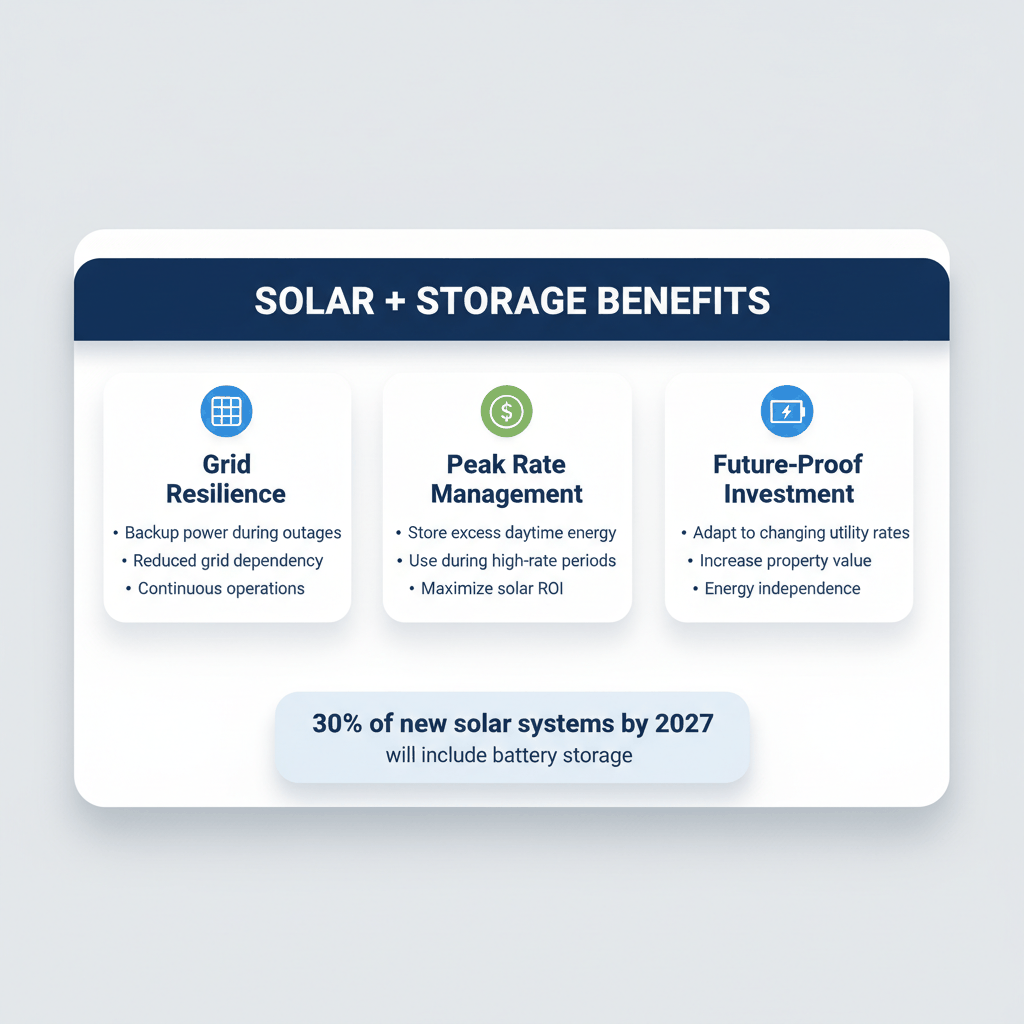
Energy storage transforms solar from variable power source to reliable energy solution. Businesses can store excess solar energy during the day and use it during peak rate periods. This maximizes the financial benefits of solar installations.
Grid resilience is another major benefit. Companies with solar and storage can continue operating during power outages. This capability is becoming increasingly valuable as extreme weather events stress the electrical grid.
Utility rate instability makes storage even more attractive. Some utilities are changing net metering rules or implementing time-of-use rates. Storage helps businesses adapt to these changing rate structures while maintaining energy cost control.
Major corporations are leading energy storage adoption. Google has emerged as the leader with 312 MWac of storage capacity. The company has 25% more battery storage than the rest of the top ten companies combined.
This corporate leadership demonstrates the business value of storage integration. Companies that combine solar with storage can achieve energy independence while demonstrating environmental leadership to customers and stakeholders.
Smart business owners are finding multiple ways to benefit from solar industry trends. The key is understanding where opportunities exist and how to position your company to capture them.
Solar lead generation services are particularly valuable in the solar industry because customers need education about technology options, financing alternatives, and long-term benefits.
Thought leadership helps companies differentiate themselves in competitive markets. Share valuable content about industry trends, technology advances, and successful projects. This positions your company as a knowledgeable authority customers can trust.
Focus on education rather than sales pitches. Customers want to understand how solar technology works, what financing options exist, and how installations affect property values. Companies that provide this education earn customer trust and referrals.
Use multiple content formats to reach different audiences. Blog posts work for detailed explanations. Videos demonstrate installation processes. Case studies show real results from actual customers.
The most successful solar companies offer comprehensive solutions. This includes system design, financing options, installation services, and ongoing maintenance. Customers prefer working with single companies that handle entire projects.
Energy audits represent an excellent entry point. Many customers don't understand their current energy usage patterns. Audits identify opportunities for efficiency improvements and right-size solar installations for maximum savings.
Financing partnerships are also crucial. Most customers can't afford to purchase solar systems with cash. Companies that offer multiple financing options close more sales and serve broader customer bases.
Not all solar customers are equal. Commercial and industrial customers typically install larger systems with higher profit margins. They also make decisions faster than residential customers because they focus on financial returns.
Walmart demonstrates the potential of commercial solar. The company has installed solar panels on over 600 of its stores, generating enough energy to power 20,000 homes annually. This shows the scale opportunities available in commercial markets.
Focus on businesses with high energy costs and suitable roof or ground space. Manufacturing facilities, cold storage warehouses, and retail chains are all excellent prospects for commercial solar installations.
Understanding challenges helps business owners prepare better strategies. The solar industry faces several obstacles, but companies with proper preparation can turn these challenges into competitive advantages.
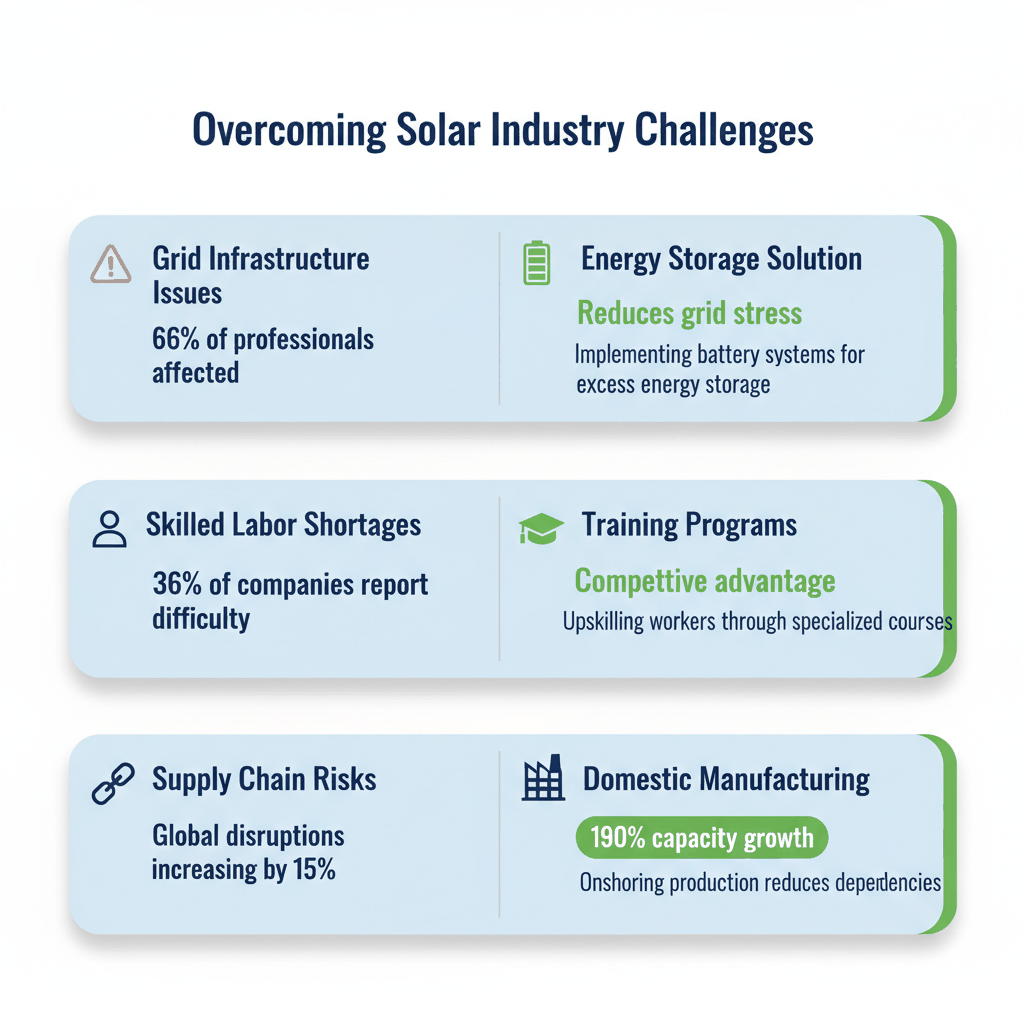
Grid saturation and instability affect 66% of professionals surveyed in recent research. Areas with high solar generation can experience power outages or equipment failure if grid infrastructure doesn't keep pace with solar growth.
Smart companies are addressing this challenge by focusing on energy storage integration. Storage reduces grid stress by keeping excess solar energy local instead of pushing it back to the grid during peak production periods.
Microgrid solutions represent another opportunity. Businesses can create local energy networks that operate independently from the main grid. This provides energy security while reducing infrastructure stress.
Nearly 36% of solar professionals worry about skilled worker shortages. Growing demand for renewable energy installations is creating more job opportunities than available qualified workers.
Companies that invest in training programs gain competitive advantages. Develop relationships with trade schools and community colleges. Create apprenticeship programs that combine classroom learning with hands-on experience.
Focus on employee retention through competitive compensation and career development opportunities. Skilled solar installers and designers are valuable assets worth investing in long-term.
The past year showed how dependence on single financing sources can destabilize solar businesses. Companies need diverse financing options including loans, power purchase agreements, and lease programs.
Supply chain diversification is equally important. The 190% growth in domestic manufacturing capacity reduces dependency on imports. Partner with multiple suppliers to ensure consistent equipment availability.
Build relationships with financial institutions that understand solar projects. Banks and credit unions with renewable energy expertise can provide better terms and faster approval processes.
What are the biggest solar industry trends affecting business owners in 2026?
The biggest solar industry trends include commercial solar growth (8% year-over-year), energy storage integration (nearly doubling capacity), and domestic manufacturing expansion (190% growth). These trends create opportunities for businesses to reduce energy costs while demonstrating environmental leadership.
How is the solar market outlook changing for commercial businesses?
The commercial solar market is expanding rapidly, with installations reaching 2,118 MWdc in 2024. The market value grew from $63.2 billion to an expected $164.1 billion by 2034. This growth is driven by corporate sustainability goals and energy cost control needs.
What solar technology advances should business owners know about?
Key solar technology advances include bifacial panels (generating 30% more energy), perovskite cells (approaching 30% efficiency), and improved string inverters with UL3740 standards. These advances improve system performance while reducing installation costs.
Why is energy storage integration becoming standard with solar installations?
Energy storage integration provides grid resilience, maximizes financial benefits through peak rate management, and helps businesses adapt to changing utility rate structures. By 2027, nearly 30% of new solar systems will include battery storage.
What challenges face the solar industry and how can businesses prepare?
Main challenges include grid infrastructure limitations (affecting 66% of professionals), skilled labor shortages (concerning 36% of companies), and supply chain risks. Businesses can prepare through energy storage integration, training programs, and diversified supplier relationships.
The solar industry is transforming how businesses think about energy costs and environmental responsibility. Companies that understand these trends and act on the opportunities will build competitive advantages while contributing to a cleaner energy future.
The data shows clear growth trajectories across commercial solar, energy storage, and domestic manufacturing. Business owners who position themselves in these growth markets today will benefit from the continued expansion of renewable energy adoption.
Ready to get pay per call solar leads? Sign up for free with ResultCalls today!

Hello everyone! My name is Alex and I write these blogs to help educate small business owners on different ways to grow their business. My goal is to make lead generation as easy as possible for you. After reading these blogs, I hope you leave with some actionable steps that will get you closer to growing your business :)