When homeowners search for "emergency roof repair near me" or "storm damage roofer," they need help within hours. These aren't shoppers browsing for deals. They have water dripping into their living room or wind damage threatening their home.
Here's the problem most roofers face. You might be the best contractor in town. But if you're not showing up when customers search, you're invisible. Traditional marketing takes weeks to build trust. Emergency roof repairs can't wait that long.
Roofing Google Ads solve this timing problem. They put your phone number at the top of search results exactly when homeowners need you most. You skip the wait time and connect directly with ready-to-hire customers.
You'll learn how to build profitable ad campaigns, target the right emergency keywords, and turn urgent searches into booked jobs. Plus discover why storm season campaigns can generate months of revenue in just days.
Table of Contents
Roofing has one of the strongest intent-to-purchase ratios in home services. When someone searches "roof replacement near me" they're not browsing. They need a roofer, often within days.
The math works in your favor. Average costs run $8–$25 per click depending on your market. But the average ticket for full replacement is $8,000–$15,000. Even at a $150 cost per lead, the return on ad spend is significant.
Google Ads let you appear instantly when customers search. You don't wait weeks building brand awareness. Your phone number shows up exactly when homeowners need emergency help.
Emergency roofing searches have clear buying intent. Terms like "roof leak repair" or "storm damage contractor" signal immediate need. These customers contact multiple roofers and hire the first credible responder.
Planning searches like "roof replacement cost" have longer timelines. But they still indicate active project research. Both types convert well when you target them correctly.
Most roofing ad accounts fail because they ignore fundamental campaign structure. Emergency, planning, and commercial searches get lumped together. This makes ads vague and hurts your Quality Score.
Casting too wide a net wastes budgets without attracting qualified leads. Broad keywords like "roof" or "home improvement" drain spending. Zero in on specific, service-oriented keywords tied to your expertise and geography.
Professional optimization can recover 20-40% of wasted spend. The typical waste rate hits 32% in roofing campaigns.
You need to track what happens after someone clicks your ad. Without this data, you're optimizing for volume instead of value. You need to know which keywords drive actual appointments, not just clicks or form fills.
Set up call tracking and form tracking. This shows which campaigns generate real jobs instead of just website visits.
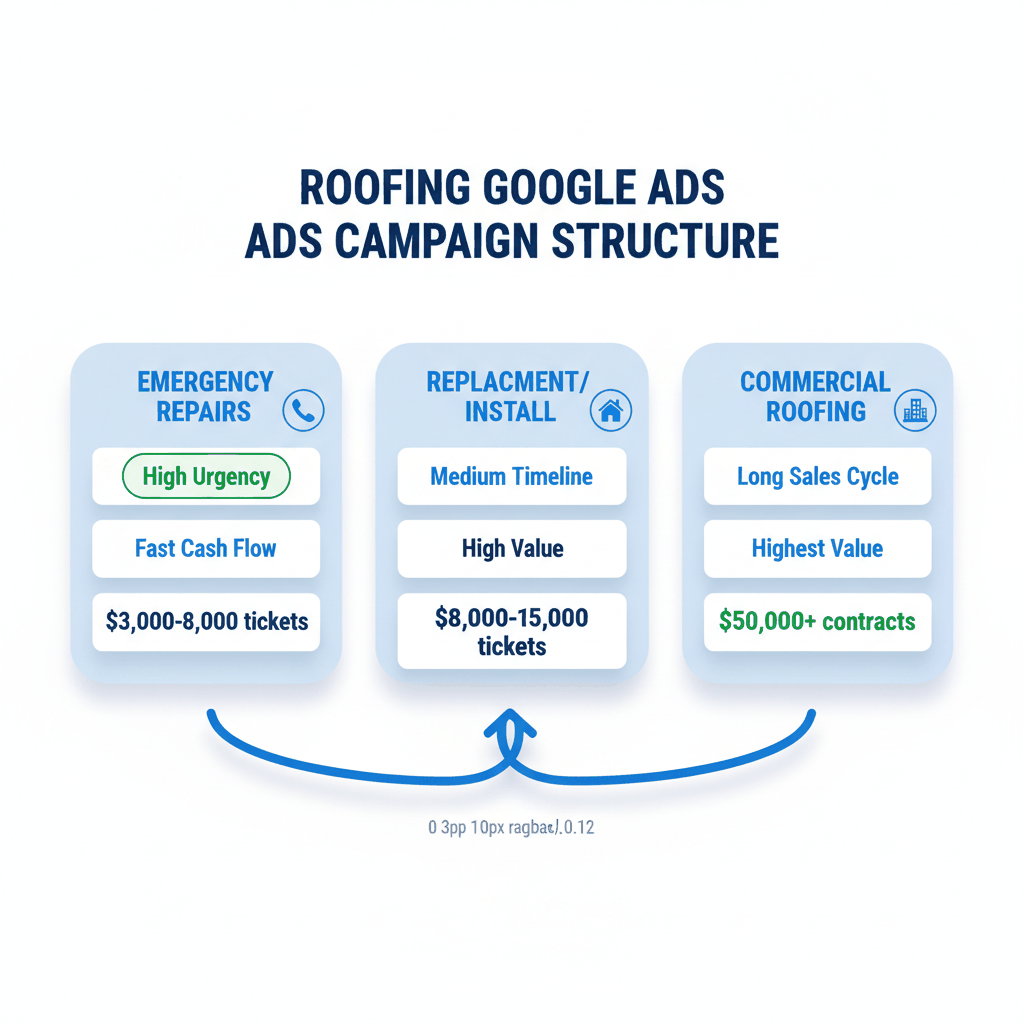
High-performing accounts separate buyer type, buyer situation, and buyer timeline. Group emergency repairs separately from planned replacements. Commercial roofing needs its own campaigns.
This structure lets you write specific ads for each situation. Emergency ads emphasize speed and availability. Replacement ads focus on quality and warranties.
Emergency roofing ads win or lose based on response speed, not ad copy. Homeowners contact multiple roofers and choose the first credible responder. If the click waits, the job is gone.
Target urgent search terms that signal immediate need:
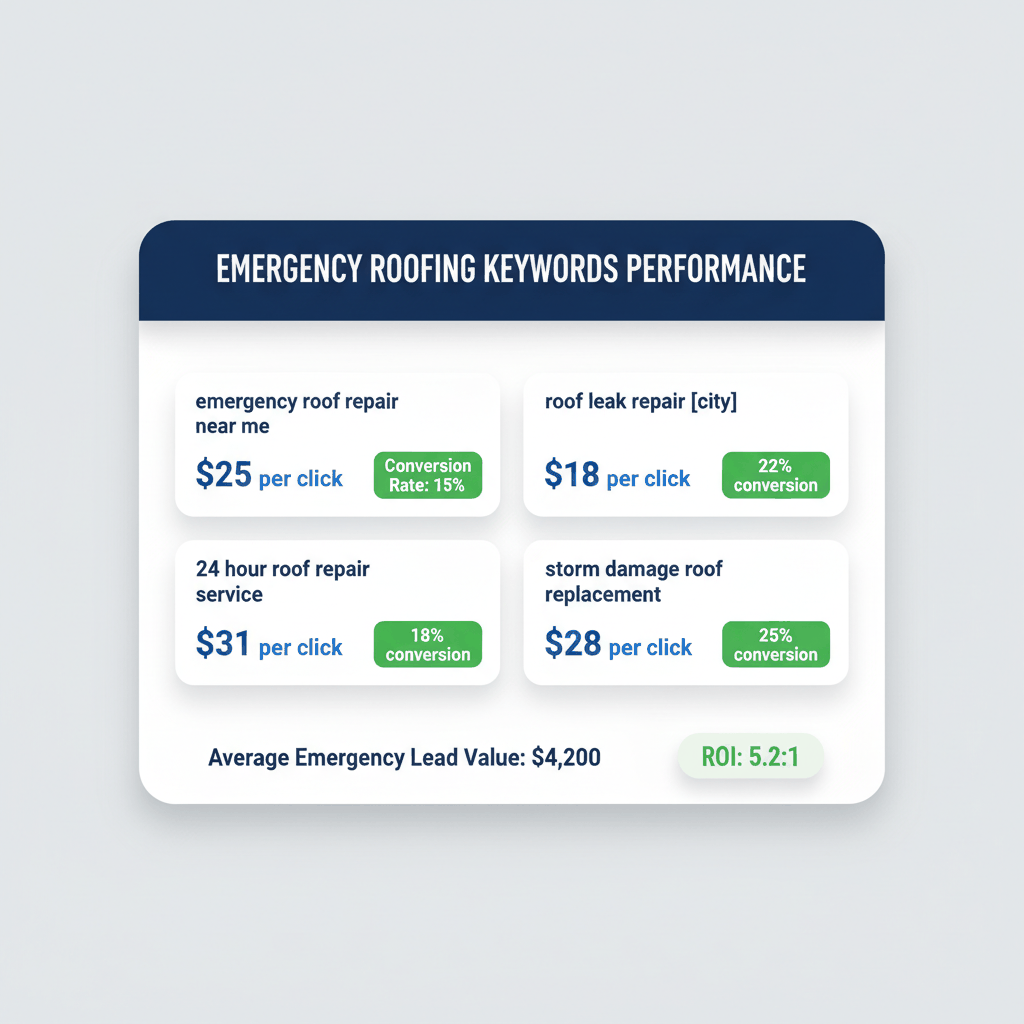
"emergency roof repair near me"
"storm damage roof replacement"
"roof leak repair [city name]"
"24 hour roof repair service"
"emergency roof tarping"
"hail damage inspection"
These keywords cost more per click. But they convert at higher rates because the need is immediate. Budget accordingly for these premium terms.
Peak business hours often have higher costs per click. Ad scheduling helps you bid more during high-converting times. Layer in scheduling so ads run when homeowners are most likely to call.
Evening and weekend hours work well for emergency services. After storms hit, search volume spikes within hours. Your ads need to be running when this happens.
Target specific zip codes instead of broad cities. Focus on neighborhoods where homeowners can afford your pricing. Use a 25-mile radius from your business address as a starting point.
For example, target affluent suburbs separately from lower-income areas. Adjust bids based on the average home values in each location.
Structure your campaigns by intent and value. This approach improves ad relevance and reduces wasted spending. Industry benchmarks show structured campaigns perform 40% better than generic setups.
Focus on terms like "emergency roof repair," "roof leak repair," and "storm damage roofer." These have high urgency and lower ticket values. But they provide fast cash flow and immediate revenue.
Set higher budgets during storm season. Pre-build these campaigns before storms hit your area, not after damage occurs.
Target terms like "roof replacement company," "new roof estimate," and "metal roof installation." These searches have lower urgency but higher ticket values. The sales cycle is longer but more profitable.
Include cost-related keywords like "roof replacement cost [city]" or "how much does a new roof cost." These indicate active project planning.
Commercial searches like "flat roof repair," "TPO roof repair," and "commercial roof replacement" have longer sales cycles. But they offer high value contracts worth $50,000 or more.
Target business districts and industrial areas. Schedule ads during business hours when facility managers are searching.
Local Service Ads put your business at the very top of search results with a "Google Guaranteed" badge. Case studies show roofing companies see 50% increases in lead generation using LSAs effectively.
LSAs work on a pay-per-lead model instead of pay-per-click. You only pay when potential customers contact you directly through the ad. This reduces wasted spending on unqualified clicks.
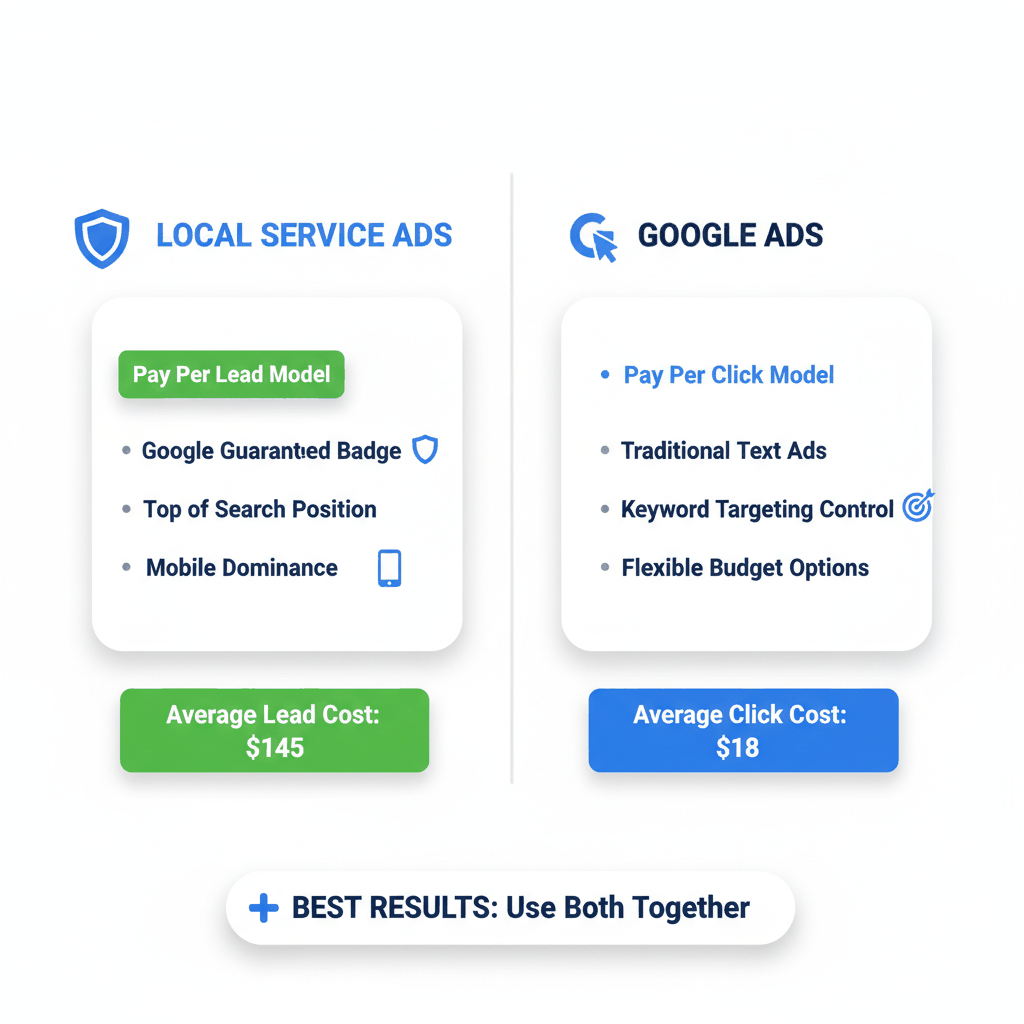
On smartphones, LSAs dominate the top of the screen. They appear before map results, organic listings, or even paid search ads. For roofers, this visibility boost means more impressions and higher conversion potential.
Emergency situations like leaks or hail damage often trigger mobile searches. LSAs capture these urgent searches better than traditional text ads.
LSAs integrate with Google Assistant and voice-enabled devices. When someone says "Hey Google, find me a roofer nearby," LSAs are often the first results served.
Optimize your LSA profile for voice search phrases. Include terms like "emergency roof repair," "roofing contractor near me," and "storm damage roofer."
The "Google Guaranteed" badge builds instant trust with potential customers. Google backs your work with their guarantee program. This reduces the trust barrier that stops many homeowners from calling unknown contractors.
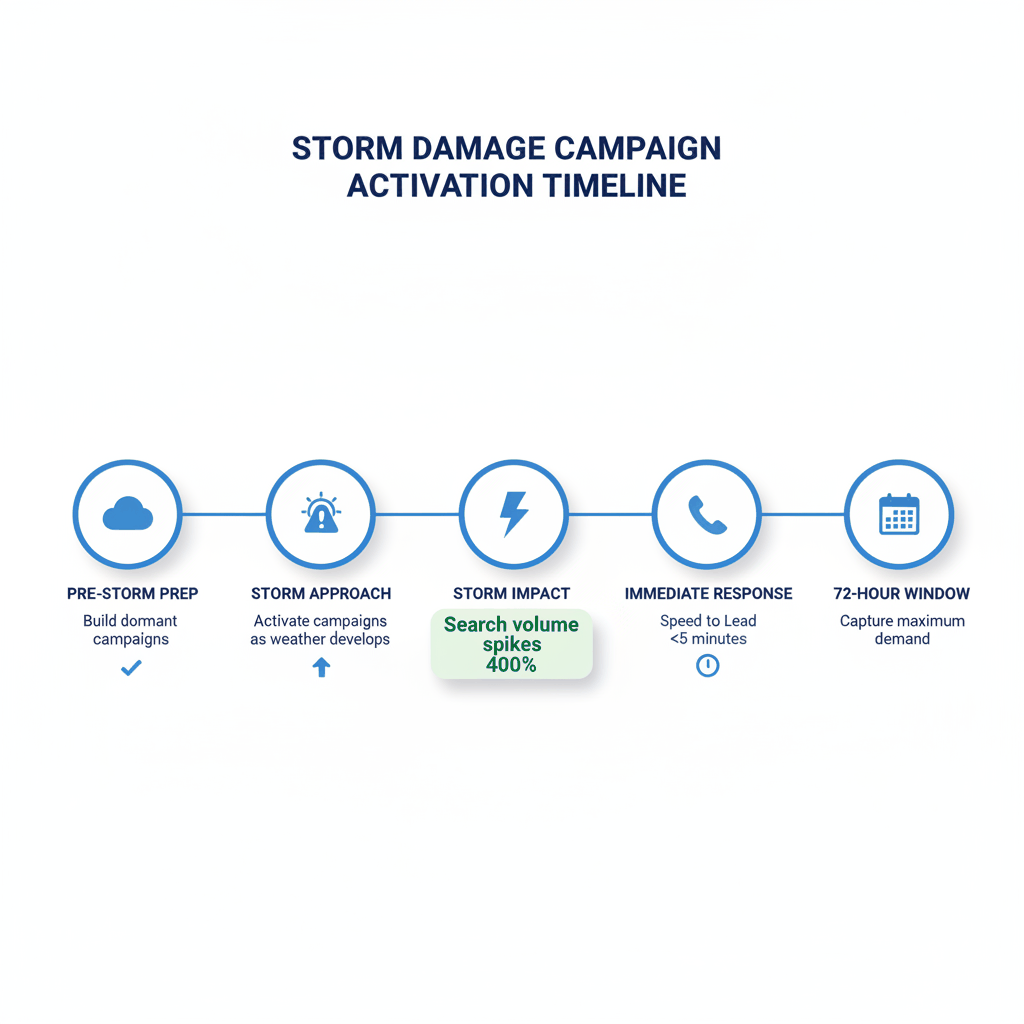
Storm season campaigns can generate months of revenue in just days. When hailstorms or hurricanes hit, search volume for "roof damage" and "storm damage repair" spikes within hours.
The contractors who win storm season have campaigns ready to activate before storms hit. Build dormant campaigns that can go live the same day storms reach your service area.
Create campaigns targeting storm damage keywords before storm season starts. Include terms like:
"hail damage roof repair"
"wind damage roofing contractor"
"insurance roof replacement"
"storm damage inspection"
"emergency roof tarping service"
Keep these campaigns paused until storms hit. Then activate them immediately as weather conditions develop.
Your Speed to Lead system determines storm campaign success. Every inbound lead must be contacted within minutes. Storm-damaged homeowners typically call multiple contractors and choose the first credible responder.
Set up automated responses and call routing. Have inspection teams ready to deploy immediately after storms pass.
Many storm damage jobs involve insurance claims. Target keywords like "insurance roof replacement" and "roof insurance claim help." Position yourself as an expert in working with insurance adjusters.
Create landing pages that address insurance concerns. Explain your claims process and provide clear next steps for homeowners.
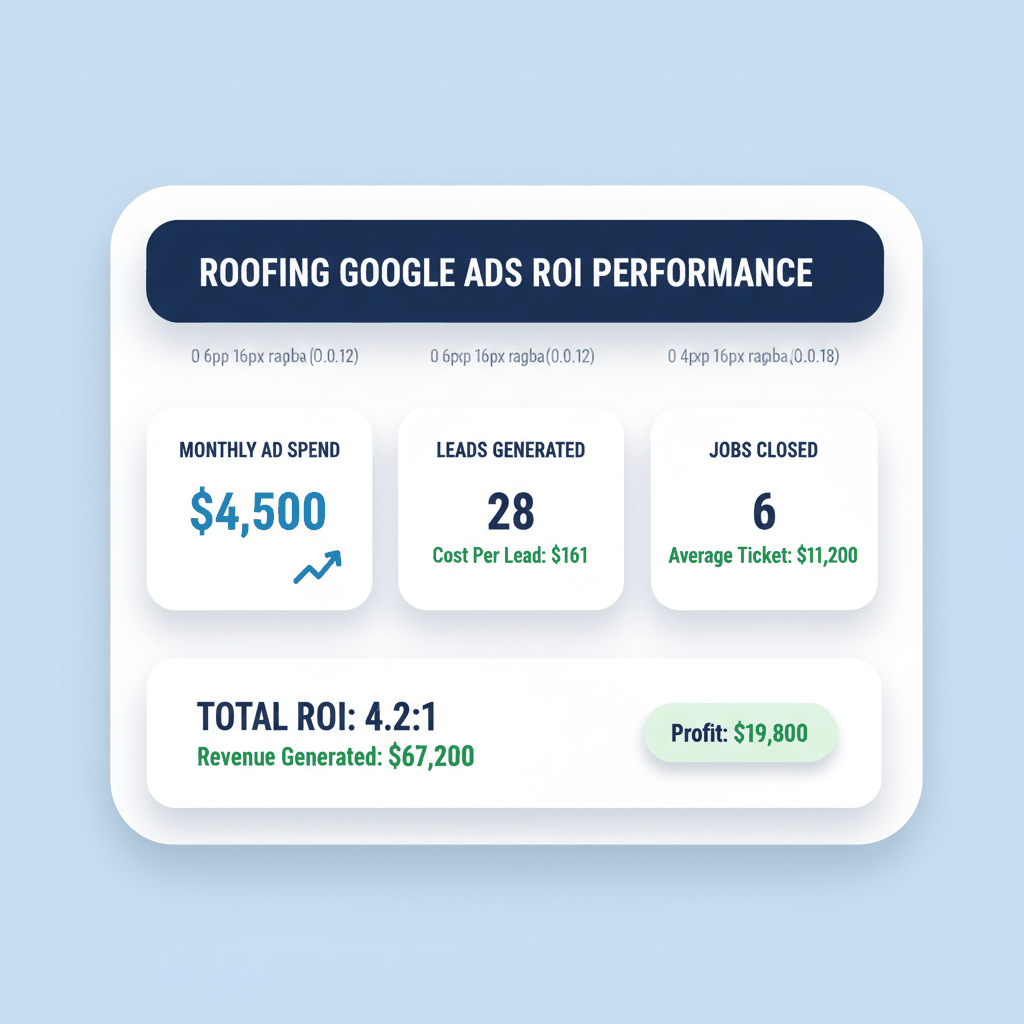
Start with a daily budget of $50–$100. Monitor results and increase spending only when you see strong returns. Professional setup typically achieves 4:1 return on ad spend within 60 days.
Use Maximize Conversions if your goal is getting as many leads as possible. Target CPA works better if you want to control lead costs by setting maximum amounts per lead.
Start with manual bidding until you have enough conversion data. Then switch to automated bidding strategies for better performance.
Emergency ads should emphasize speed and availability. Include phrases like "24/7 service," "immediate response," and "emergency repairs." Add your phone number in ad extensions.
Replacement ads should focus on quality and warranties. Highlight certifications, insurance coverage, and customer testimonials. Include pricing information when possible.
Create separate landing pages for emergency and planned projects. Emergency pages should have prominent phone numbers and simple contact forms. Remove unnecessary navigation that distracts from calling.
Planned project pages can include more detail about services, pricing, and company credentials. Add customer reviews and project galleries to build trust.
Track phone calls and form submissions as conversions. Use Google Tag Manager or native tracking to log these actions. Link your Google Ads account with Google Analytics for deeper performance insights.
Track which keywords drive actual appointments, not just website visits. This data helps you optimize for value instead of volume.
How much should roofers spend on Google Ads monthly?
Most successful roofing companies start with $3,000–$5,000 monthly and scale up based on results. The average cost per lead is $126, but one closed replacement job can return 3:1 to 5:1 on ad spend.
What's the difference between Google Ads and Local Service Ads for roofers?
Google Ads charge per click and appear as text ads in search results. Local Service Ads charge per lead and display at the top with a "Google Guaranteed" badge. LSAs often work better for emergency roof repair searches.
When should roofing companies activate storm damage campaigns?
Activate storm campaigns as weather conditions develop, not after damage occurs. Search volume spikes within hours of storms hitting. Pre-built campaigns ready to launch immediately capture this surge in demand.
How quickly do roofing Google Ads show results?
Emergency roof repair ads can generate leads within hours of activation. Planned replacement campaigns typically need 30-60 days to optimize performance and achieve consistent results.
What keywords work best for roofing PPC campaigns?
High-converting keywords include "emergency roof repair [city]," "roof replacement cost," "storm damage contractor," and "roofing company near me." Target specific service and location combinations for best results.
Ready to buy roofing leads? Sign up for free with ResultCalls today!

Hello everyone! My name is Alex and I write these blogs to help educate small business owners on different ways to grow their business. My goal is to make lead generation as easy as possible for you. After reading these blogs, I hope you leave with some actionable steps that will get you closer to growing your business :)