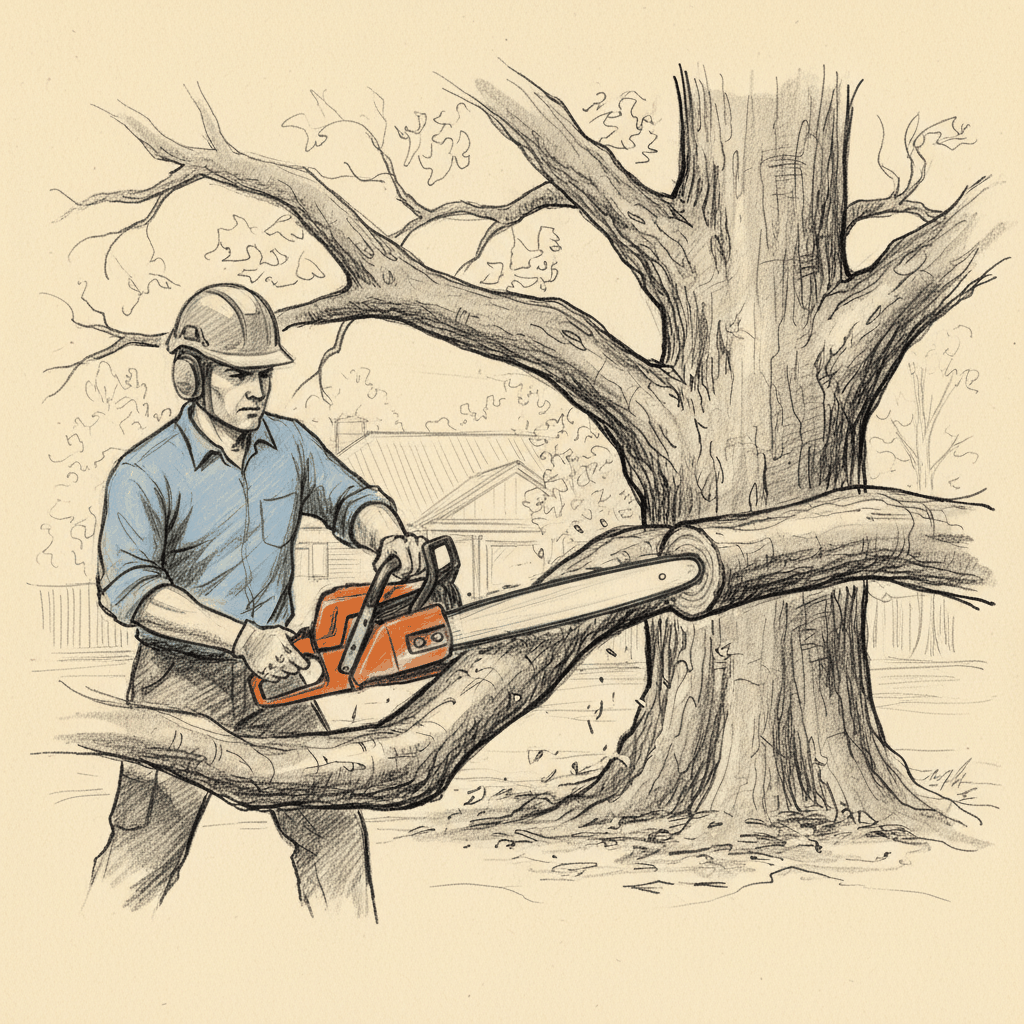
Here's the problem: homeowners only search for tree services when they have an immediate need. A fallen tree after a storm. Branches hanging over their roof. Dead trees that pose safety risks. When these situations happen, homeowners go straight to Google.
Google Ads puts your tree service company right at the top of search results. Unlike SEO which takes months to show results, Google Ads works immediately. You can start getting calls within hours of launching your campaign. The key is setting everything up correctly from day one.
This guide will show you exactly how to create profitable Google Ads campaigns that generate quality leads for your tree service business. You'll learn campaign structure, keyword selection, budget management, and conversion tracking strategies that actually work.
Most tree service companies make a huge mistake when setting up Google Ads. They create one campaign for everything. Tree removal, trimming, stump grinding, and emergency services all get lumped together. This approach wastes money fast.
Successful tree service Google Ads require separate campaigns for each major service. Here's why this matters. Emergency tree removal commands premium pricing. Homeowners with trees threatening their homes pay $2,000-$5,000 for immediate service. Regular tree trimming runs $200-$800. These customers have different urgency levels and different budgets.
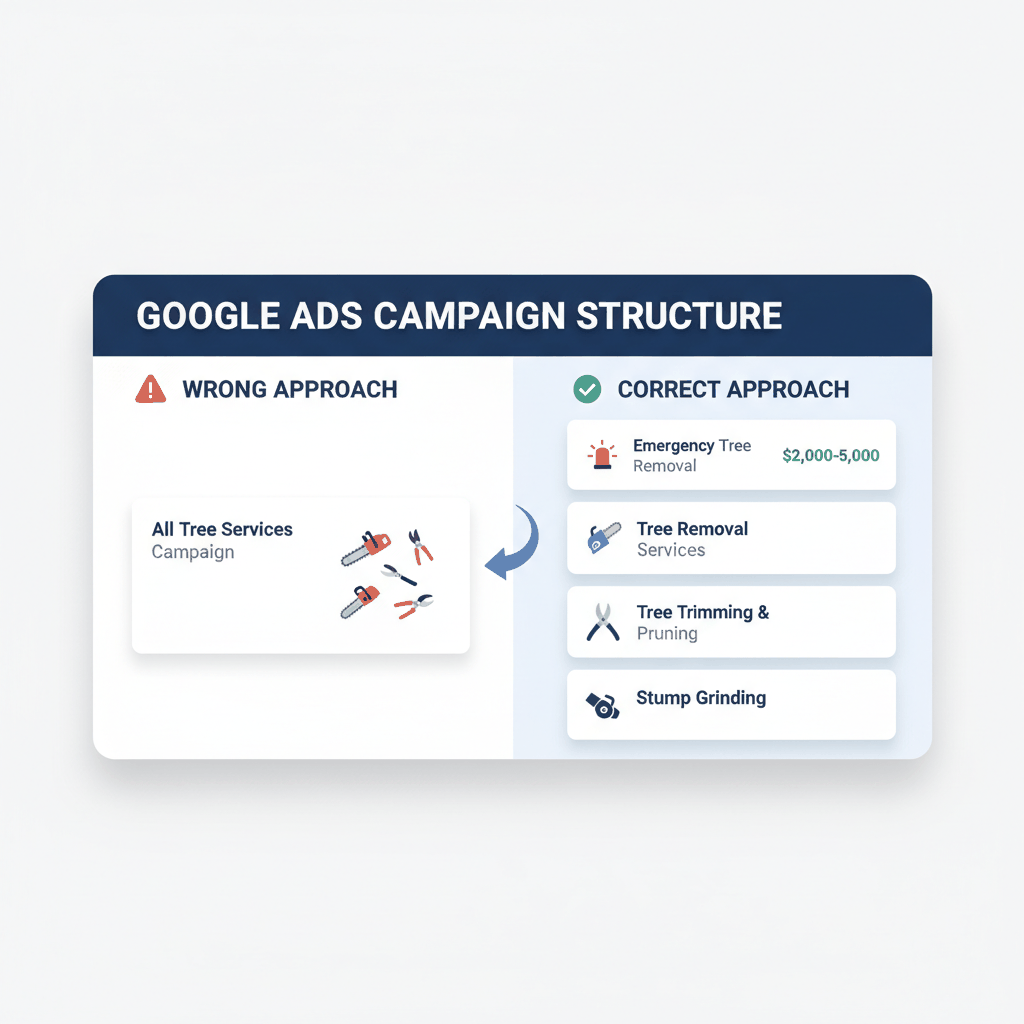
Create these four core campaigns for maximum effectiveness:
Each campaign gets its own budget, keywords, and landing pages. Campaign structure determines success more than any other factor. When someone searches for "emergency tree removal," they see ads specifically about emergency services, not generic tree care messages.
Focus on areas where you actually provide service. Use radius targeting around your location. Start with a 15-mile radius and adjust based on results. Exclude areas where you don't travel or where competition is too expensive.
Target high-value neighborhoods where homeowners invest in professional tree care. Avoid apartment complexes and commercial areas unless you specifically serve those markets. Your geographic settings control who sees your ads and how much you pay per click.
Keyword selection makes or breaks your Google Ads campaigns. The wrong keywords drain your budget on clicks that never convert. The right keywords bring qualified homeowners who need your services immediately.
Start with high-intent keywords that show immediate need. "Tree removal near me" indicates someone ready to hire. "How to trim trees" suggests someone looking for DIY information. Focus on keywords that lead to phone calls, not educational content.
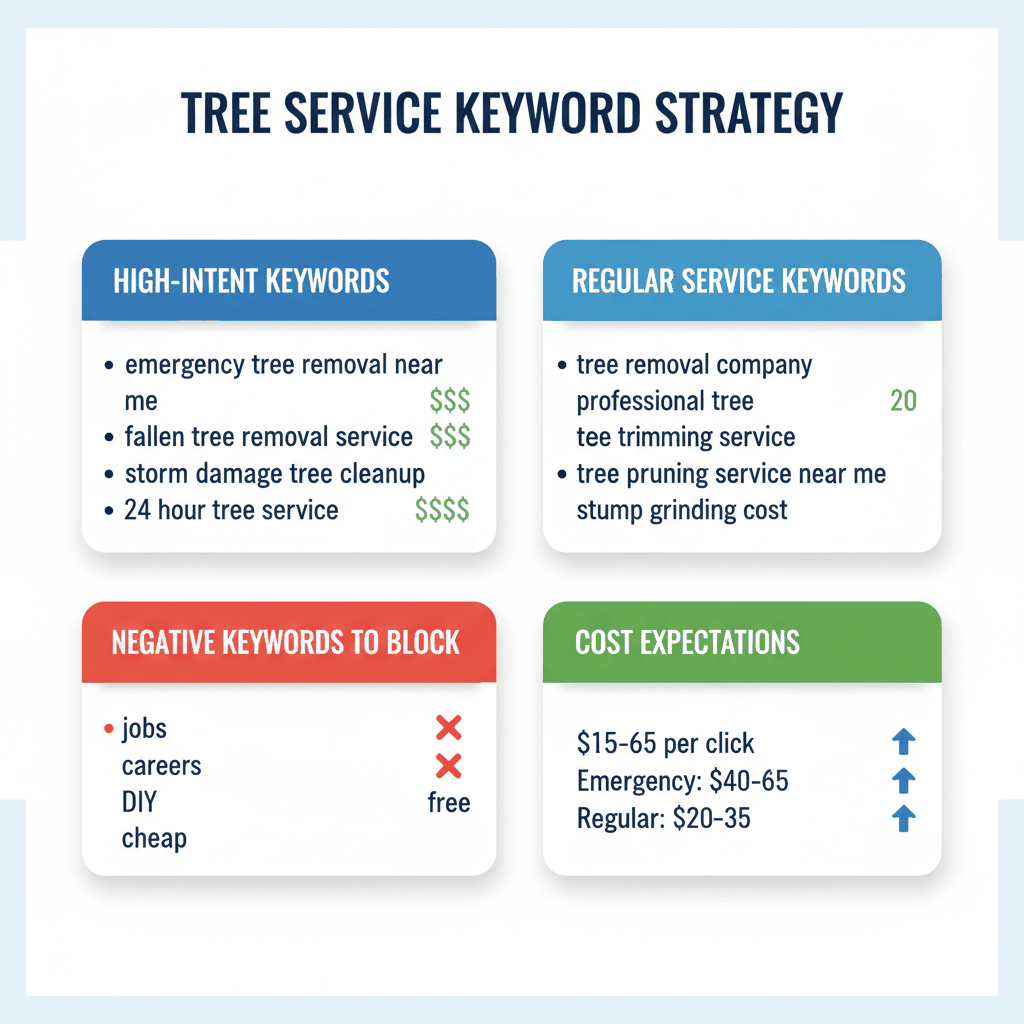
Emergency services keywords generate the most valuable leads:
Regular service keywords provide steady lead flow:
Negative keywords prevent your ads from showing for irrelevant searches. Add these negative keywords immediately: jobs, careers, hiring, DIY, how to, free, cheap, Dollar Tree, Christmas tree, family tree. Negative keywords can reduce wasted spend by 30-50% in the first month.
Monitor search terms weekly and add new negative keywords based on irrelevant clicks. This ongoing optimization keeps your campaigns focused on qualified prospects.
Budget management determines whether Google Ads becomes profitable or burns through cash with no results. Most tree service companies either spend too little to get meaningful data or spend too much before learning what works.
Set daily budgets between $50-100 per campaign to start. This range provides enough data to make optimization decisions without risking massive losses from beginner mistakes. Budget allocation should prioritize your highest-value services first.
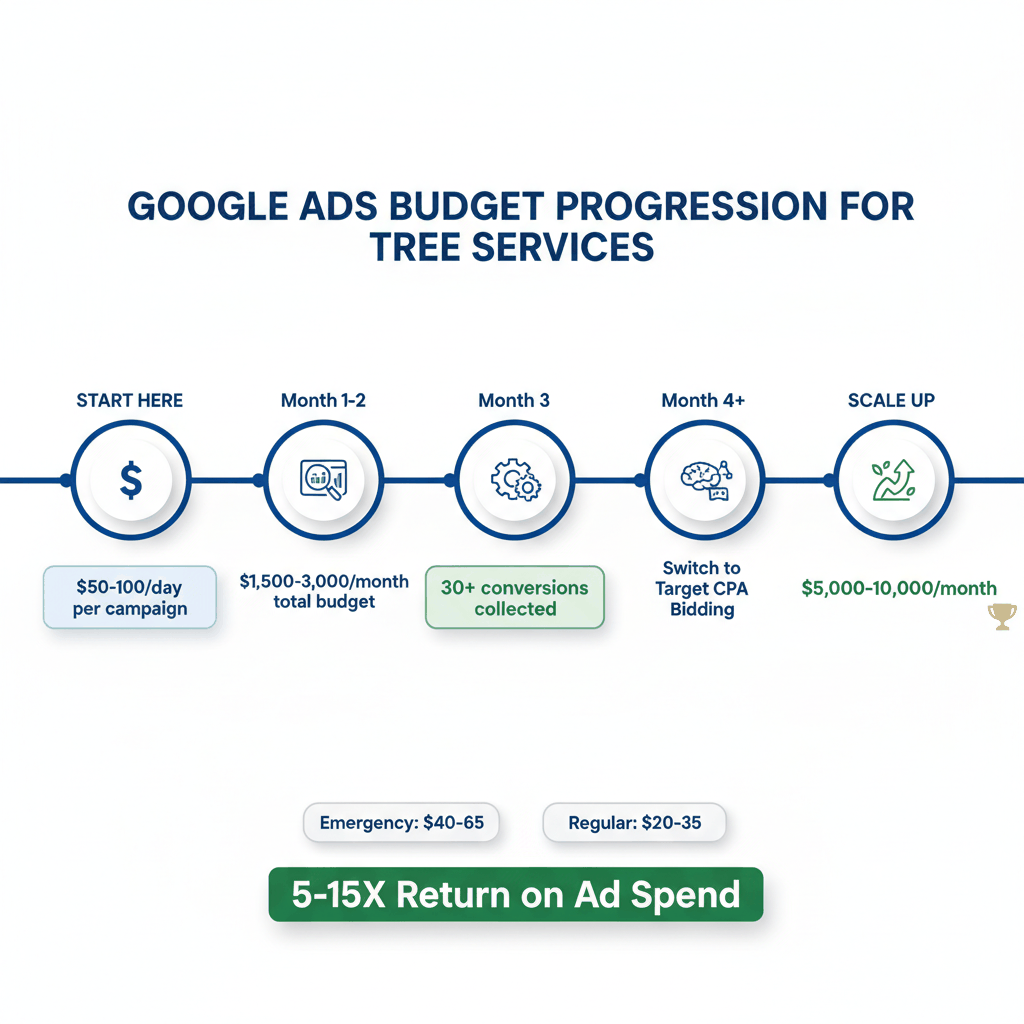
Tree service keywords typically cost $15-65 per click in competitive markets. Emergency removal keywords command the highest prices because customers pay premium rates for immediate service. Regular maintenance services cost less but generate lower revenue per job.
In major metropolitan areas, expect to pay $40-65 per click for emergency services. Smaller markets might see $20-35 per click. The key is understanding your customer lifetime value and pricing accordingly.
Start with manual bidding to collect clean performance data. Set maximum bids based on your cost per lead targets. If you can afford $100 per lead and expect a 10% click-to-lead conversion rate, bid up to $10 per click.
After collecting 30+ conversions, switch to automated bidding. Target CPA bidding lets Google's AI optimize bids to hit your desired cost per lead. The AI leverages conversion data to bid higher when leads are likely and lower when they're not.
Without conversion tracking, Google Ads becomes expensive guesswork. You might spend $5,000 monthly without knowing if it generated five leads or fifty. Proper tracking reveals which keywords, ads, and campaigns actually produce customers.
Set up phone call tracking first since most tree service leads come through phone calls. Use Google's call extensions and call-only ads to capture phone numbers. Install call tracking software that records which ads generate each phone call.
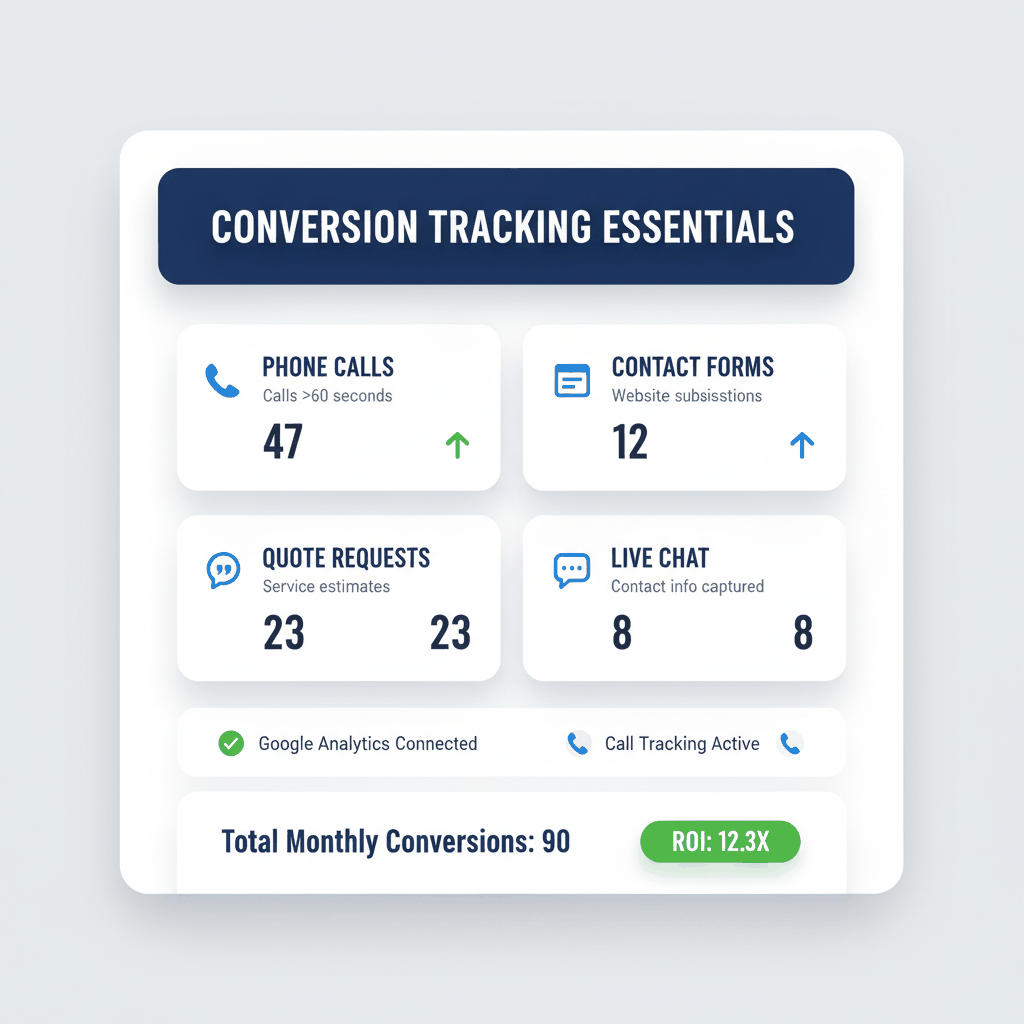
Track these key conversion actions:
Professional lead tracking systems integrate with Google Ads to show exactly which campaigns generate customers. This data enables smart budget allocation and campaign optimization decisions.
Connect Google Ads to Google Analytics for deeper insights into user behavior. See which landing pages convert best and how long visitors spend on your site before calling. Analytics data reveals optimization opportunities beyond basic conversion tracking.
Set up goal tracking for important website actions. Track not just form submissions but also time spent on service pages, PDF downloads, and multiple page visits that indicate serious interest.
Your ad copy determines whether potential customers click your ads or choose competitors. Generic messages like "Quality Tree Service" don't stand out. Specific, benefit-focused copy generates more clicks and higher-quality leads.
Write headlines that address immediate customer needs. "Emergency Tree Removal - Available 24/7" works better than "Professional Tree Care Services." Include your city name and specific services to increase relevance and local connection.
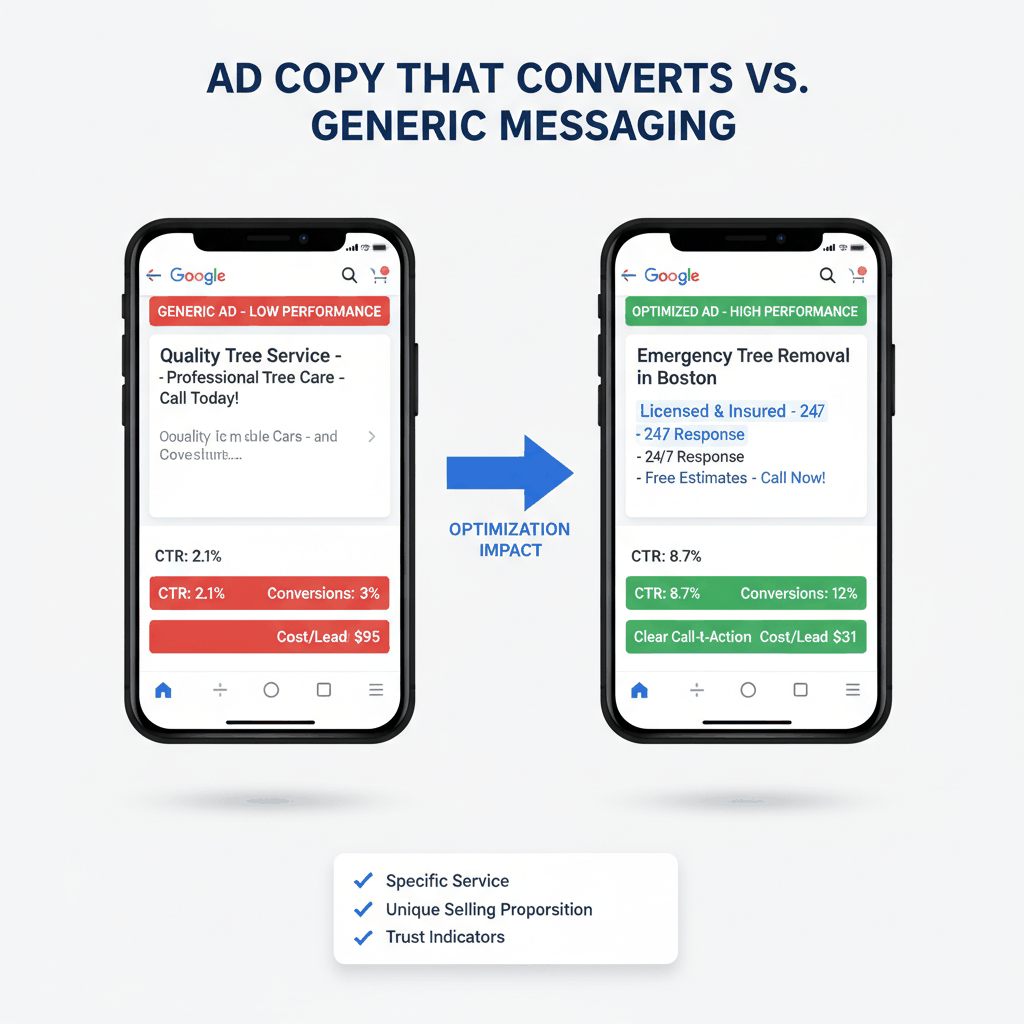
Include these elements in every ad:
Example high-converting ad: "Emergency Tree Removal in [City] - Licensed & Insured - 24/7 Response - Free Estimates - Call Now!" This ad includes service, location, trust factors, and urgency.
Use these ad extensions to provide more information and increase ad visibility:
Ad extensions can increase click-through rates by 15-25% while providing valuable information to potential customers before they visit your website.
Most tree service companies make predictable mistakes that drain advertising budgets without generating leads. Learning from these common errors saves thousands of dollars in wasted spend and months of poor performance.
The biggest mistake is using broad match keywords without negative keywords. Google shows your ads for loosely related searches that rarely convert. Someone searching "tree service jobs" sees your ad but wants employment, not tree removal services.
Avoid these structural mistakes:
Each service needs dedicated campaigns, landing pages, and ad copy. Emergency tree removal requires different messaging than routine pruning services. Customers searching for emergency help want immediate response guarantees, not general tree care information.
These tracking errors prevent campaign improvement:
Campaign optimization requires consistent data analysis and testing. Without proper tracking, you can't identify which elements drive results and which waste money.
Measuring return on investment determines whether Google Ads grows your business profitably or drains resources without results. Track not just leads but job bookings and total revenue generated from each campaign.
Calculate your customer lifetime value first. Emergency tree removal customers often need additional services like stump grinding or regular maintenance. A $2,000 emergency job might lead to $5,000 in total work over two years.
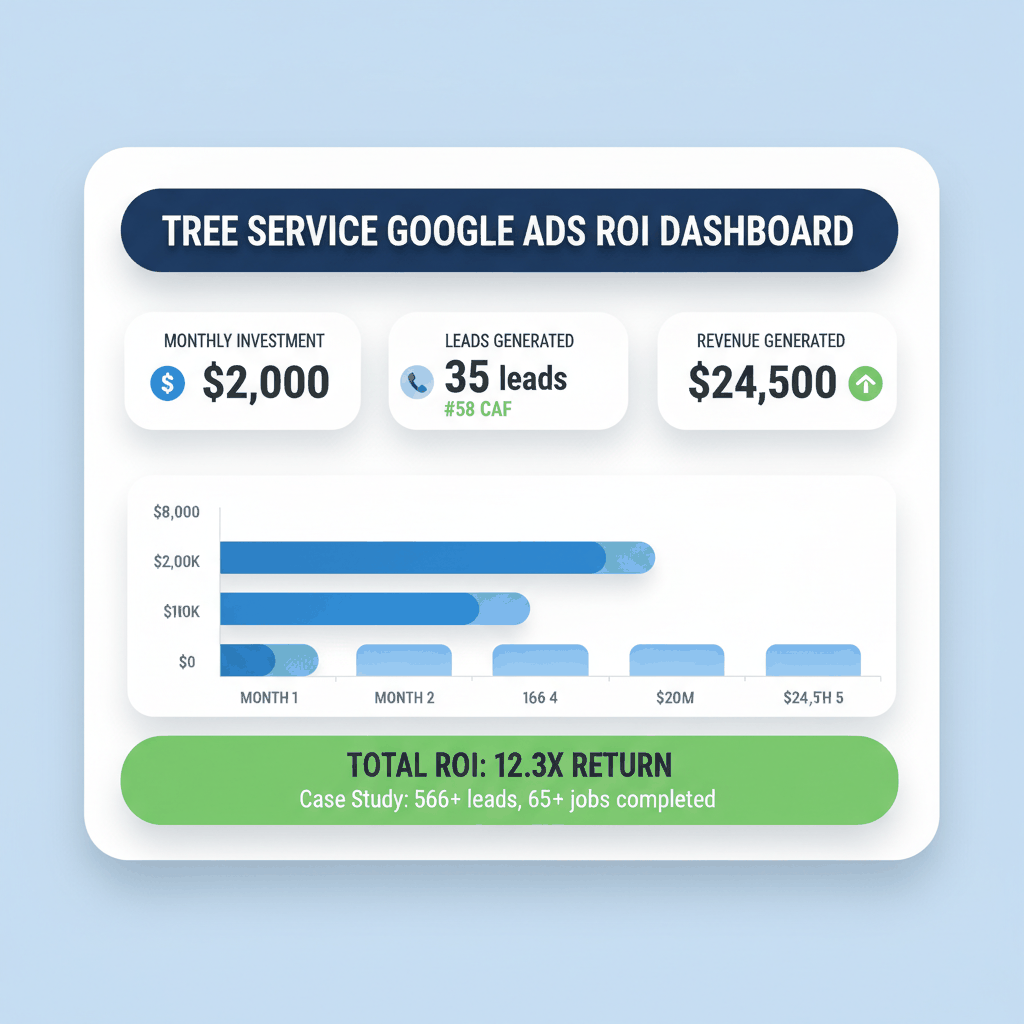
Monitor these essential metrics weekly:
Successful tree service campaigns typically generate 5-15X return on ad spend. If you spend $2,000 monthly on ads, expect $10,000-30,000 in additional revenue when campaigns are optimized properly.
A Boston tree service startup invested $33,500 in advertising over five months. The campaign generated 566+ leads and 65+ completed jobs. Monthly performance reached 280+ leads with a $58 cost per lead, achieving strong ROI for a new business.
Real case studies show what's possible with proper campaign management. The key is consistent optimization and focusing on high-value service categories first.
Start with $1,500-3,000 monthly across all campaigns. This provides enough data to optimize while limiting risk. Successful campaigns can scale to $5,000-10,000 monthly as they prove profitability.
Local Service Ads charge only for qualified leads ($20-85 per lead) while traditional Google Ads charge per click ($15-65). LSAs appear at the top of search results but have less control over targeting and messaging.
Properly set up campaigns can generate leads within 24-48 hours. However, optimization takes 30-60 days to achieve peak performance and lowest cost per lead.
Start with phrase match and exact match keywords for better control. Add broad match keywords after building comprehensive negative keyword lists to prevent irrelevant clicks.
Expect 5-12% conversion rates from clicks to leads. Emergency services typically convert higher (8-15%) than routine maintenance services (3-8%). Focus on improving landing page quality to increase conversions.
Ready to generate consistent leads for your tree service business? Sign up for free with ResultCalls today!

Hello everyone! My name is Alex and I write these blogs to help educate small business owners on different ways to grow their business. My goal is to make lead generation as easy as possible for you. After reading these blogs, I hope you leave with some actionable steps that will get you closer to growing your business :)