
Running a successful HVAC business feels overwhelming when leads come in randomly. One month you're booked solid, the next month you're scrambling to pay bills. Sound familiar?
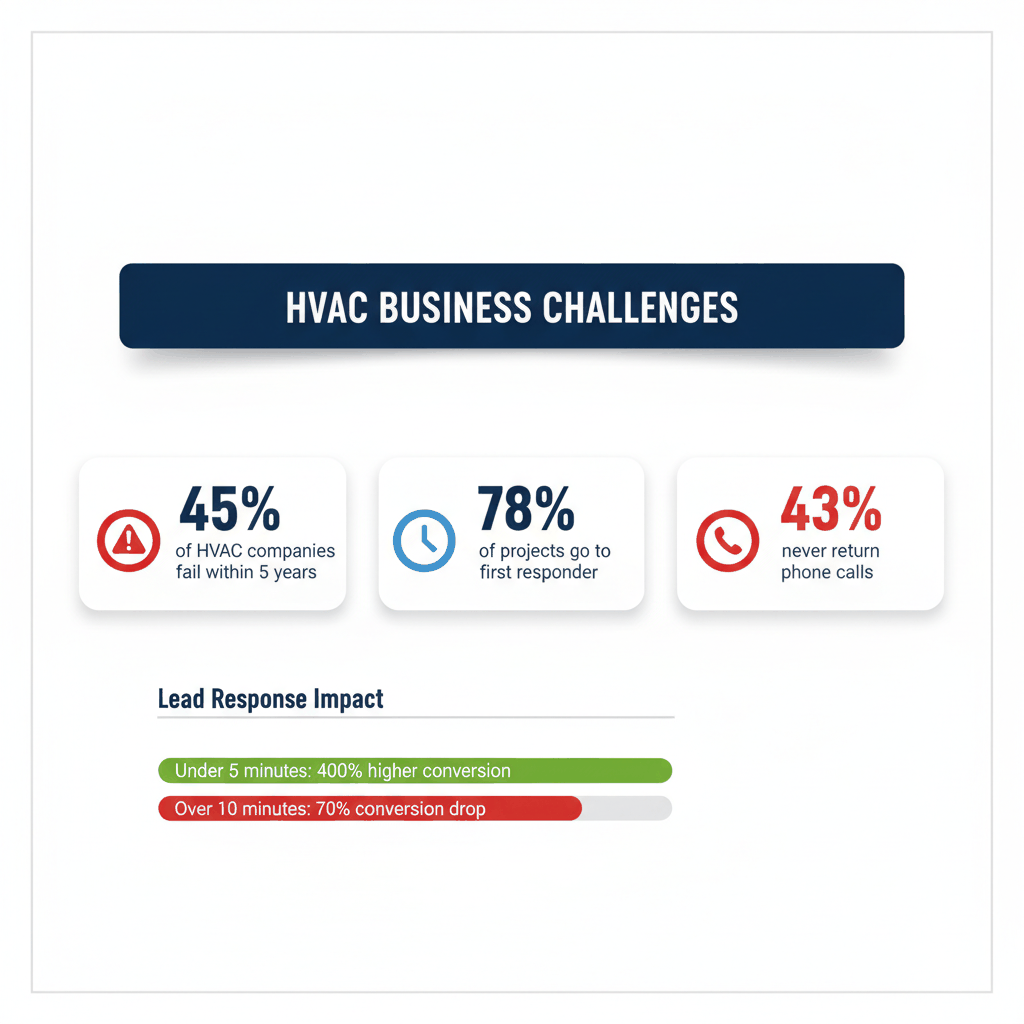
The HVAC industry is booming and predicted to reach 367.5 billion dollars by 2030. However, about 45% of HVAC companies fail within five years due to cash flow problems and inconsistent lead generation.
The solution isn't working harder or hiring more technicians. It's building predictable marketing systems that generate consistent leads while you focus on delivering quality service. This guide shows you exactly how to transform your HVAC business from reactive chaos into a predictable revenue machine.
You'll discover proven strategies that successful HVAC owners use to automate lead generation, improve customer follow-up, and scale their operations without burning out. These systems work whether you're a one-person operation or managing a team of technicians.
Table of Contents
Most HVAC business owners struggle with the same core problems. These challenges keep you stuck in survival mode instead of building a thriving company.
The average HVAC company needs to generate between 50 to 100 leads per month to maintain steady growth. Many struggle to hit even half that number consistently.
Emergency calls create feast-or-famine cycles. Summer brings AC repair floods while winter might leave you with empty schedules. This rollercoaster makes it impossible to plan ahead or invest in growth.
Without predictable lead flow, you can't hire confidently or invest in better equipment. Every slow week creates stress about making payroll or covering business expenses.
Speed determines conversion success more than any other factor. Industry data shows 78% of projects go to the first contractor who responds.
Unfortunately, many HVAC companies fail to treat phone calls with urgency. Up to 43 percent of businesses never even return phone calls.
Your response time should be under 5 minutes for optimal conversion. This timeframe increases conversion by 400% compared to slower response times. Emergency leads require even faster responses.
Many HVAC owners spend their days reacting instead of leading. Constantly putting out fires leaves no room for strategy, marketing, or business development.
Manual scheduling, paper invoices, and phone tag with customers wastes hours daily. This time should be spent on revenue-generating activities like sales calls or business planning.
Without systems, every process depends on you personally. This makes vacations impossible and creates a business that owns you instead of serving you.
CRM applications deliver an average ROI of $8.71 for every dollar spent. HVAC businesses specifically can gain almost $3 million in revenue yearly with proper implementation.
The right CRM transforms chaotic lead management into organized, profitable systems. Here's how to choose and implement the best solution for your HVAC business growth.
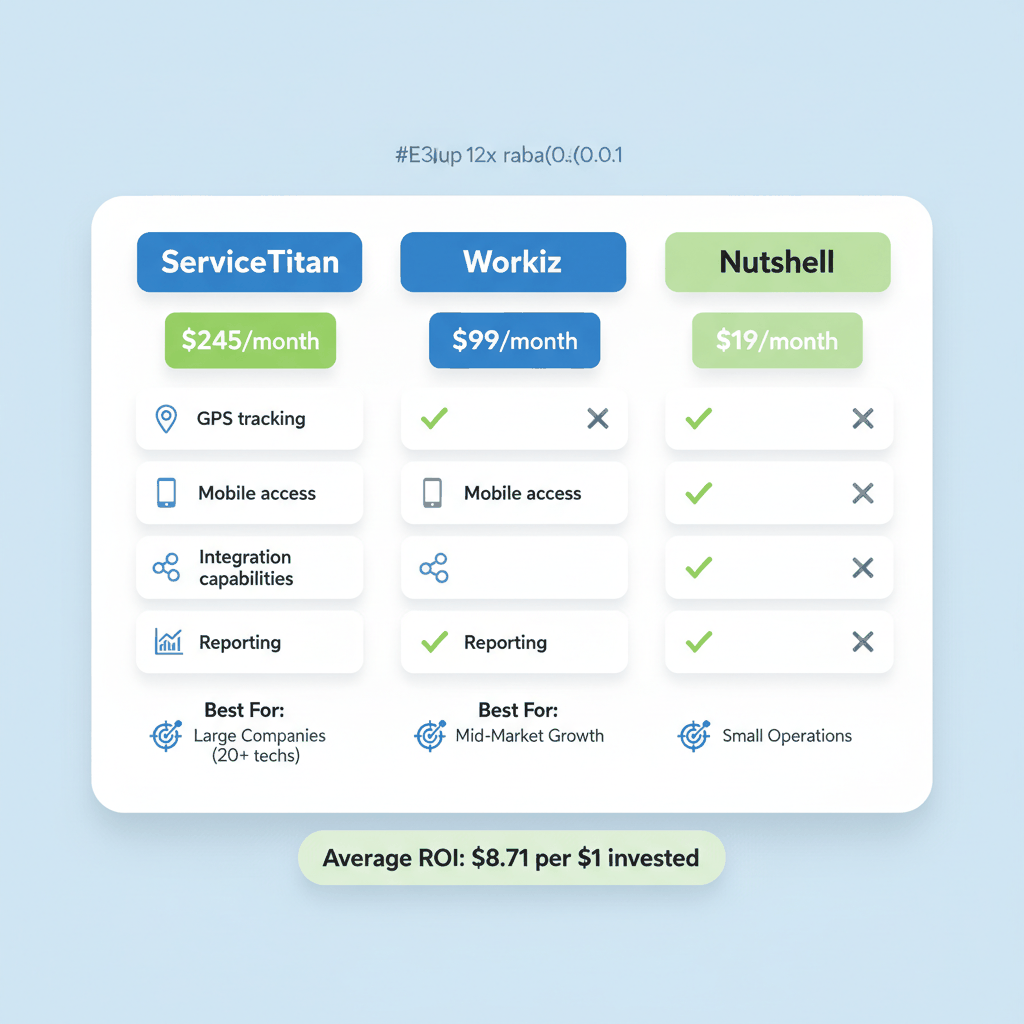
HVAC CRM systems need industry-specific features that generic business software lacks. Look for GPS tracking for technicians, emergency dispatch capabilities, and service history tracking for equipment.
Integration with HVAC business automation tools saves time and reduces errors. When your CRM connects to accounting software, scheduling systems, and marketing tools, information flows seamlessly.
Mobile access is critical since your technicians work in the field. They need to update job status, capture photos, and access customer information from their phones or tablets.
ServiceTitan works best for larger HVAC companies with 20+ technicians. It offers comprehensive industry-specific features and detailed reporting tools. However, setup is complex and pricing starts at $245 per month per user.
Workiz excels for mid-market HVAC companies. One company reported that since they started with Workiz, their company has grown 3 times in revenue every year.
For smaller operations, Nutshell provides essential CRM features without overwhelming complexity. Pricing starts at $19 per month per user, making it affordable for growing businesses.
Start with basic lead tracking before adding advanced features. Get your team comfortable with contact management and basic reporting first.
Train your entire team, not just office staff. Technicians who understand the system provide better customer data and improve overall efficiency.
Most companies see positive ROI within the first year of CRM implementation. Focus on features that directly impact revenue like automated follow-ups and lead scoring.
Marketing automation transforms sporadic lead generation into predictable customer acquisition. The key is implementing systems that work 24/7 to attract and nurture prospects while you focus on service delivery.
Effective HVAC marketing systems combine multiple channels working together. No single strategy generates enough leads consistently.
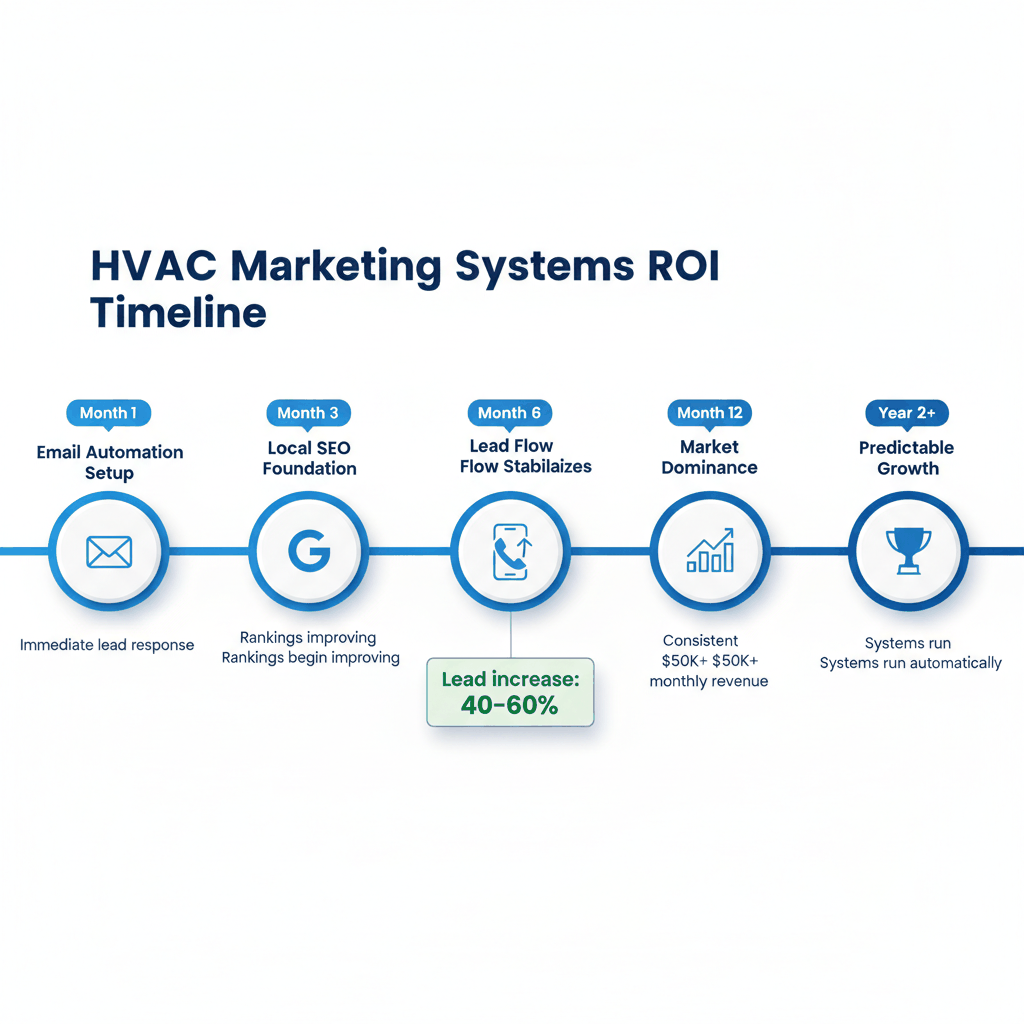
Email marketing delivers the highest ROI of any digital marketing channel. However, most HVAC companies send generic newsletters nobody wants instead of useful information customers value.
Segment your email list by customer type and service history. Commercial clients don't care about residential promotions. Emergency repair customers have different needs than maintenance plan subscribers.
Automate follow-up sequences after service calls. A simple "How did we do?" email 48 hours after service completion shows you care about quality and often generates reviews or referrals.
Time seasonal campaigns carefully. Send AC tune-up promotions in March, not July when systems are already running constantly. Early bird pricing works because customers save money and you schedule work during slower periods.
Google accounts for nearly 80% of searches from desktops. Over 55% of consumers search online before scheduling home services.
Optimize your Google Business Profile with accurate information, photos of your work, and consistent posting. This gives your business credibility in Google's algorithm.
Include location-specific phrases like "HVAC contractor in Atlanta" throughout your website. Local keywords help search engines connect your business to nearby customers.
SEO takes 3-6 months to show results, but once it works, it becomes your most profitable marketing channel. Companies that invest early dominate their markets for years.
Local Service Ads appear at the very top of Google search results for emergency HVAC queries. They feature your review count and aggregate star rating prominently.
Because HVAC issues require fast response, these ads generate high-intent leads. Customers calling from LSA typically need immediate service and convert at higher rates.
Monitor your campaign performance carefully. HVAC keywords can cost $15-50 per click in competitive markets. Track which keywords generate qualified leads and adjust bids accordingly.
Lead management determines whether marketing investments generate profit or waste money. The best marketing in the world fails without proper lead follow-up systems.
Most HVAC companies lose 50-70% of leads due to poor management. This represents thousands of dollars in wasted marketing spend and missed opportunities.
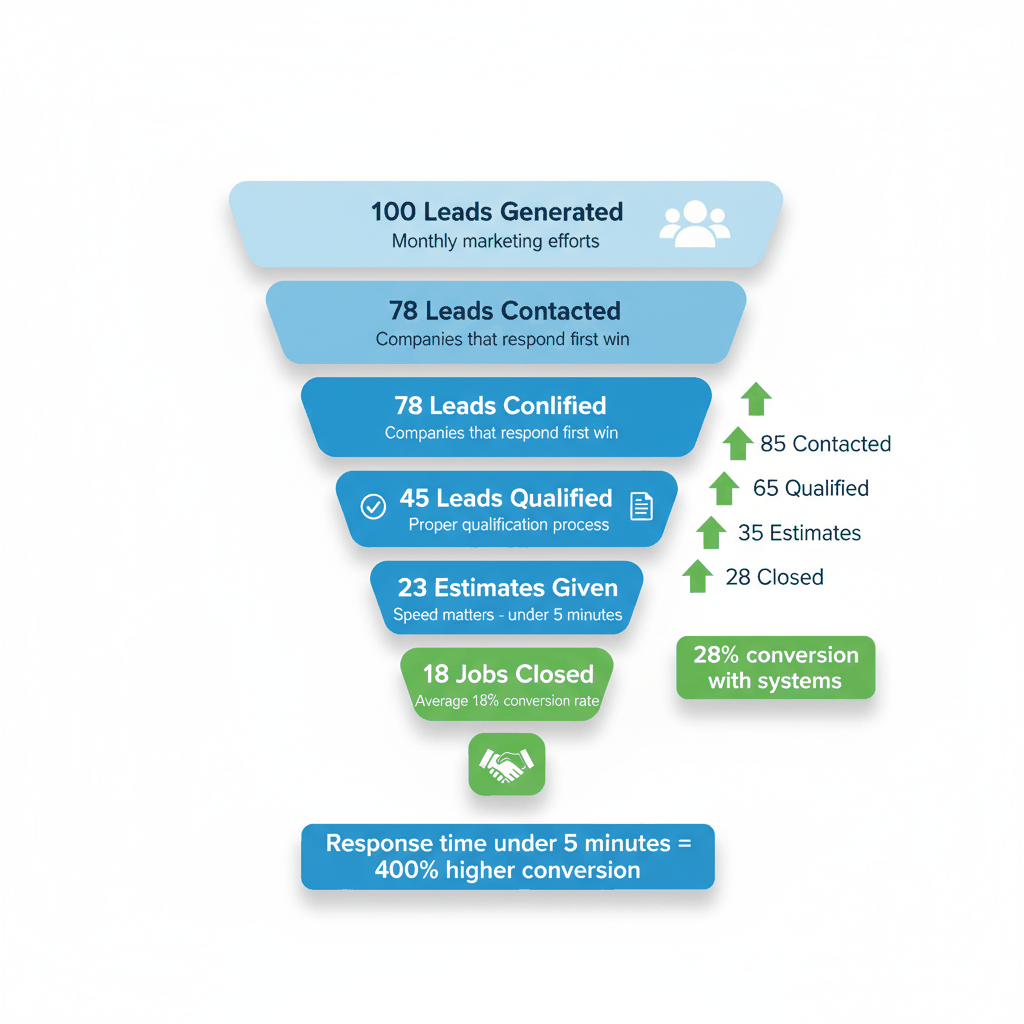
Conversion rates drop dramatically after just 10 minutes. Your HVAC lead management system should respond within 5 minutes for optimal conversion rates.
Implement automated text responses that acknowledge inquiries immediately. Follow up with personalized phone calls within the hour for non-emergency requests.
For emergency leads, aim for under 2-minute response times. Emergency customers often call multiple companies and choose whoever answers first.
Not all leads deserve equal attention. Develop systems that identify high-value prospects and prioritize them accordingly.
Emergency repair calls typically convert at 70-80% rates. New installation inquiries convert at 15-25% rates but generate much higher revenue per sale.
Create qualification questions that identify budget, timeline, and decision-making authority. This information helps your sales team focus on winnable opportunities.
Single-touch follow-up misses 80% of potential sales. Implement sequences using phone calls, text messages, and emails over several weeks.
Vary your messaging based on lead source and type. Someone requesting emergency service needs different follow-up than a maintenance plan prospect.
Track response rates for each channel and adjust accordingly. Some customers prefer text messages while others respond better to phone calls.
Automation eliminates repetitive tasks that consume your time without generating revenue. The right tools handle scheduling, invoicing, and customer communication automatically.
Focus on automating processes that happen frequently and follow predictable patterns. These create the biggest time savings and ROI improvements.
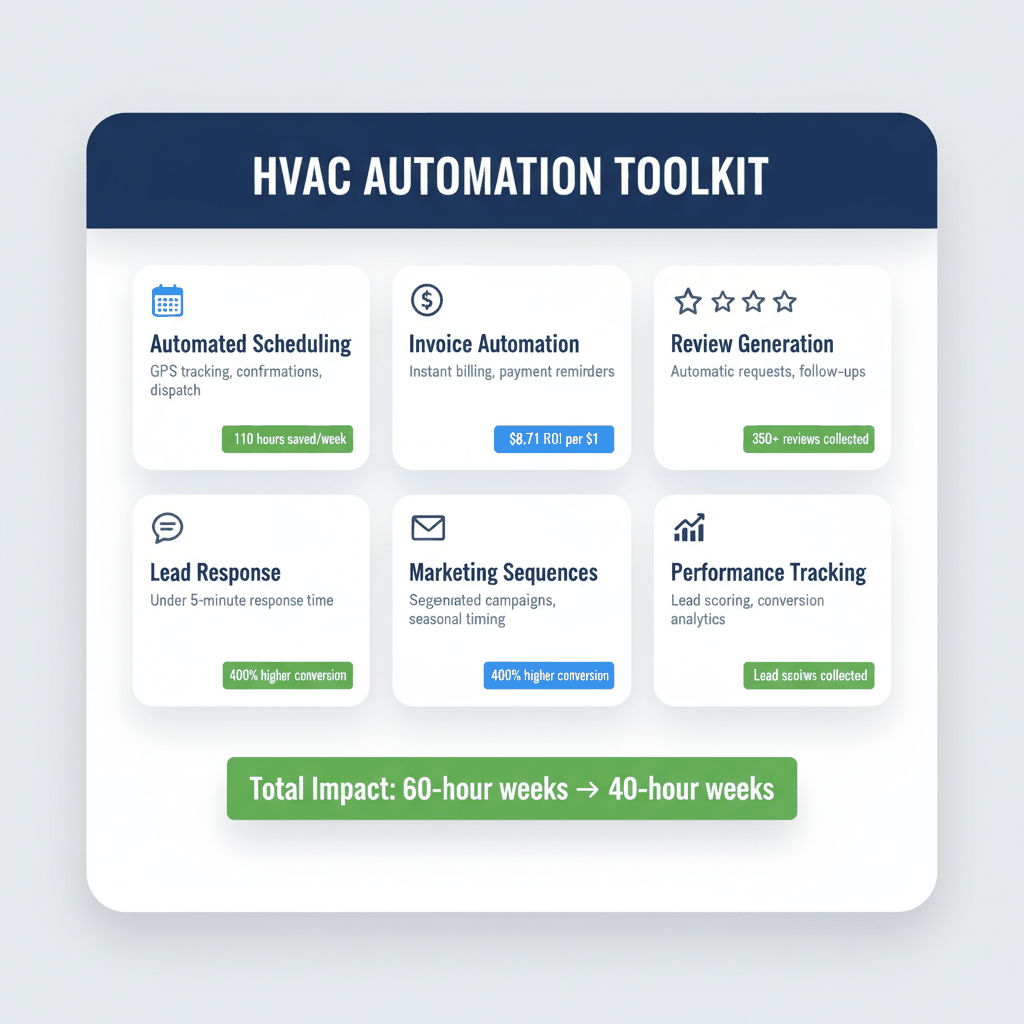
Automated scheduling reduces no-shows and improves customer satisfaction. Send appointment confirmations 24 hours before scheduled service calls.
GPS tracking helps customers know exactly when technicians will arrive. Real-time updates reduce anxiety and improve the overall service experience.
Dispatch notifications keep technicians informed about job changes, customer preferences, and special instructions without constant phone calls.
Automated invoicing speeds up payment collection and reduces billing errors. Send invoices immediately after job completion while the service is fresh in customers' minds.
Offer multiple payment options including online payments and auto-pay for recurring services. Make it easy for customers to pay you quickly.
Follow up on overdue invoices automatically with polite reminders. This reduces awkward collection calls and maintains positive customer relationships.
Online reviews drive customer decisions more than any advertisement. 88% of consumers consult reviews when discovering local businesses.
The difference between 4.2 stars and 4.7 stars can double your phone calls from Google searches. Systematic review generation is essential for sustainable growth.
Send review requests 2-4 hours after job completion when customers feel satisfied. Include direct links to your Google Business Profile for easy access.
If customers don't respond to the first request, send a follow-up message 24 hours later. Automated sequences ensure no satisfied customers get missed.
Real businesses achieve dramatic results when they implement proper systems. These case studies show what's possible when you combine the right tools with consistent execution.
AC Guys reduced their office staff from five people to two, cutting payroll overhead by 60% through operational efficiency improvements.
They implemented Workiz automation that triggers 20 different custom sequences after job completion. This includes review requests and estimate follow-ups that used to be hand-typed.
The automation saves an estimated 110 hours per week and helped them collect almost 350 reviews. This far exceeds competitors in their market.
One local HVAC company partnered with marketing experts and implemented full-stack automation called Logic Soft Cloud.
They scaled from $300,000 to over $1 million in annual revenue in under 12 months.
The system automated bookings, streamlined follow-ups, and empowered their sales team to close more deals faster. Automation eliminated missed follow-ups by automatically qualifying leads and notifying reps when contacts showed high interest.
One business owner went from 60-hour weeks to leaving at 5 PM on Fridays after implementing comprehensive automation.
Two hours after job completion, customers receive personalized SMS messages. If they leave a Google review, the sequence ends. If they don't respond within 24 hours, a second follow-up goes out automatically.
The owner reported: "The automation just works. I don't think about it anymore. My techs get their jobs, customers get their invoices, reviews come in automatically."
How long does it take to see results from HVAC marketing systems?
Most HVAC businesses see initial results within 30-60 days of implementing proper lead management systems. SEO and long-term strategies take 3-6 months to show full impact. CRM systems typically deliver positive ROI within the first year of implementation.
What's the most important HVAC business automation to implement first?
Start with automated lead response systems since speed-to-response determines conversion more than any other factor. Implement 5-minute response goals and automated follow-up sequences before adding complex features.
How much should I budget for HVAC CRM systems and marketing tools?
Expect to invest $200-500 per month for comprehensive HVAC business automation tools. CRM systems deliver an average ROI of $8.71 for every dollar spent, making this investment profitable for most companies.
Can small HVAC companies compete with larger competitors using these systems?
Yes, automation levels the playing field by enabling small companies to provide enterprise-level customer service and follow-up. Many small HVAC businesses outperform larger competitors by implementing better systems and responding faster to leads.
What metrics should I track to measure HVAC business growth success?
Focus on cost per lead, conversion rates, and customer lifetime value rather than vanity metrics. Track response times, review generation rates, and monthly recurring revenue from maintenance contracts to gauge system effectiveness.
Ready to buy HVAC leads today? Sign up for free with ResultCalls!

Hello everyone! My name is Alex and I write these blogs to help educate small business owners on different ways to grow their business. My goal is to make lead generation as easy as possible for you. After reading these blogs, I hope you leave with some actionable steps that will get you closer to growing your business :)