
Your phone rings at 2 AM. Water floods a homeowner's basement. They grab their phone and search desperately for help.
Here's the problem. 88% of online consumers will not return to a website after a bad user experience. Nearly 50% of mobile visitors bounce if your page takes more than three seconds to load.
Water damage website optimization solves this challenge. It's the systematic process of improving your restoration website to capture emergency customers when they need help most. The right optimization strategies convert distressed homeowners into paying customers during their most urgent moments.
You'll discover proven techniques that turn emergency searches into profitable jobs. These strategies help restoration companies dominate local search results and convert panicked visitors into loyal customers.
Table of Contents
Emergency situations create unique website challenges. When disaster strikes, customers need immediate answers and instant trust.
Over 80% of water damage restoration searches happen on mobile devices. People search while standing in flooded basements or dealing with burst pipes. They don't have time for slow websites or confusing navigation.
The competition is fierce. Water damage restoration keywords cost up to $250.79 per click. Emergency plumbing averages $82.82 per click, but water damage keywords reach $91-$250+ per click.
Here's what makes this critical. 70% of users click one of the top five search results. If you're not there, you're not getting the job.
Most visitors decide in less than three seconds if they're staying on your website or hitting the back button. That's especially true during emergencies when stress levels run high.
Your website must answer three questions immediately:
Can you come now?
Are you licensed and insured?
Do other people trust you?
If your site doesn't answer all three within the first scroll, visitors leave. They call your competitor instead.
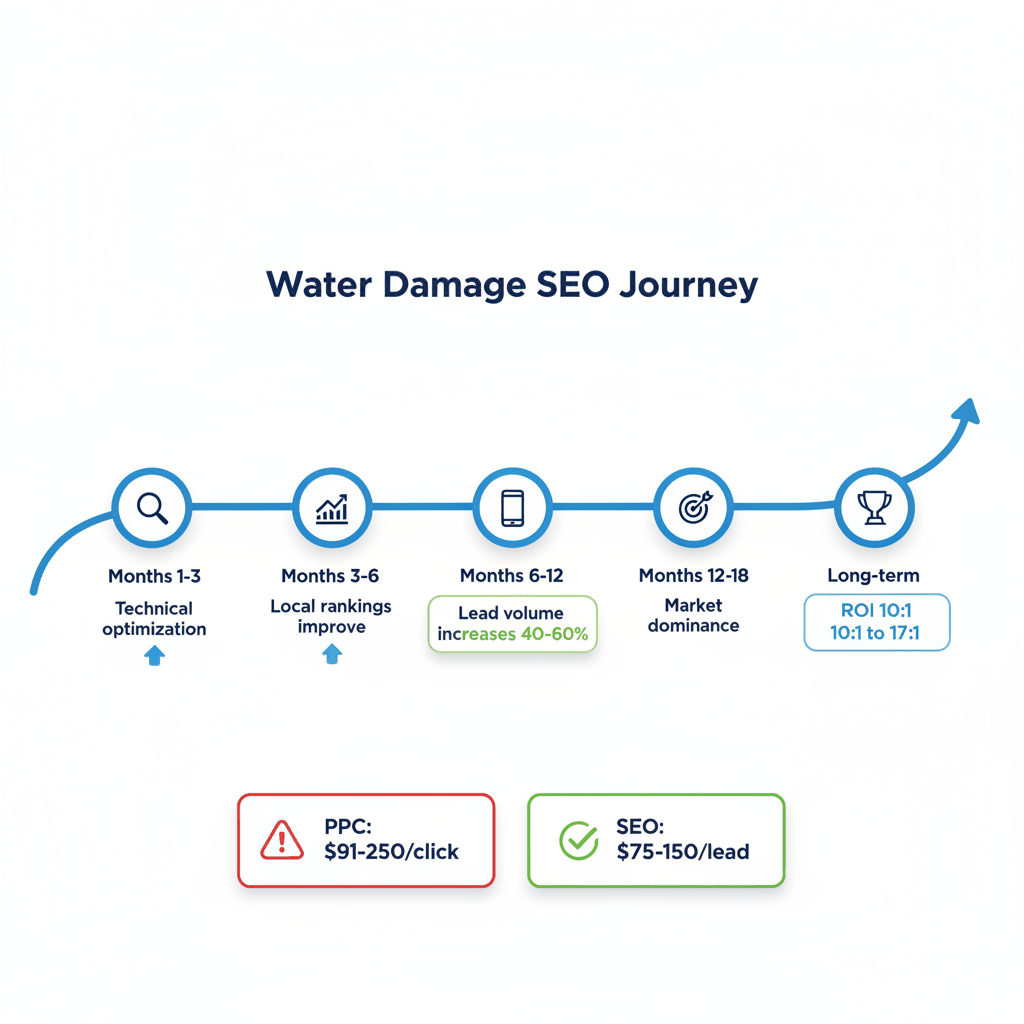
Well-executed water damage restoration marketing campaigns typically achieve 10:1 to 17:1 ROI ratios in established campaigns. A $15,000 monthly investment generating 15-20 jobs at $10,500 average value produces $157,500-$210,000 in revenue.
Water damage websites face unique obstacles that don't affect other home service businesses. Understanding these challenges helps you fix them.
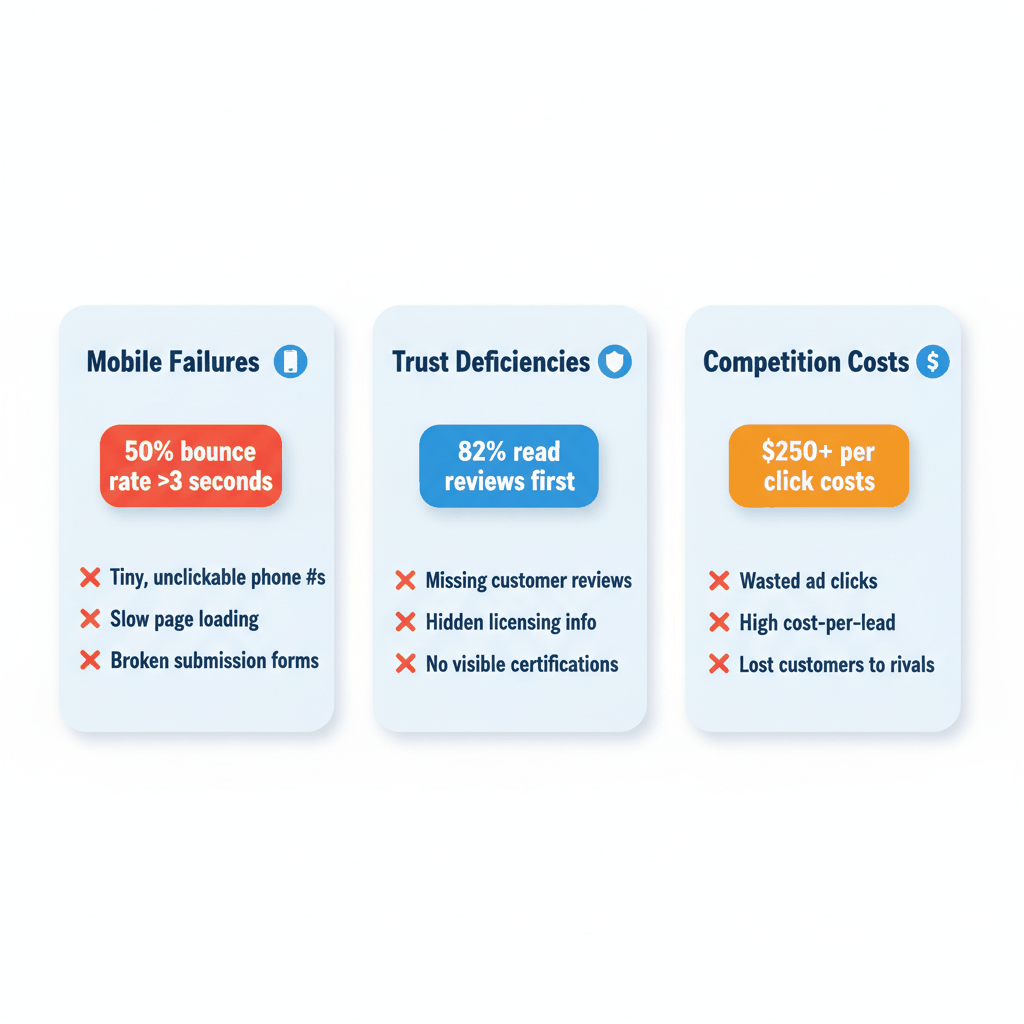
Your mobile experience determines success or failure. Nearly 50% of mobile visitors bounce if a page takes more than three seconds to load.
Common mobile problems include:
Tiny phone numbers that are hard to tap
Confusing navigation menus
Slow-loading images and videos
Forms that don't work on phones
Text too small to read easily
These issues cost you jobs every day. Emergency customers won't wait for your site to load or struggle with broken features.
82% of customers read reviews of a local business before using their services. They read an average of 10 reviews before trusting a restoration company.
Many water damage sites fail to display trust signals prominently. Visitors can't find licensing information, reviews, or credentials quickly. This creates doubt during moments when trust is everything.
Emergency customers need proof you're legitimate. They're inviting strangers into their damaged homes. Without obvious trust signals, they choose competitors who look more trustworthy.
Water damage restoration features the highest CPCs in the home services sector. While HVAC repair averages $70.84 per click and drain cleaning $73.87, water damage keywords reach much higher costs.
This makes conversion optimization crucial. You can't afford to waste expensive clicks on a website that doesn't convert. Every visitor who leaves without calling costs real money.
Smart restoration companies focus on water damage restoration lead generation strategies that maximize conversions instead of just driving more traffic.
Your mobile experience determines whether emergency customers call you or your competitors. Here's how to optimize for mobile users in crisis situations.
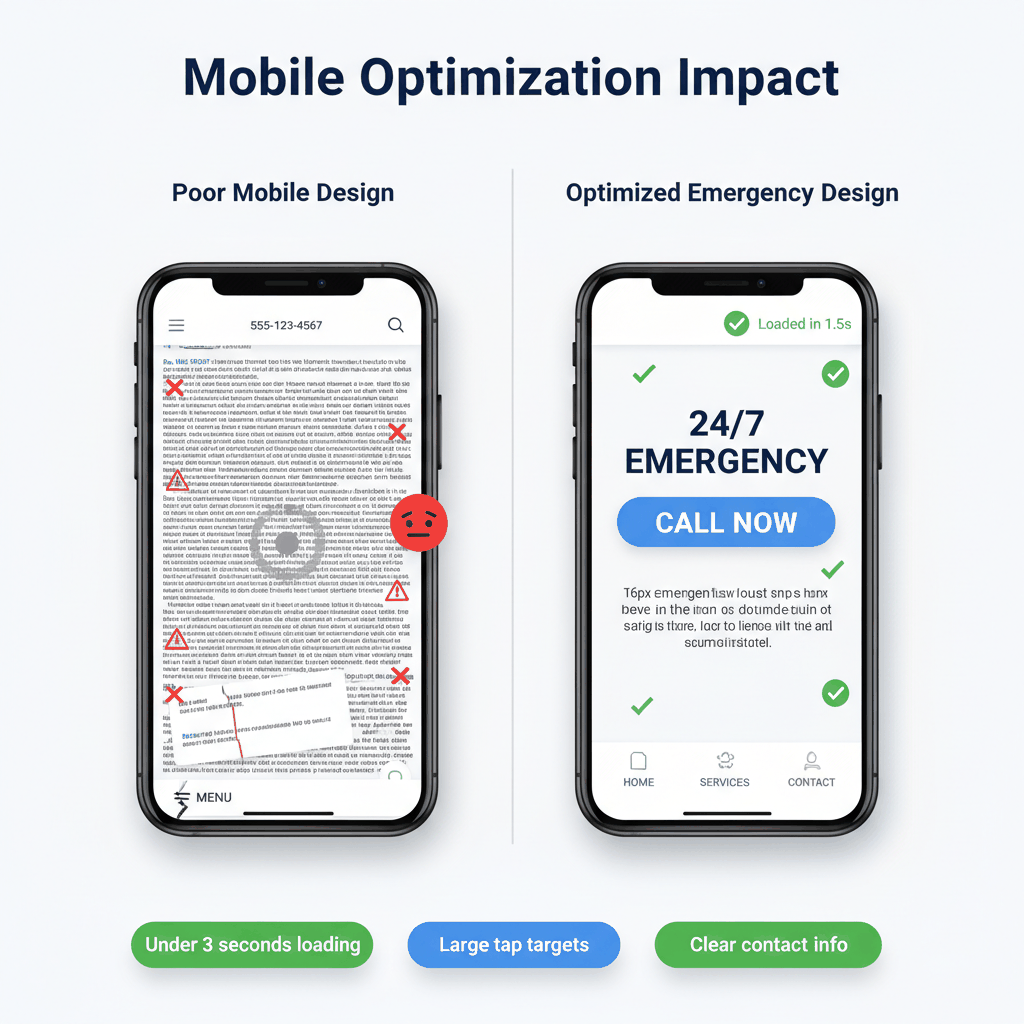
Aim for under three seconds to keep visitors from bouncing. Every second delay costs conversions during emergencies.
Technical speed improvements include:
Compress all images to reduce file sizes
Use fast web hosting with good uptime
Minimize plugins and unnecessary code
Enable browser caching for repeat visitors
Optimize CSS and JavaScript files
Test your site speed regularly. Use tools like Google PageSpeed Insights to identify specific problems. Fix the biggest issues first for maximum impact.
Design your site for people in crisis. They need clear information and easy ways to contact you immediately.
Key design elements include:
Large, prominent phone numbers at the top
Click-to-call buttons that work perfectly
Clear "24/7 Emergency Service" messaging
Simple navigation with emergency contact options
Readable text using at least 16px font size
Make everything finger-friendly. Emergency customers often have shaky hands or work in poor lighting. Large buttons and clear text prevent frustration.
Your layout should adjust seamlessly to any screen size. Use responsive design that works on phones, tablets, and desktops.
Critical responsive features include:
Navigation that collapses into simple menus
Images that resize without breaking
Text that stays readable on small screens
Forms that work on touch devices
Contact information always visible
Test your site on multiple devices. What looks good on your computer might be unusable on a phone. Emergency customers won't forgive poor mobile experiences.
Trust determines whether frightened homeowners choose your company during emergencies. Display the right signals prominently to convert more visitors.
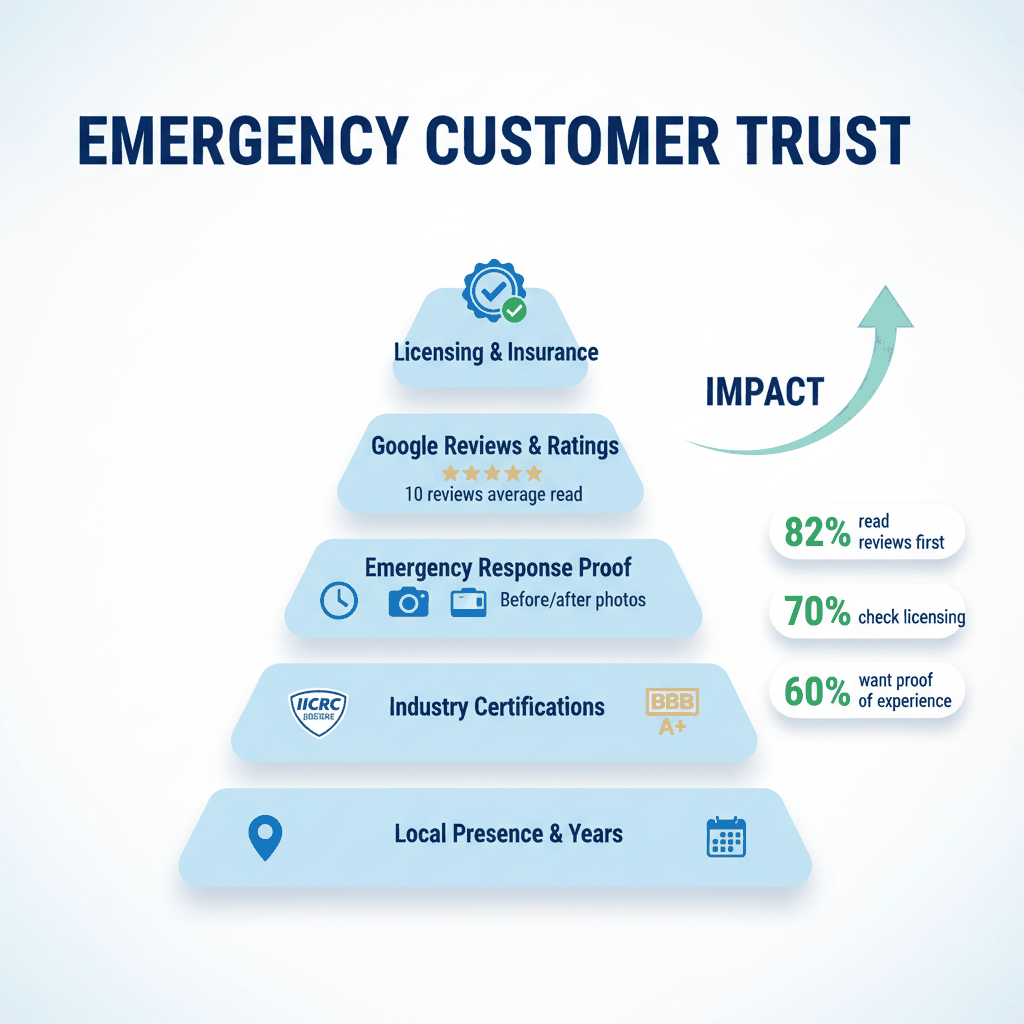
Show your credentials immediately. Emergency customers need proof you're qualified and legitimate before they'll call.
Display these credentials prominently:
State licensing numbers and certifications
Insurance information and bonding details
Industry certifications like IICRC
Better Business Bureau ratings
Years in business and local presence
Put licensing information in your header or sidebar. Don't make visitors hunt for proof you're qualified. They'll leave and call someone else instead.
Companies with numerous positive online reviews see a 20-30% boost in local SEO rankings. This directly increases visibility during critical searches.
Effective review strategies include:
Display Google reviews directly on your homepage
Show recent testimonials with photos
Include video testimonials from happy customers
Feature before-and-after project galleries
Highlight any media coverage or awards
Fresh reviews matter most. Show recent testimonials to prove you're currently providing great service. Old reviews suggest you might not be active anymore.
Prove you actually respond to emergencies quickly. Many companies claim 24/7 service but don't deliver.
Show emergency response credibility through:
Photos of your team responding at night
Case studies showing fast response times
Emergency response equipment photos
Customer stories about quick service
Clear availability messaging
Don't just claim fast response. Prove it with real evidence. Emergency customers have been disappointed before. They need concrete proof you'll show up when promised.
SEO provides the lowest long-term cost per lead at $75-$150. Here's how to rank for high-value emergency keywords.
Target high-intent emergency keywords that searchers use during crises. These keywords convert better than general restoration terms.
High-value emergency keywords include:
"24/7 water damage repair near me"
"Emergency flood cleanup [your city]"
"Water extraction services tonight"
"Burst pipe cleanup emergency"
"Basement flooding help now"
When water damage strikes, searchers type phrases like "24/7 fire damage repair" or "emergency water extraction" into Google. Targeting those phrases ensures restoration providers surface as the most relevant option.
Most emergency searches include local terms. Customers want nearby help that can arrive quickly.
Local SEO strategies include:
Optimize Google Business Profile completely
Target neighborhood-specific keywords
Create location pages for each service area
Build local citations and directory listings
Encourage reviews from local customers
Many customers search for "flood cleanup Eugene OR" or similar local terms. Focus on mobile optimization since people often search local terms on phones during emergencies.
Content marketing generates 3x more leads and costs 62% less than traditional marketing. Creating resource pages about water damage prevention can attract up to 40% more organic traffic.
Effective content topics include:
Steps to take immediately after water damage
How to prevent basement flooding
Mold prevention after water damage
Insurance claim tips for water damage
Emergency water damage checklists
This content establishes your company as an authoritative resource. It also captures traffic from people researching water damage issues before emergencies happen.
Water damage restoration SEO typically requires 12-18 months to generate substantial organic lead flow. Initial improvements may appear within 3-6 months for less competitive local keywords.
ROI improves over time as SEO efforts mature. Some established companies report 20:1+ returns once their optimization strategy takes hold.
Professional water damage lead generation services can help bridge the gap while your SEO develops. This ensures consistent lead flow during the optimization period.
Real restoration companies achieve dramatic results through proper website optimization. These case studies show what's possible with the right approach.
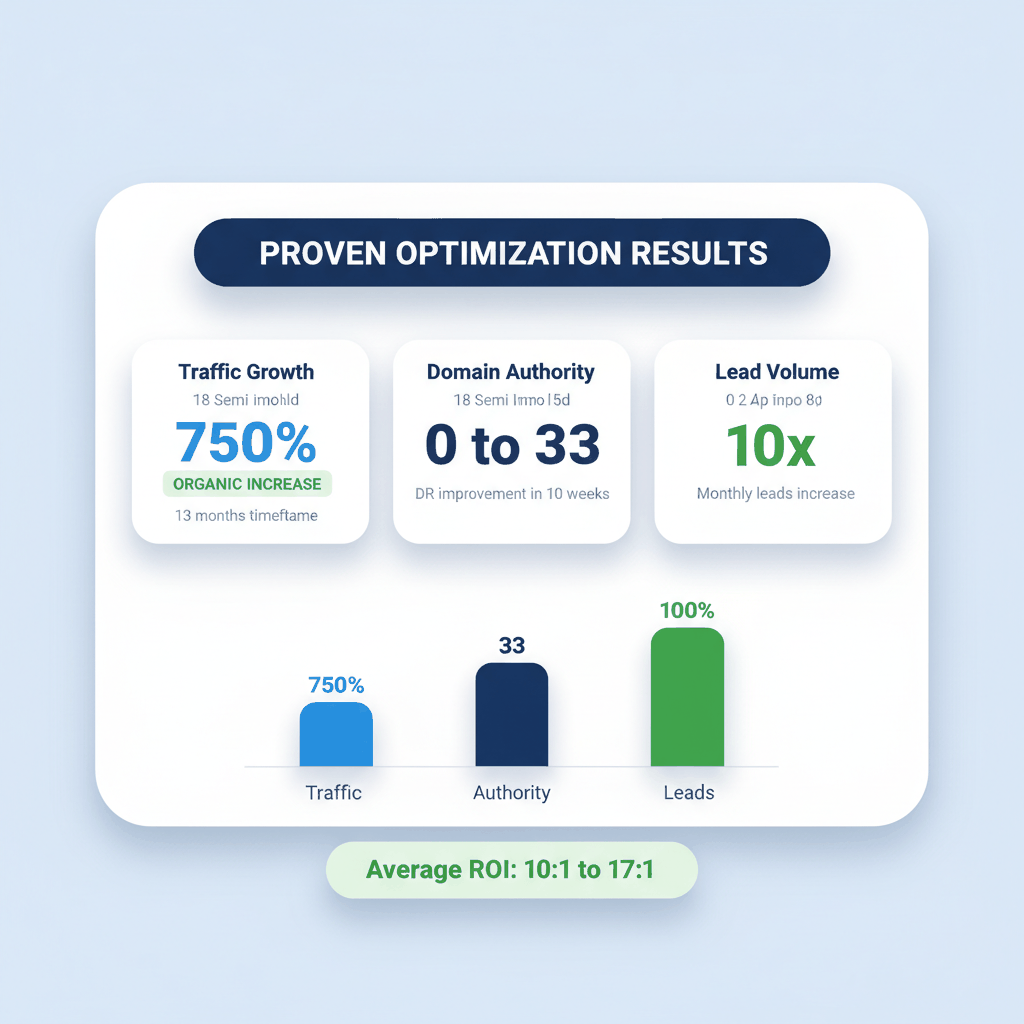
One water damage restoration company achieved 750% more organic traffic and leads within 13 months of implementing local SEO strategies.
The results included:
2x increase in website loading speed
4x increase in calls and submissions
Jump to #2 position for "water damage glendale"
Move to #5 position for "water damage pasadena"
Rise to #6 position for "water damage repair Los Angeles"
The key was focusing on technical optimization first, then building local authority through consistent SEO efforts.
One mid-sized water removal client saw their domain rating jump from 0 to 33 in just 10 weeks, with 26 new keywords indexed and organic traffic flowing.
Another client achieved:
Domain rating rise from 0 to 16 in six weeks
57 keywords indexed quickly
12 first-page rankings established
Foundation set to reduce paid-lead costs
A third client focused on Google Business Profile optimization and steady backlink development. Over 30 days they achieved:
158% net increase in tracked keywords
981 local visits to their website
163 calls directly from the website
29 lead-form submissions organically
Dry Force achieved a 171.6% increase in web sessions, a 4,075% surge in organic conversions, and a 450% rise in form submissions. This resulted in a steady flow of qualified leads.
Rocky Mountain restoration company saw immediate improvement in conversion rates, engagement, and time on site with clear elevation in organic rankings. They now dominate their local market.
Leads increased from approximately 1 per month to 10+ and increasing, with high ROI from their optimization investment.
These successful companies focused on several critical areas:
Mobile optimization for emergency searchers
Local SEO with neighborhood targeting
Trust signals displayed prominently
Fast loading speeds under three seconds
Clear emergency contact information
The combination of technical optimization, local SEO, and conversion optimization creates compound results over time.
How long does water damage website optimization take to show results?
Most campaigns begin to show measurable results in 3-6 months. That includes ranking gains, increased organic traffic, and better lead flow. Full optimization benefits typically develop over 12-18 months as your local authority grows.
What's the most important element for emergency water damage websites?
Mobile optimization is critical since over 80% of water damage searches happen on mobile devices. Your site must load in under three seconds and display contact information prominently for emergency situations.
How much should I expect to spend on water damage SEO?
Professional SEO services typically range from $2,000-$8,000 monthly depending on market competition and scope. This provides much better ROI than PPC advertising, which can cost $91-$250+ per click for water damage keywords.
Which trust signals matter most for restoration websites?
Display licensing information, Google reviews, and emergency response proof immediately. Emergency customers need to see credentials, recent positive reviews, and evidence you actually respond to calls quickly before they'll trust you.
Should I focus on SEO or paid ads for water damage leads?
Use both strategies together. SEO provides the lowest long-term cost per lead at $75-$150, but takes 12-18 months to develop fully. Paid ads deliver immediate results while your SEO builds authority over time.
Ready to buy water damage restoration leads? Sign up for free with ResultCalls today!

Hello everyone! My name is Alex and I write these blogs to help educate small business owners on different ways to grow their business. My goal is to make lead generation as easy as possible for you. After reading these blogs, I hope you leave with some actionable steps that will get you closer to growing your business :)