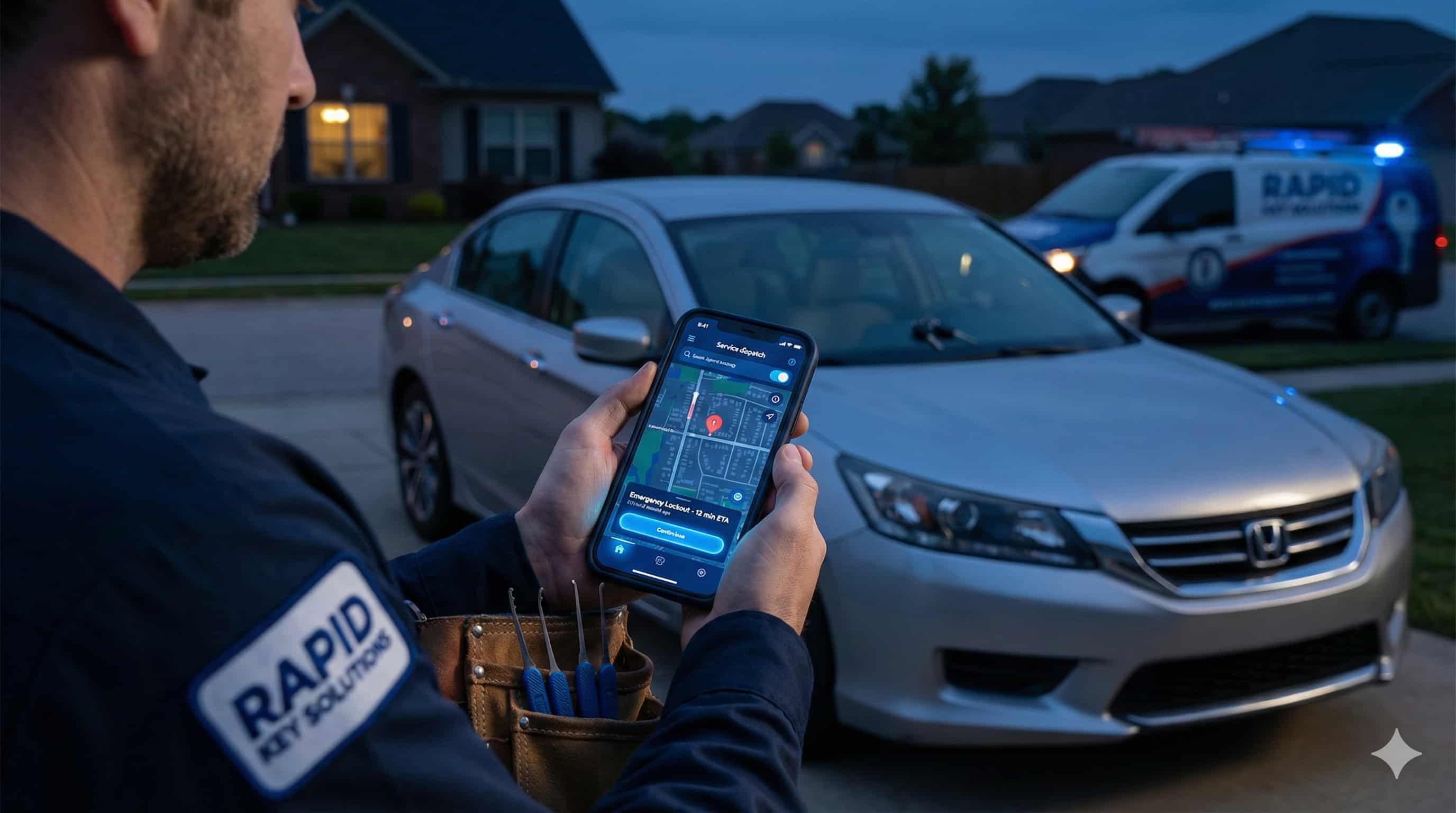
Picture this: A customer is locked out of their car at midnight. They grab their phone and ask "Hey Google, who's the best emergency locksmith near me right now?" If your locksmith business isn't optimized for voice search, you just lost that emergency call to a competitor.
Voice search now accounts for 48% of emergency locksmith queries. That's almost half of all potential customers using their voice instead of typing. Nearly 8 out of 10 mobile local searches result in a purchase within a single day.
The good news? Most locksmith businesses haven't caught up to this trend yet. This creates a massive opportunity for forward-thinking locksmith owners who optimize for voice search now.
You'll discover how to capture voice search traffic, optimize for featured snippets, and turn emergency voice queries into paying customers. Plus, we'll show you the exact strategies one Denver locksmith used to increase call volume by 180%.
Table of Contents
Voice Search Locksmith Market Trends
Common Voice Search Challenges for Locksmiths
Emergency Locksmith Voice Search Optimization
Mobile Locksmith SEO Best Practices
Locksmith Featured Snippets Strategy
Local Voice Search Optimization
Voice Search Tools and Analytics
The locksmith industry is experiencing a digital revolution. Voice search has grown from 31% to 48% of emergency locksmith queries in just 11 months. This shift represents a fundamental change in how customers find emergency services.
Here's what's driving this change. Smart speakers are now in 55% of households. Mobile voice search usage has reached 27% among smartphone users. Emergency situations create perfect conditions for voice search because people need help fast.
The numbers tell the story. 76% of local mobile searches lead to a business visit within 24 hours. For locksmith businesses, this means voice search directly converts to service calls.
Emergency locksmith services are perfect for voice search. Customers are often stressed, in a hurry, or have their hands full. Voice search provides immediate answers without typing complex queries.
Traditional text searches like "locksmith Denver" are being replaced by natural questions. Customers now ask "Who can unlock my Honda Civic downtown right now?" or "What's the fastest emergency locksmith service near me?"
Mobile devices drive most voice searches for locksmith services. Over half of locksmith searches happen on phones. When someone is locked out, they reach for their mobile device first.
Voice search on mobile is natural and fast. It eliminates the frustration of typing on small screens during stressful situations. This convenience factor explains why emergency locksmith voice queries continue growing.
Many locksmith businesses struggle with voice search optimization. They built their SEO around traditional keywords that don't match natural speech patterns. This mismatch costs them emergency calls every day.
Traditional locksmith SEO focused on short phrases. Terms like "car lockout" or "locksmith Denver" worked for text searches. Voice searches use complete questions and natural language instead.
For example, customers don't say "locksmith near me." They ask "Who's the closest locksmith that can help me right now?" This fundamental difference requires new keyword strategies.
The solution involves targeting question-based keywords. Use tools like AnswerThePublic to find actual questions people ask about locksmith services.
About 41% of voice search answers come from featured snippets. Many locksmith websites don't structure content to capture these Position Zero results.
Voice assistants read featured snippet content aloud. If your locksmith business appears in featured snippets, you'll be the first answer customers hear. This creates a huge competitive advantage.
Most locksmiths create content that ranks well but doesn't answer specific questions concisely. Featured snippets require different content formatting and structure.
Voice search results load 52% faster than average websites. If your locksmith site loads slowly on mobile, you won't rank for voice queries.
The average voice search result page loads in 4.6 seconds. Sites taking longer than 3 seconds experience high abandonment rates. Emergency customers won't wait for slow websites.
Google uses mobile-first indexing as the standard. Your locksmith website must perform perfectly on phones to capture voice search traffic.
Emergency locksmith voice search requires specific optimization strategies. Customers in crisis situations use different language and have immediate needs. Your content must match their urgency and natural speech patterns.
Start with the 5W+H approach for keyword research. Who, What, Where, When, Why, and How questions generate most voice searches. "How" appears more than any other word in featured snippet searches.
Target complete questions like "How fast can a locksmith unlock my car?" or "What does emergency locksmith service cost?" These match natural speech better than traditional keywords.
Use these emergency locksmith voice search keywords:
"Who can unlock my car right now?"
"How much does emergency lockout service cost?"
"What's the fastest locksmith response time?"
"Where can I find 24-hour locksmith service?"
"Why is my car key not working?"
"When do locksmiths charge extra fees?"
Structure your content to answer questions directly and concisely. Start with the question as an H2 heading. Follow with a 40-60 word answer that could work as a featured snippet.
For example: "How fast can emergency locksmiths respond?" Answer: "Professional emergency locksmiths typically arrive within 15-30 minutes during normal hours. Response times may extend to 45-60 minutes during peak periods or severe weather. Most locksmith services provide estimated arrival times when you call."
This format gives voice assistants clear, quotable answers while providing helpful information to potential customers.
Include specific emergency response details that match voice search queries. Customers want to know response times, availability, and service areas before calling.
Create dedicated sections answering these emergency questions:
Average response times by area
24/7 availability confirmation
Service area boundaries
Emergency pricing structure
What to expect during service calls
Mobile optimization forms the foundation of voice search success. Since most voice searches happen on mobile devices, your locksmith website must deliver perfect mobile experiences.
Voice search results require fast loading times. Test your site speed using Google PageSpeed Insights. Aim for scores above 90 for mobile performance.
Compress images, minimize code, and use content delivery networks. Every second of load time matters for emergency locksmith searches. Customers in crisis won't wait for slow websites.
Enable browser caching and optimize your hosting setup. Consider using AMP (Accelerated Mobile Pages) for key service pages to maximize mobile speed.
Design content for mobile screens first. Use short paragraphs, bullet points, and clear headings. Emergency customers need information quickly and clearly.
Make phone numbers clickable and prominently displayed. Add click-to-call buttons throughout your content. Emergency customers want immediate contact options.
Use local schema markup to help search engines understand your service areas. This improves visibility for location-based voice searches.
Implement responsive design that works across all devices. Test your site on various phone sizes and orientations. Voice search users access sites from many different mobile devices.
Use structured data markup for locksmith services. Include business hours, service areas, and contact information in your schema markup. This helps voice assistants find and read your information accurately.
Optimize for local search signals. Ensure your name, address, and phone number appear consistently across your website and directory listings.
Featured snippets power most voice search answers. Optimizing for Position Zero results can dramatically increase your locksmith business visibility in voice searches.
The words "best" and "how-to" return more featured snippets than anything else. Lists dominate featured snippets over paragraphs and tables.
Create content that answers specific locksmith questions in list format:
Best locksmith services for car lockouts
How to choose reliable emergency locksmith
Top 5 questions to ask before hiring locksmith
Best times to call emergency locksmith service
Structure your locksmith content around common questions. Use the exact questions as H2 headings. Follow with concise, actionable answers.
Monitor Google's "People Also Ask" section for locksmith-related queries. These questions represent real voice searches. Create content that directly answers these questions.
Use numbered lists for step-by-step processes. For example, "5 Steps to Take When Locked Out of Your Car" or "3 Ways to Verify Licensed Locksmith Services."
Answer questions in 40-60 words for paragraph snippets. Include the question in your content, followed immediately by the answer. This signals to Google that your content contains important information.
Use Google's Rich Results Test tool to verify your structured data. Proper schema markup increases your chances of appearing in featured snippets.
Test different content formats for the same questions. Sometimes bullet points work better than numbered lists. Monitor your featured snippet performance and adjust accordingly.
Local SEO integration drives voice search success for locksmith businesses. 76% of voice searches have local intent. Customers need locksmith services in their specific location.
Your Google Business Profile serves as your online storefront for voice search. Complete every section with accurate, detailed information. Include services, hours, phone number, and high-quality photos.
Connect your profile to real-time availability data when possible. Update your status based on current availability: "3 technicians available now—call for 15-minute ETA" or "Currently serving downtown area—18 minute average response time."
Post regular updates about your locksmith services. Use keywords naturally in your posts. Respond to all reviews promptly and professionally.
Maintain consistent name, address, and phone number across all directory listings. Use tools like BrightLocal to monitor your local citations and ensure accuracy.
Inconsistent information confuses voice assistants and hurts your local rankings. Verify your listings on major platforms like Yelp, Yellow Pages, and industry-specific directories.
Include location-specific keywords in your content naturally. Mention neighborhoods, landmarks, and local areas you serve. This helps voice assistants understand your service area.
Create location-specific content for each service area. Answer questions like "Best locksmith in [neighborhood name]" or "Emergency locksmith near [local landmark]."
Include local references and area-specific information. Mention local businesses, streets, or landmarks that customers might reference in voice searches.
Optimize for "near me" searches by including proximity language in your content. Use phrases like "closest locksmith," "nearby emergency service," and "local locksmith response."
Tracking voice search performance requires specific tools and metrics. Google Search Console won't explicitly show voice queries, but you can identify them by looking for longer, question-based phrases.
Monitor your analytics for question-based keywords and longer phrases. These often indicate voice searches. Look for queries starting with "how," "what," "where," "when," "why," and "who."
Track featured snippet performance using tools like SEMrush or Ahrefs. Monitor which questions trigger featured snippets for locksmith-related queries in your area.
Use Google Search Console to identify queries that bring traffic to your site. Filter for longer, conversational phrases that suggest voice search origins.
Test your voice search optimization using actual voice assistants. Ask Google Assistant, Siri, and Alexa questions about locksmith services in your area. Note which businesses appear first.
Use AnswerThePublic to find question-based keywords in your industry. This tool shows actual questions people search for related to locksmith services.
Implement Google's Structured Data Testing Tool to verify your schema markup. Proper structured data helps voice assistants understand and cite your content.
Track key voice search metrics including:
Question-based keyword rankings
Featured snippet appearances
Mobile page speed scores
Local search visibility
Call volume from mobile devices
Set up conversion tracking for voice-driven traffic. Monitor which voice search queries lead to actual locksmith service calls.
How do I optimize my locksmith website for voice search?
Focus on natural language keywords, optimize for featured snippets, ensure fast mobile loading, and maintain accurate Google Business Profile information. Target question-based keywords that match how people speak.
What voice search keywords work best for emergency locksmith services?
Target complete questions like "Who's the fastest emergency locksmith near me?" and "How much does car lockout service cost?" Use the 5W+H approach (Who, What, Where, When, Why, How) for keyword research.
How important is mobile optimization for locksmith voice search?
Critical. Voice search results load 52% faster than average websites, and over half of locksmith searches happen on mobile devices. Your site must load in under 3 seconds on mobile.
Can voice search optimization increase emergency locksmith calls?
Yes. Voice search accounts for 48% of emergency locksmith queries, and 76% of local mobile searches lead to business visits within 24 hours. Proper optimization directly increases service calls.
What's the connection between featured snippets and voice search for locksmiths?
About 41% of voice search answers come from featured snippets. When your locksmith content appears in Position Zero, voice assistants read your information first to customers.
Ready to get more locksmith calls? Sign up for free with ResultCalls today!

Hello everyone! My name is Alex and I write these blogs to help educate small business owners on different ways to grow their business. My goal is to make lead generation as easy as possible for you. After reading these blogs, I hope you leave with some actionable steps that will get you closer to growing your business :)