Starting a new roofing company feels overwhelming. You know how to fix roofs, but marketing? That's different territory.
Most new roofing companies make the same mistake. They scatter their marketing efforts everywhere. A truck wrap here, a Facebook ad there. Without a clear plan, you waste time and money.
The first 90 days determine if your roofing startup thrives or struggles. You need a focused marketing strategy that builds your local presence while generating immediate leads.
This guide gives you a proven 90-day marketing plan. You'll learn which tactics to prioritize, how to build your online presence, and systems that turn leads into customers.
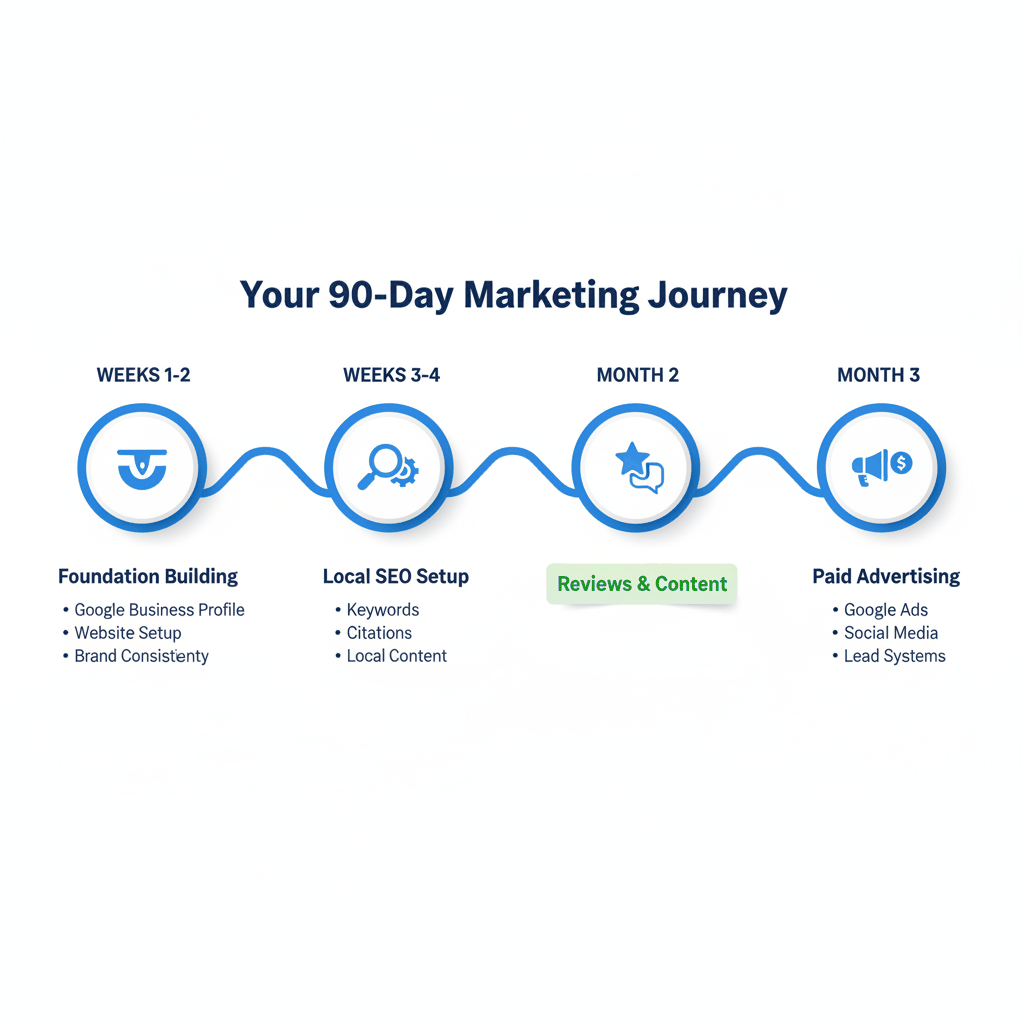
Table of Contents
Roofing marketing is different from other businesses. Customers only search for you during emergencies or major projects. This creates unique challenges for new companies.
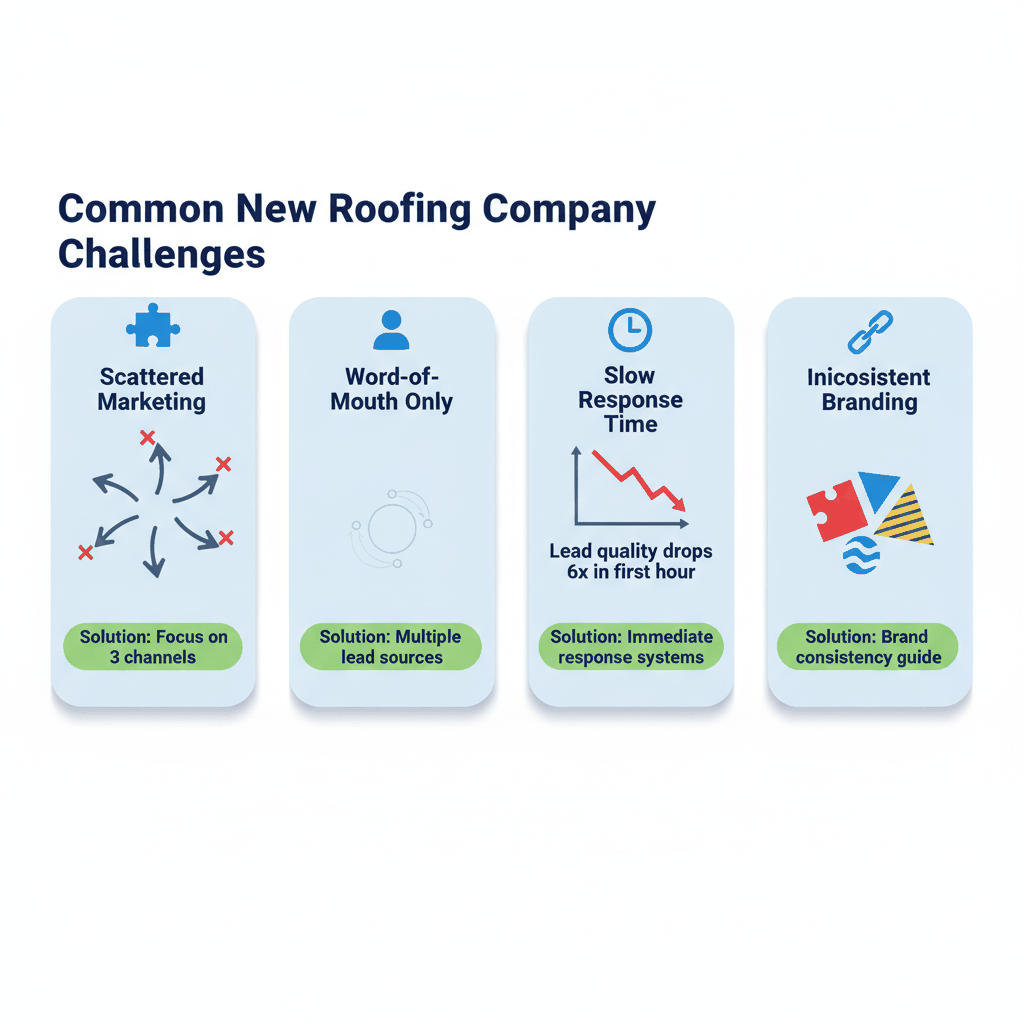
Too many roofing business owners jump between marketing tactics. They try truck wraps, billboards, and Facebook ads without a clear strategy. This wastes money and confuses customers.
Focus matters more than variety. Pick three marketing channels and master them first. Then expand your efforts.
Word of mouth is powerful for roofing companies. But it's not enough to sustain steady growth. If you only rely on referrals, you miss customers actively searching online for help.
Contractors who depend solely on referrals usually plateau. You need multiple lead sources to scale your business.
Speed kills the competition in roofing. The first contractor to respond usually wins the job. Studies show that lead qualification decreases by over 6 times in the first hour.
Set up systems that respond to leads immediately. Every minute counts when someone needs roofing help.
Your logo looks different on your truck than your website. Your social media doesn't match your business cards. This inconsistency confuses potential customers.
Consistent branding builds trust. Make sure your visual identity looks the same everywhere customers see it.
Your first two weeks focus on creating the foundation for all future marketing. Get these basics right before you spend money on advertising.
Your Google Business Profile has the highest ROI of any marketing activity. Most roofing searches happen locally. Your profile appears in Google Maps and local search results.
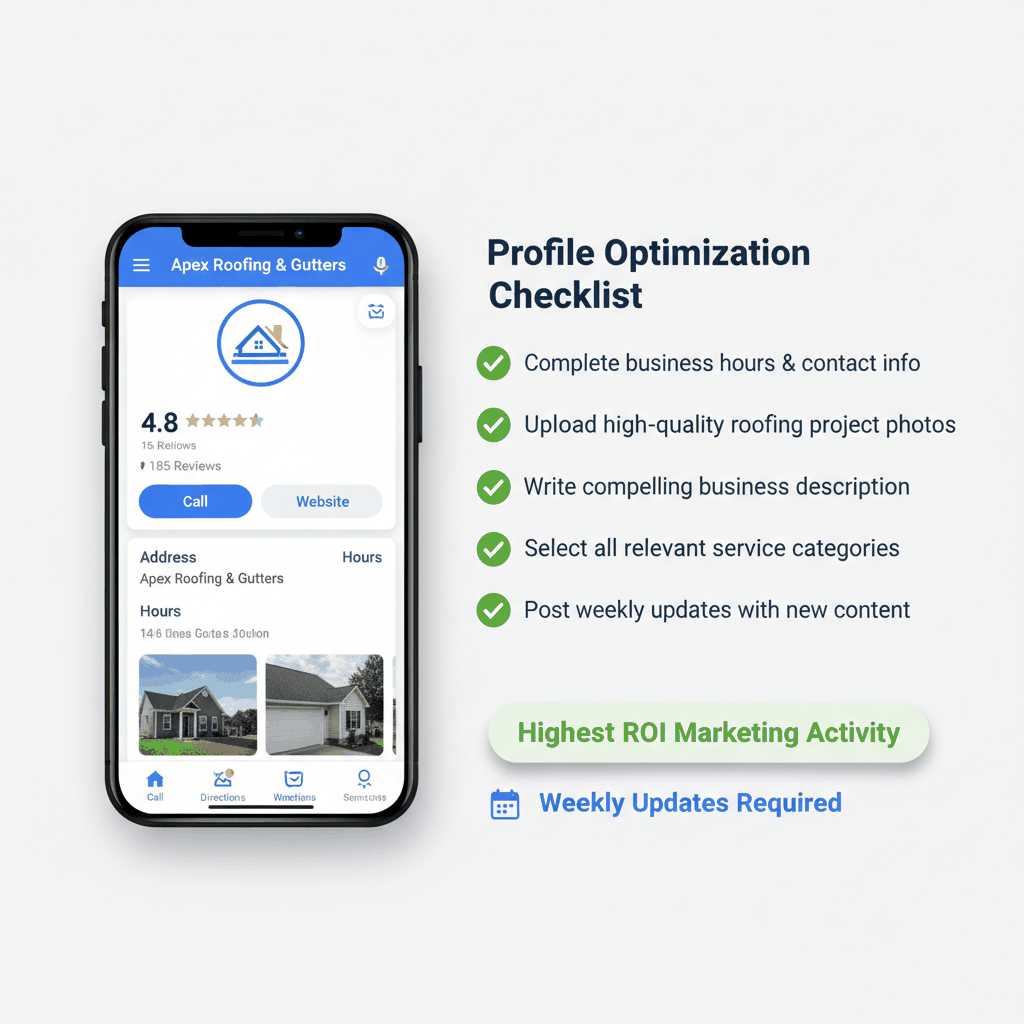
Complete every section of your profile:
Add accurate business hours and contact information
Upload high-quality photos of recent roofing projects
Write a compelling business description with your main keywords
Select all relevant service categories
Post your service area boundaries clearly
Update your profile weekly with new photos and posts. Google rewards active profiles with better visibility.
Over 70% of roofing leads start on mobile devices. If your website doesn't work perfectly on phones, you lose customers every day.
Your website needs these elements:
Fast loading speed under 3 seconds
Click-to-call phone number prominently displayed
Emergency contact form above the fold
Before and after photos of your best work
Service area map showing where you work
Customer testimonials with photos
Test your website on different phones. Ask friends to try calling you from your site. Fix any issues immediately.
Create a simple brand guide that covers your logo, colors, and messaging. Use the same elements everywhere customers see your company.
Your branding consistency should span:
Vehicle wraps and signage
Website and social media profiles
Business cards and uniforms
Invoices and contracts
Local SEO helps you show up when people search for roofers in your area. This is where most of your leads will come from long-term.
Start with keywords that combine your services with your location. Don't try to rank for "roofing" nationally. Focus on terms like "roof repair [your city]" or "emergency roofing [your area]."
Target these keyword types:
Service + location: "roof replacement Denver"
Problem + location: "roof leak repair Chicago"
Emergency + location: "emergency roofer Dallas"
Material + location: "metal roofing Austin"
Use these keywords naturally in your website content, Google Business Profile, and online listings.
Citations are mentions of your business name, address, and phone number on other websites. These help Google verify your business and improve local rankings.
Start with these high-impact citations:
Yelp and Facebook business pages
Better Business Bureau listing
Local chamber of commerce directory
Industry-specific directories like Angie's List
Home advisor and contractor platforms
Keep your business name, address, and phone number exactly the same across all platforms. Small differences confuse Google and hurt your rankings.
Create content that helps local customers understand roofing issues specific to your area. This builds authority and attracts local search traffic.
Write about topics like:
How local weather affects roofing materials
Common roofing problems in your climate
Local building codes and permit requirements
Best roofing materials for your region
Month two focuses on building social proof and creating content that attracts customers. Reviews and content work together to build trust with potential customers.
For roofing companies, customer reviews are make-or-break. Positive reviews build instant trust. A lack of reviews sends prospects to your competitors.
The best time to ask for reviews is right after project completion. The customer is happy and the work is fresh in their mind.
Set up this review process:
Send a review request within 24 hours of job completion
Include direct links to your Google Business Profile
Follow up with a personal phone call if needed
Respond to all reviews within 24 hours
Use review feedback to improve your service
Five new reviews this month can outperform 50 old ones. Google values recent, consistent review activity.
Over 50% of organic traffic comes from long-tail keywords that don't show up in research tools. Create content that naturally includes these hidden search terms.
Focus on content types that work for roofing:
Before and after project galleries with detailed descriptions
Step-by-step explanations of your roofing process
Common problem identification guides
Maintenance tips for different roofing materials
Emergency preparedness checklists
Write like you're explaining roofing issues to a neighbor. Keep technical terms simple. Answer the questions customers ask during estimates.
Social media for roofing works best when you show your work in progress. People want to see the craftsmanship and attention to detail.
Post content that builds trust:
Time-lapse videos of roof installations
Photos of challenging repairs you've completed
Team photos showing professionalism
Customer testimonials with permission
Educational tips about roof maintenance
Post consistently rather than frequently. Three quality posts per week beat seven rushed posts.
By month three, you have the foundation to support paid advertising. Your website converts visitors, you have reviews, and your brand looks professional.
Google Local Service Ads show up at the very top of search results. They're marked as "Google Guaranteed" which builds instant trust with customers.
These ads work well for roofing companies because:
You only pay for actual phone calls
Google screens and badges your business
They appear above regular search results
Customers can book appointments directly
The application process takes time. Start early and maintain high review ratings to stay active in the program.
Social media ads work for roofing when you target homeowners with older roofs or recent storm damage. Use local targeting to reach people in your service area.
Effective roofing ad campaigns focus on:
Free roof inspections after storms
Seasonal maintenance reminders
Before and after project showcases
Special offers for immediate repairs
Start with small budgets and test different messages. Scale up campaigns that generate quality leads at acceptable costs.
Fast response time separates winning roofing companies from the competition. Set up systems that engage leads immediately, even when you're on a job.
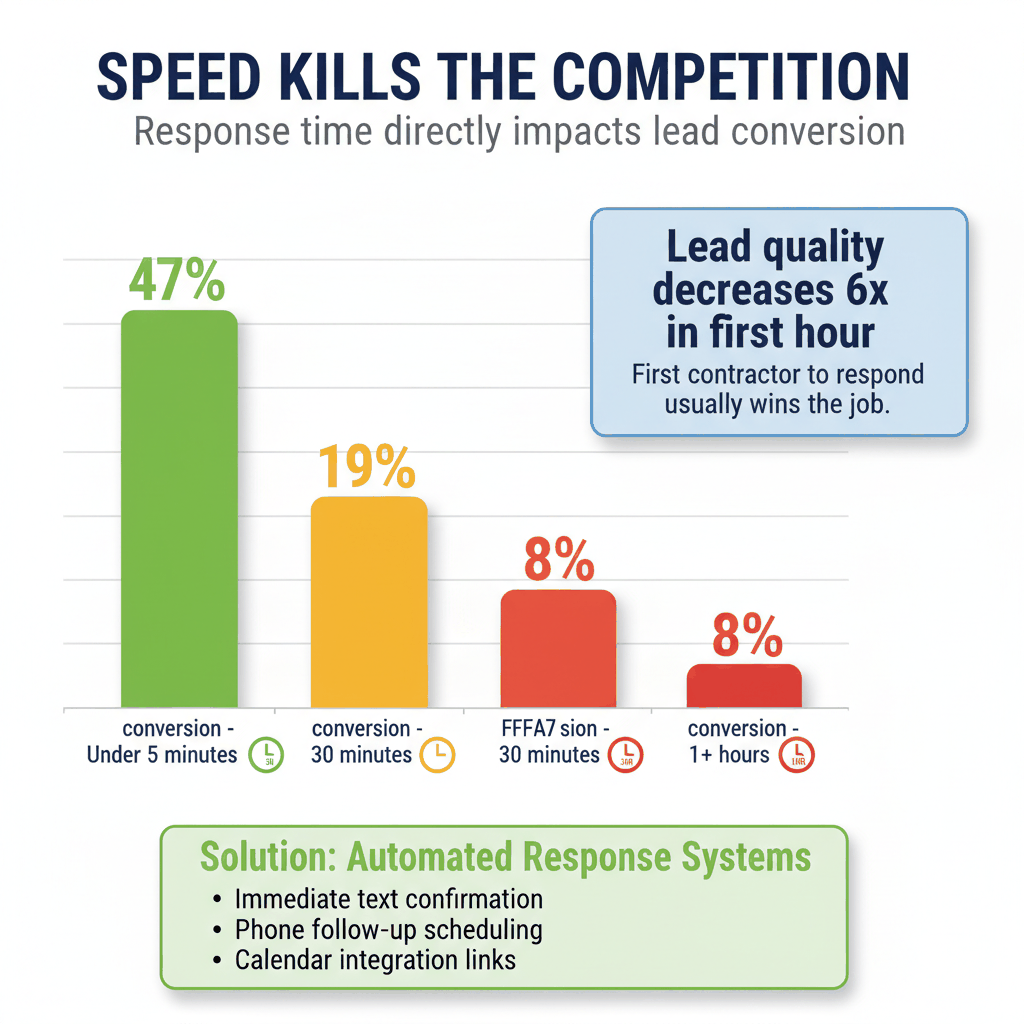
AI-powered lead engagement tools respond to new leads instantly. For roofers who work on sites or after hours, this technology protects revenue by ensuring no lead goes cold.
Your response system should include:
Automated text confirmation within minutes
Phone call follow-up within one hour
Email with helpful information and next steps
Calendar link for easy appointment scheduling
These case studies show what's possible when new roofing companies follow proven marketing strategies.
Elevated Roofing in Frisco, Texas experienced explosive growth using systematic marketing. After two years of focused effort, they achieved a 109% increase in annual website traffic.
More importantly, they saw a 340% increase in roofing leads. This growth enabled them to expand into commercial roofing and launch complementary plumbing and HVAC services.
Key success factors included consistent Google Business Profile updates, strategic content creation, and systematic review generation.
Interstate Roofing in Denver spent five years building their SEO and local presence. When major hail storms hit Denver in 2023, they were ready.
Their years of preparation paid off with market-dominating lead generation. While competitors scrambled to find customers, Interstate had more leads than they could handle.
This shows the power of starting marketing early and staying consistent, even when immediate results aren't obvious.
One specialized metal roofing company built a system generating around 300 exclusive leads each month. Their maximum cost per lead was $220, higher than typical roofing leads but profitable due to higher project values.
They succeeded by focusing on their specialty rather than trying to be everything to everyone. Metal roofing commands premium prices, allowing higher marketing investments per lead.
The right tools make marketing more efficient and help you track what's working. Start with basic tools and upgrade as your business grows.
Track your marketing performance with these essential tools:
Google Analytics for website traffic and conversion tracking
Google Search Console for keyword rankings and search performance
Google Business Profile insights for local search data
Simple rank tracking tools to monitor local keyword positions
Start with free tools. Paid options like Ahrefs or SEMrush make sense once you're generating consistent revenue from marketing.
A good CRM system helps you track leads, follow up consistently, and measure which marketing channels generate the best customers.
Business management software like AccuLynx gives you tools to track and automate marketing efforts. With automation features, you can set up triggered messages based on customer actions.
Your CRM should handle:
Lead capture from multiple sources
Automated follow-up sequences
Appointment scheduling and reminders
Project tracking and customer communication
Revenue attribution by marketing source
A ServiceTitan report shows that nearly 79% of roofing contractors aren't using AI tools at all. This represents a major opportunity for early adopters.
AI tools help with:
Instant lead response and qualification
Content creation and social media posting
Review monitoring and response drafting
Appointment scheduling and customer service
Start with simple AI assistants for customer communication. Expand to more sophisticated tools as you see results.
Experts suggest roofing businesses allocate 7-12% of revenue to marketing. Smaller companies should stick to the lower end while larger firms can invest more aggressively.
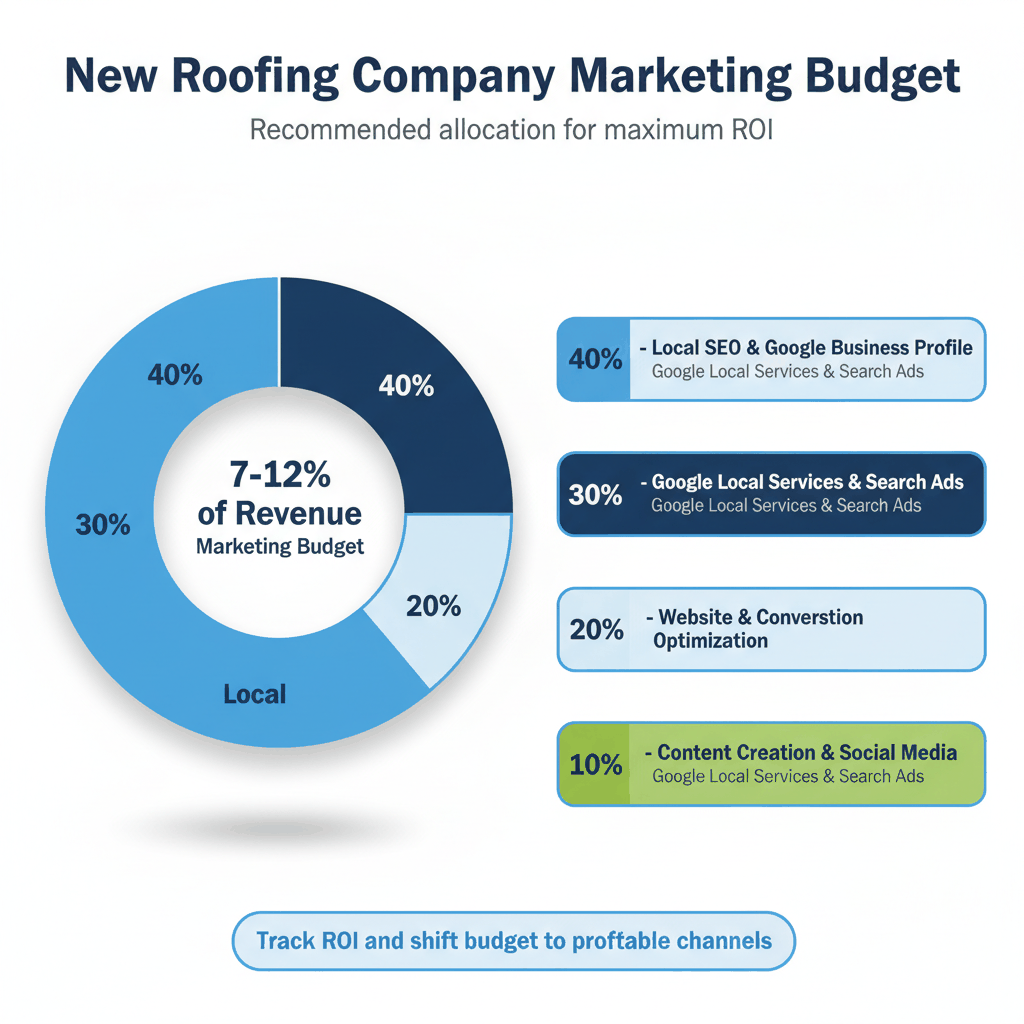
For new roofing companies, focus your budget on:
40% local SEO and Google Business Profile optimization
30% paid advertising (Google Local Services and search ads)
20% website and conversion optimization
10% content creation and social media
Track return on investment for each channel. Shift budget toward activities that generate profitable customers.
Stay ahead of changes that affect how customers find and choose roofing contractors. These trends will impact your marketing strategy in 2025 and beyond.
People no longer just type keywords into Google. They ask complex questions to AI tools like ChatGPT and Google's AI Overview.
Customers might ask: "What's the best roofing material for a lakefront home that can handle heavy snow?" or "Find me a trusted local contractor specializing in cedar shake installation."
Create content that answers these detailed, conversational questions. Write like you're having a consultation with a homeowner.
Over 88% of customers who search for local businesses on mobile devices call or visit within 24 hours. Every second your website takes to load costs you engagement and revenue.
Mobile customers want immediate answers and fast responses. Optimize every customer touchpoint for mobile use.
Local searches account for nearly half of all Google queries. "Roofing near me" searches often convert at over 40%. By targeting hyper-local keywords, contractors capture high-intent prospects ready to schedule inspections.
Focus your marketing on local search visibility rather than broad, national keywords.
How much should a new roofing company spend on marketing?
New roofing companies should invest 7-10% of revenue in marketing. Start with lower budgets focused on local SEO and Google Business Profile optimization. Increase spending as you generate consistent leads and revenue.
What's the most important marketing activity for roofing startups?
Optimizing your Google Business Profile has the highest ROI for new roofing companies. Most customers find roofers through local search results, and your Google profile appears prominently in these searches.
How quickly can new roofing companies see marketing results?
You can see immediate results from Google Local Service Ads and proper lead response systems. SEO and content marketing take 3-6 months to show significant impact. Focus on quick wins while building long-term strategies.
Should new roofing companies use social media marketing?
Yes, but focus on visual platforms like Facebook and Instagram. Share before and after photos, work-in-progress videos, and customer testimonials. Social media works best for building trust and showcasing craftsmanship.
How do roofing companies track marketing performance?
Use Google Analytics to track website visitors and conversions. Monitor phone calls from different marketing sources. Track which channels generate the highest-value customers, not just the most leads.
Ready to get pay per call roofing leads? Sign up for fee with ResultCalls today!

Hello everyone! My name is Alex and I write these blogs to help educate small business owners on different ways to grow their business. My goal is to make lead generation as easy as possible for you. After reading these blogs, I hope you leave with some actionable steps that will get you closer to growing your business :)