Your HVAC business could be missing out on massive growth opportunities. The U.S. HVAC industry is worth $156 billion currently. Yet most contractors struggle with inconsistent revenue and high customer costs.
The problem is that 70% of HVAC companies report dissatisfaction with their marketing providers. They waste money on strategies that don't work. Plus, the average cost to acquire a new customer ranges from $150 to $350.
There's a better way to grow your HVAC business. Smart contractors use proven local marketing strategies to lower costs and increase revenue. These tactics help you connect with customers when they need you most.
You'll discover budget-friendly strategies that work. Plus, you'll learn exactly how to implement each tactic step by step.
Table of Contents
Local marketing for HVAC businesses means targeting customers in your service area. This approach works because 46% of Google searches have local intent. People search for "AC repair near me" or "heating service in Dallas."
The foundation starts with understanding your market. Your customers need emergency repairs, seasonal maintenance, and system replacements. They want fast response times and reliable service.
Focus on specific neighborhoods and zip codes. Create separate landing pages for each major area you serve. For example, if you serve three counties, build dedicated pages for each location.
Research local competition in each area. Use tools like Google Keyword Planner to find what people search for in your market.
List your core services and seasonal offerings. Most successful HVAC companies focus on these areas:
Emergency repair services
Seasonal maintenance contracts
System installations and replacements
Indoor air quality improvements
Energy efficiency upgrades
Smart thermostat installations
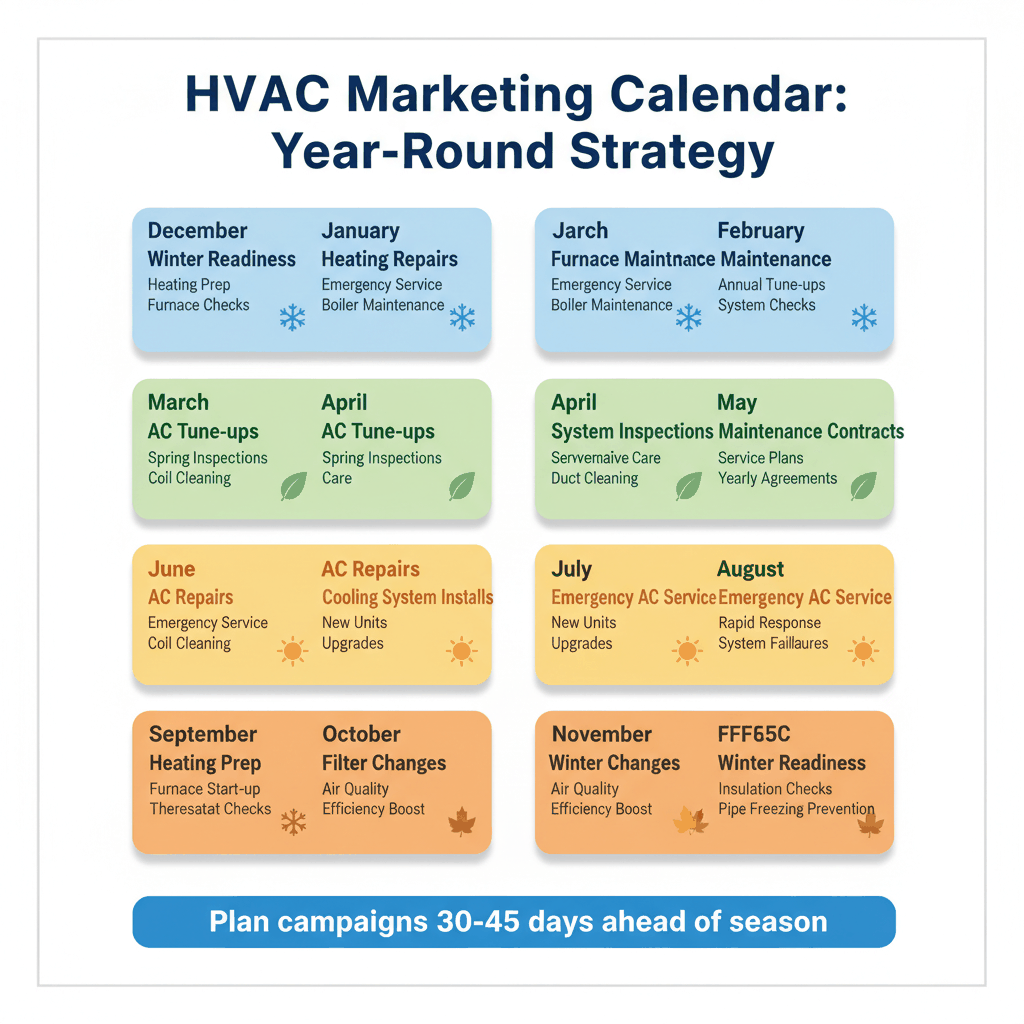
Match your services to customer needs throughout the year. Summer brings AC repair calls. Winter creates heating emergencies. Spring and fall are perfect for maintenance contracts.
Google Business Profile is your most important marketing tool. It's free and appears in 93% of local searches. When someone searches "HVAC repair near me," your profile could appear in the top three results.
The key is optimization. Most contractors create basic profiles and forget about them. Smart business owners treat their profile like a marketing machine.
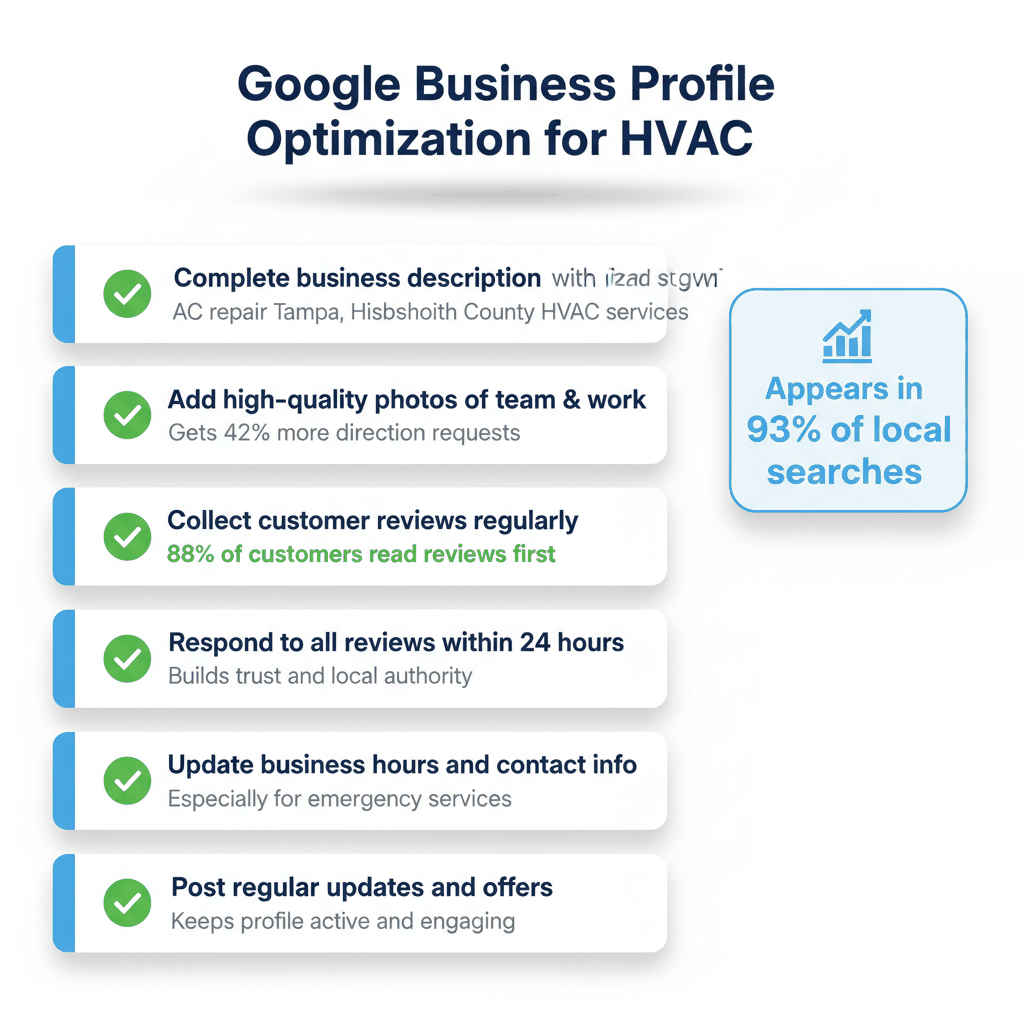
Include location-specific keywords in your description. Don't write generic text like "We provide excellent HVAC service." Instead, use targeted phrases.
For example: "Looking for fast AC repair in Tampa? We specialize in emergency HVAC services, furnace installations, duct cleaning, and seasonal tune-ups across Hillsborough County."
This description includes the city name, specific services, and county coverage area.
Upload photos of your team, vehicles, and completed work. Show before and after pictures of installations. Include photos of your office and service area.
Businesses with photos get 42% more direction requests and 35% more clicks to their website. Update photos regularly to keep your profile fresh.
Reviews directly impact your local rankings. 88% of consumers consult reviews when discovering local businesses.
Ask satisfied customers to leave reviews after completing jobs. Respond to all reviews, both positive and negative. Thank customers for positive feedback and address concerns professionally.
SEO helps your website appear when customers search for HVAC services. The goal is ranking on the first page of Google for local searches in your area.
Start with keyword research. Find out what your customers actually search for online. Common HVAC keywords include "AC repair," "heating service," "HVAC contractor," and "furnace installation."
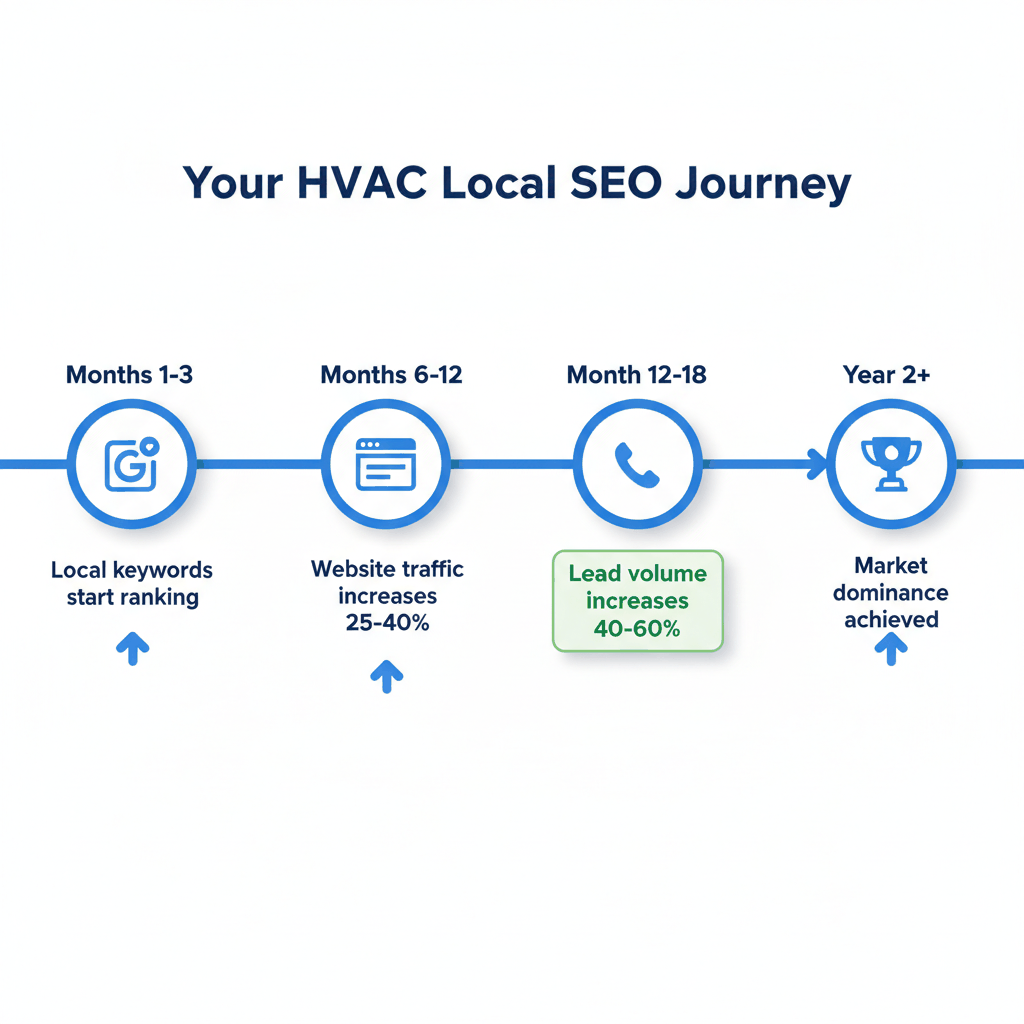
Combine service keywords with your location. Instead of targeting "AC repair," focus on "AC repair in Phoenix" or "Phoenix air conditioning service."
Create separate pages for each major service and location combination. This gives you more opportunities to rank in local searches.
Write blog posts that answer customer questions. Topics might include:
How often to change air filters
Signs your AC needs repair
Preparing your heating system for winter
Energy-saving tips for homeowners
When to replace vs. repair HVAC systems
This content helps customers and shows Google you're an expert in your field.
Make sure your website loads fast on mobile devices. 76% of mobile searchers will call a business within 24 hours of their search.
Include your phone number prominently on every page. Add click-to-call buttons for mobile users. Make it easy for customers to contact you immediately.
Keeping existing customers costs less than finding new ones. The average customer lifetime value for HVAC clients is $15,340. That makes retention extremely valuable.
HVAC systems get replaced every 10-15 years. If you keep customers through one replacement cycle, you create massive lifetime value.
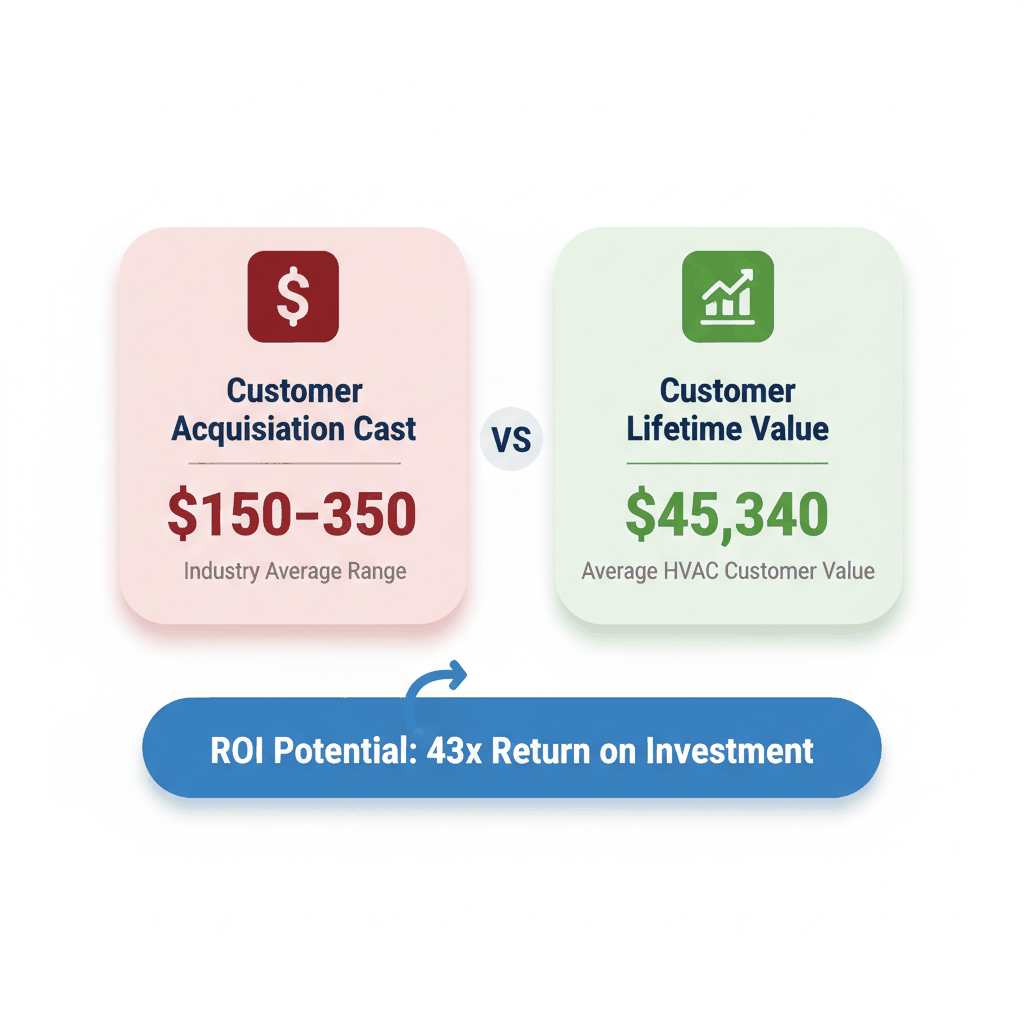
Offer annual maintenance contracts for heating and cooling systems. These provide steady recurring revenue and keep you connected with customers year-round.
As a rule, aim for 300-500 maintenance customers per technician. This significantly lowers your marketing costs while providing predictable income.
Maintenance customers are also more likely to choose you for repairs and replacements. They already trust your service and expertise.
Create systems to stay in touch with customers after completing work. Send seasonal reminders about maintenance. Share energy-saving tips via email.
Use customer management software to track service history and schedule follow-ups automatically. This ensures no customer gets forgotten.
Train technicians to identify additional opportunities during service calls. Common upsells include:
Air filter replacements and upgrades
Duct cleaning services
Smart thermostat installations
Indoor air quality improvements
Energy efficiency upgrades
Focus on solutions that benefit customers, not just additional revenue. Explain how upgrades improve comfort, efficiency, or air quality.
Most successful HVAC companies invest 7-10% of annual revenue in marketing. Going above 10% means you're not being efficient. Spending less than 5% means you're missing opportunities.
The key is tracking return on investment for every marketing dollar spent. Know which channels generate the most leads and focus your budget there.
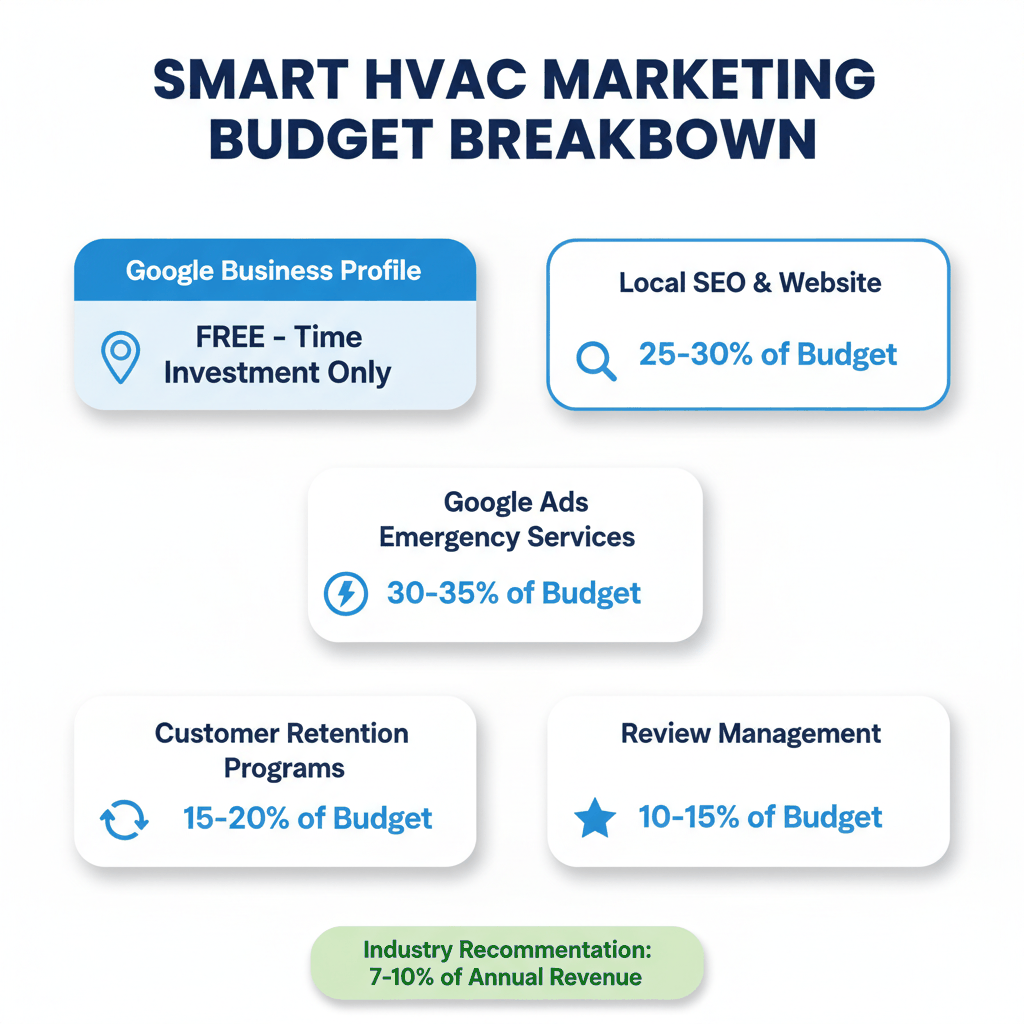
Divide your marketing budget across proven channels:
Google Business Profile optimization (Free but requires time)
Local SEO and website optimization (25-30% of budget)
Google Ads for emergency services (30-35% of budget)
Customer retention programs (15-20% of budget)
Review management and reputation building (10-15% of budget)
Start with the highest-impact, lowest-cost strategies first. Google Business Profile optimization costs nothing but time and can generate immediate results.
Track key metrics for every marketing channel:
Cost per lead (industry average is $153)
Customer acquisition cost ($150-$350 range)
Customer lifetime value ($15,340 average)
Conversion rate from lead to customer
Use tools like Google Analytics and call tracking software to measure results accurately.
HVAC lead generation services can help you get pay per call leads and boost revenue.
Your online reputation directly affects your ability to grow. Customers research HVAC companies before making decisions. Poor reviews can eliminate you from consideration immediately.
The goal is building a consistent flow of positive reviews while addressing any negative feedback professionally and quickly.
Ask for reviews at the right moment. The best time is immediately after completing excellent service when customers feel most satisfied.
Train your technicians to request reviews verbally. Follow up with text messages or emails containing direct links to your Google Business Profile.
Make the process easy for customers. Don't just ask for reviews - show them exactly how to leave one.
Respond to negative reviews within 24 hours. Acknowledge the customer's concerns and offer to resolve the issue privately.
For example: "Thank you for your feedback, John. We're sorry your experience didn't meet expectations. Please call our office at [phone number] so we can make this right."
This shows other customers that you care about service quality and are willing to fix problems.
The right technology tools can automate marketing tasks and improve customer service. This frees up time for you to focus on running your business.
Smart HVAC businesses invest in tools that handle routine tasks automatically while improving customer experiences.
Platforms like ServiceTitan help you manage customer interactions, track service history, and automate follow-ups.
Instead of juggling spreadsheets and manual follow-ups, you can automate key tasks and focus on service delivery.
Use tools like Google Analytics and Google Search Console to monitor website performance. Track which pages generate the most leads and phone calls.
SEMrush and similar platforms help with keyword research and competitor analysis. Know what's working for other HVAC companies in your market.
The smart thermostat market is projected to grow to $3.86 billion by 2029. Consider expanding your services to include smart HVAC solutions.
Nearly 70 million American households will use smart home technology in 2024. This represents a huge growth opportunity for forward-thinking contractors.
How much should I spend on HVAC marketing?
Industry experts recommend spending 7-10% of annual revenue on marketing for optimal HVAC business growth. Companies spending less than 5% often miss growth opportunities, while those spending over 10% may not be using efficient strategies.
What's the average customer lifetime value for HVAC businesses?
The average customer lifetime value for HVAC clients is $15,340. Since HVAC systems typically need replacement every 10-15 years, maintaining customer relationships through at least one replacement cycle creates significant value for your business.
How can I reduce customer acquisition costs for my HVAC business?
Focus on Google Business Profile optimization, local SEO, and customer retention programs. Building 300-500 maintenance customers per technician significantly reduces marketing costs while providing steady recurring revenue and referral opportunities.
What are the most effective local marketing strategies for HVAC companies?
The most effective strategies include optimizing your Google Business Profile, targeting local SEO keywords, building maintenance agreement programs, and managing online reviews. These tactics help you appear in local search results when customers need HVAC services.
How do I grow my HVAC business in a competitive market?
Focus on customer retention, local SEO optimization, and smart technology integration. Differentiate yourself by offering maintenance contracts, emergency services, and smart home solutions while maintaining excellent customer service and online reputation.
Ready to buy HVAC leads? Sign up for free with ResultCalls today!

Hello everyone! My name is Alex and I write these blogs to help educate small business owners on different ways to grow their business. My goal is to make lead generation as easy as possible for you. After reading these blogs, I hope you leave with some actionable steps that will get you closer to growing your business :)