Your phone rings at 2 AM. A homeowner's basement is flooded. They need help now. But are your ads running when they search for "emergency water damage restoration"?
Most water damage restoration companies miss their biggest opportunities. They turn off ads overnight or fail to bid higher during emergency hours. This leaves desperate customers to find your competitors instead.
Water damage Google ads require a different approach than regular home service marketing. Emergencies happen 24/7. Your ad strategy must match that reality.
This guide shows you proven bidding strategies for water damage restoration. You'll learn how to capture high-value emergency leads around the clock. Plus discover advanced campaign tactics that turn expensive clicks into profitable jobs.
Table of Contents
Water damage Google ads target customers in real-time. They appear at the top of search results when someone searches "emergency water damage restoration near me." This timing is everything for restoration businesses.
Research shows that 76% of people who search for something nearby visit a business within 24 hours. For water damage, that window shrinks to hours or minutes.
Water damage creates urgent situations. Homeowners need immediate help. They don't have time to research multiple companies or wait for callbacks. They call the first qualified company they find.
Traditional marketing works for planned purchases. Water damage emergencies are different. They happen without warning. Your SEO ranking won't help if customers can't find you at 3 AM on a Sunday.
Google ads solve this problem. They run 24/7. You can adjust bids for peak emergency hours. Plus target specific keywords that emergency customers use.
Emergency customers search differently than regular prospects. They use urgent keywords like "24/7 water damage repair" and "emergency flood cleanup." They include location modifiers like "near me" or their city name.
These searchers convert faster. They don't comparison shop. They need solutions immediately. This makes them highly valuable despite higher click costs.
Water damage restoration features the highest cost-per-click rates in home services. Understanding these costs helps you budget effectively and set realistic expectations.
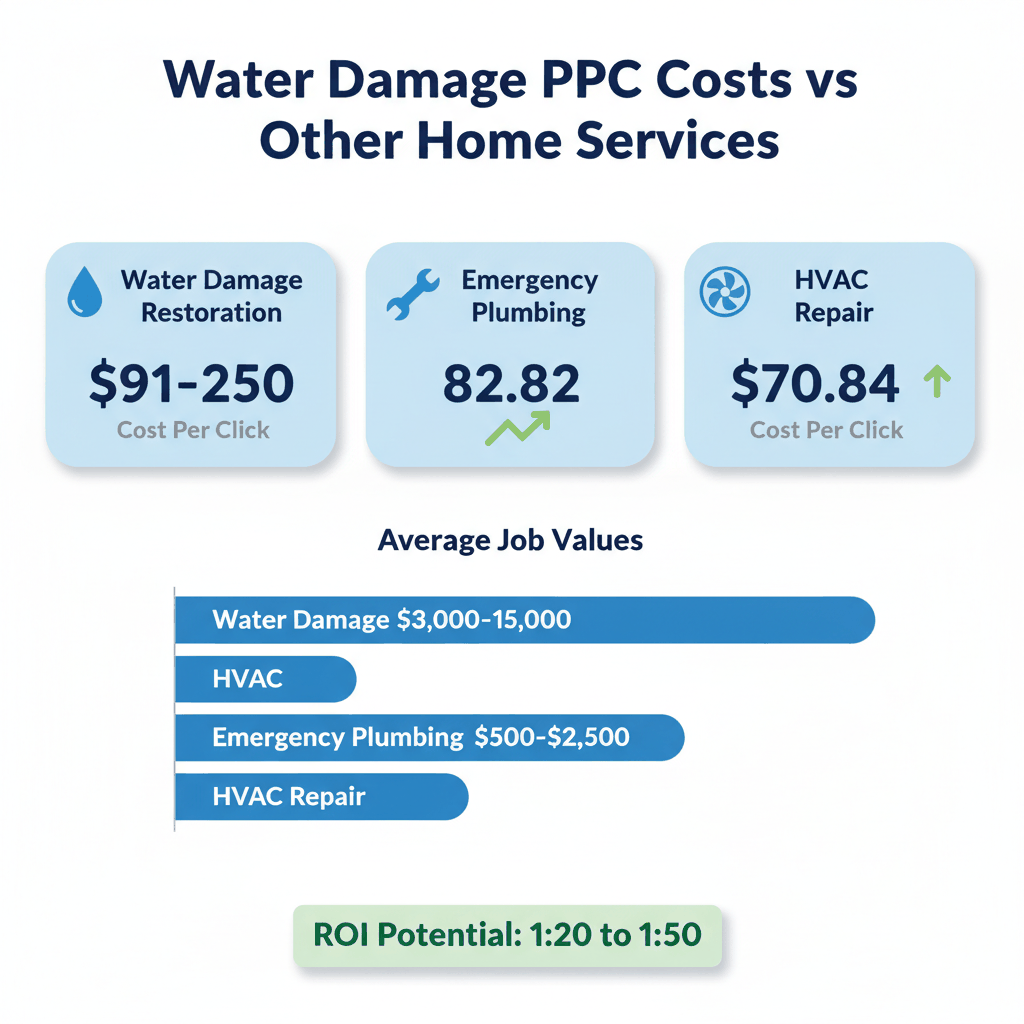
Water damage keywords cost $91-$250+ per click depending on location and competition. Emergency plumbing averages $82.82 per click. HVAC repair costs $70.84 per click.
Keywords like "water restoration [city]" may cost $100 to $150 per click. The term "water damage" still hovers around the $120 mark for a single click in competitive markets.
High costs reflect high value. Water damage jobs average $3,000 to $15,000 or more. Insurance often covers the work. This makes customers less price-sensitive during emergencies.
Competition drives prices up. Many restoration companies compete for the same emergency keywords. Limited ad space at the top of results increases bidding wars.
A $120 click that generates a $6,000 restoration job represents excellent ROI. The key is conversion optimization. You need landing pages that convert visitors into phone calls.
For example: One Florida restoration company averaged $120 per lead. She closed 1 out of every 3 leads. Her average job value was $6,000. This meant spending a few hundred dollars in ads to generate thousands in revenue.
Emergency water damage happens around the clock. Your bidding strategy must reflect this reality. Most companies make the mistake of using the same bids 24/7.
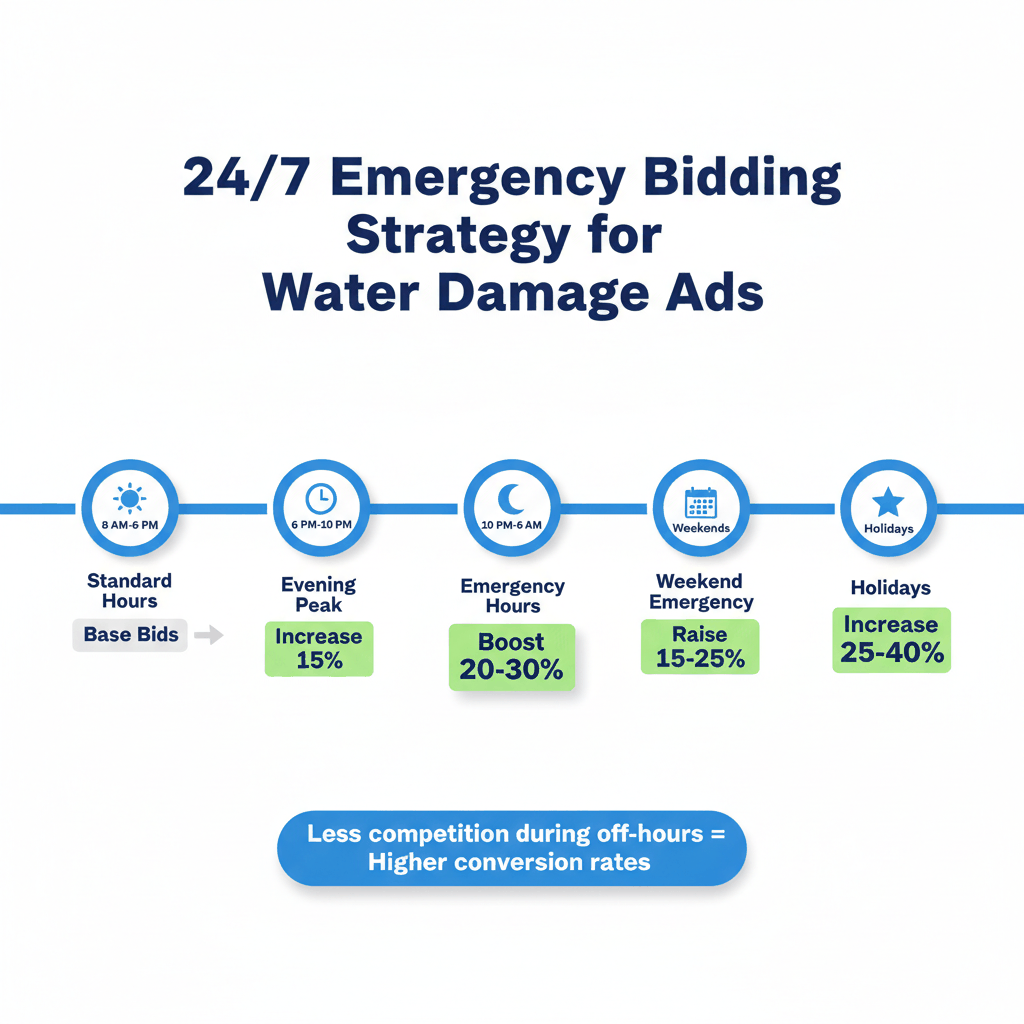
Water emergencies peak during specific times. Late nights (10 PM to 6 AM) often see fewer competitors but highly motivated customers. Weekends and holidays also generate emergency calls.
Increase your bids by 20-30% during these peak hours. Many competitors turn off ads overnight. This creates opportunities to capture desperate customers with less competition.
Google Ads allows dayparting through campaign settings. Click on 'Ad Schedule' to select specific days and times for ads to appear. You can adjust bids for different time periods.
Here's how to optimize your schedule:
Increase bids 20-30% from 8 PM to 8 AM
Boost weekend bids by 15-25%
Raise holiday bids by 25-40%
Lower bids during slow weekday hours
Monitor performance and adjust monthly
Consider automated bidding strategies like "Maximize Conversions" or "Target CPA" once you have conversion data. Google's machine learning optimizes bids for conversion likelihood.
These strategies work better than manual bidding after you accumulate 30-50 conversions in 30 days. The system learns when your ads convert best and adjusts bids automatically.
Proper campaign structure separates successful water damage ads from money-wasting disasters. Most contractors make the mistake of lumping all services into one campaign.
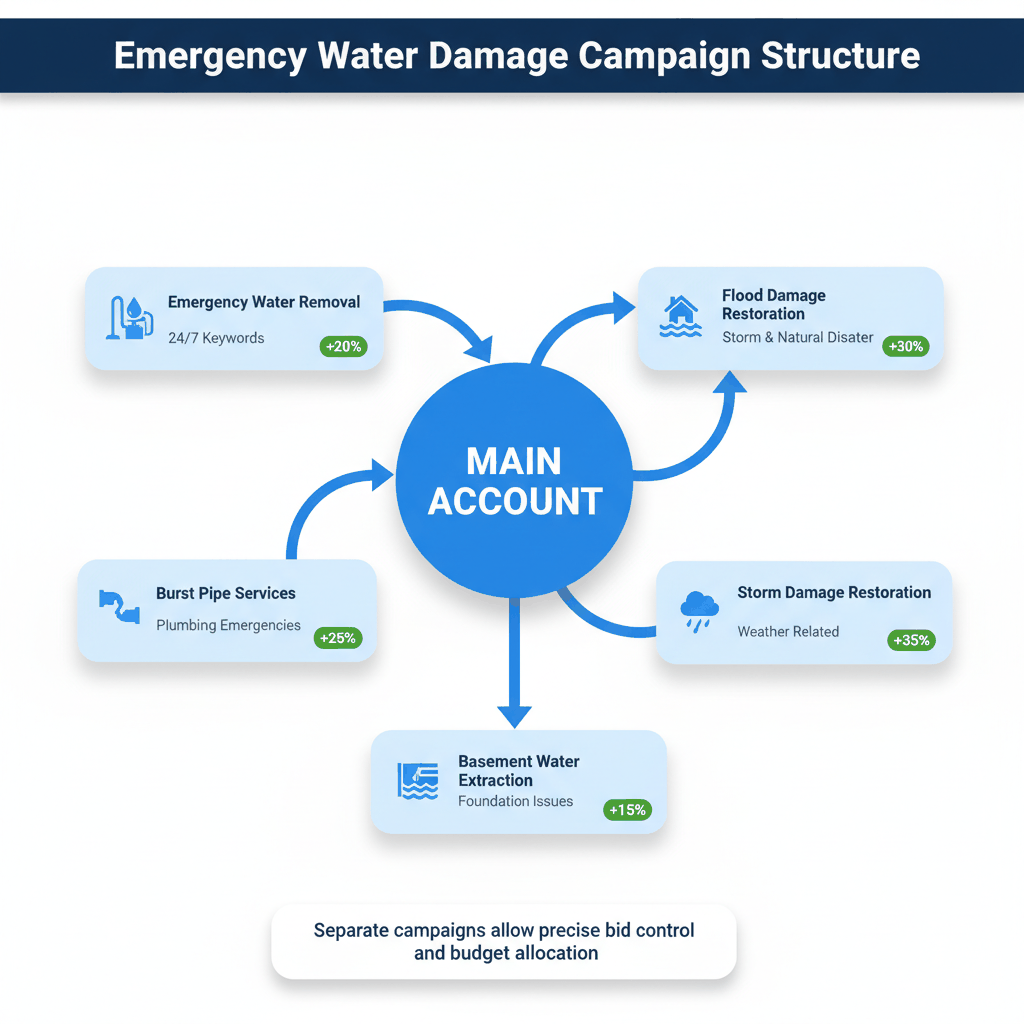
Create separate campaigns for different emergency types. This allows better budget control and bid optimization for each service.
Recommended campaign structure:
Emergency Water Removal
Flood Damage Restoration
Burst Pipe Services
Basement Water Extraction
Storm Damage Restoration
Use Phrase Match and Exact Match keywords exclusively. Avoid Broad Match keywords as they trigger ads for irrelevant searches and drain your budget.
Target these emergency keyword types:
Urgent action words: "emergency," "24/7," "immediate"
Service specific: "water removal," "flood cleanup," "burst pipe"
Location modifiers: "near me," "[city name]"
Insurance related: "insurance water damage," "covered restoration"
Industry experts use negative keyword lists with 7,000+ terms. These block irrelevant searches like basement waterproofing, car water damage, and DIY guides.
Essential negative keywords include:
DIY terms: "how to," "tutorial," "yourself"
Non-emergency: "prevention," "tips," "advice"
Wrong services: "car," "boat," "RV"
Information seeking: "cost," "price," "estimate"
Conversion tracking separates profitable campaigns from money-losing experiments. Many restoration companies fail to track leads properly, making ROI calculation impossible.
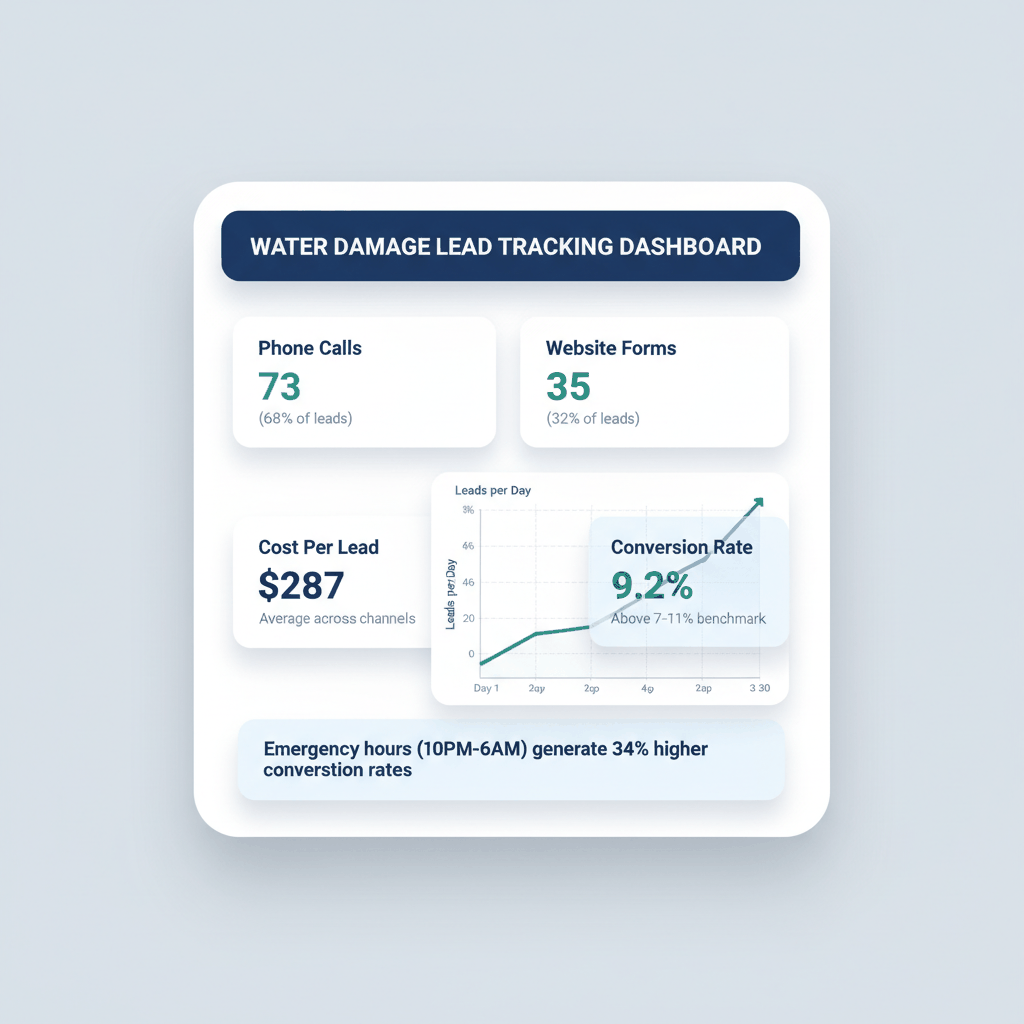
Track multiple conversion types for complete visibility. Phone calls often represent 70-80% of water damage leads. Website forms capture the remaining 20-30%.
Set up tracking for:
Phone calls from ads
Phone calls from your website
Contact form submissions
Chat interactions
Emergency callback requests
Cost Per Lead (CPL) for water damage varies widely. Expect $150 to $400+ for a qualified phone call depending on your market. This might seem expensive, but it works when you close high-value jobs.
Well-optimized campaigns achieve conversion rates between 7% and 11%. This significantly exceeds Google's average conversion rate of 2.5% across all industries.
Use conversion data to optimize your campaigns weekly. Analyze performance metrics and adjust keywords, ad copy, and bid strategies accordingly.
Focus on these key metrics:
Cost per conversion (phone call or form)
Conversion rate by keyword
Revenue per conversion
Return on ad spend (ROAS)
Knowing industry benchmarks helps you evaluate your campaign performance. Water damage restoration campaigns should exceed general Google Ads averages due to high-intent searches.
Emergency restoration campaigns convert better than most industries. Well-optimized campaigns achieve 7-11% conversion rates compared to Google's 2.5% average across all accounts.
Mobile represents 60-70% of water damage searches, particularly for emergency keywords. Your mobile landing pages must load fast and convert well.
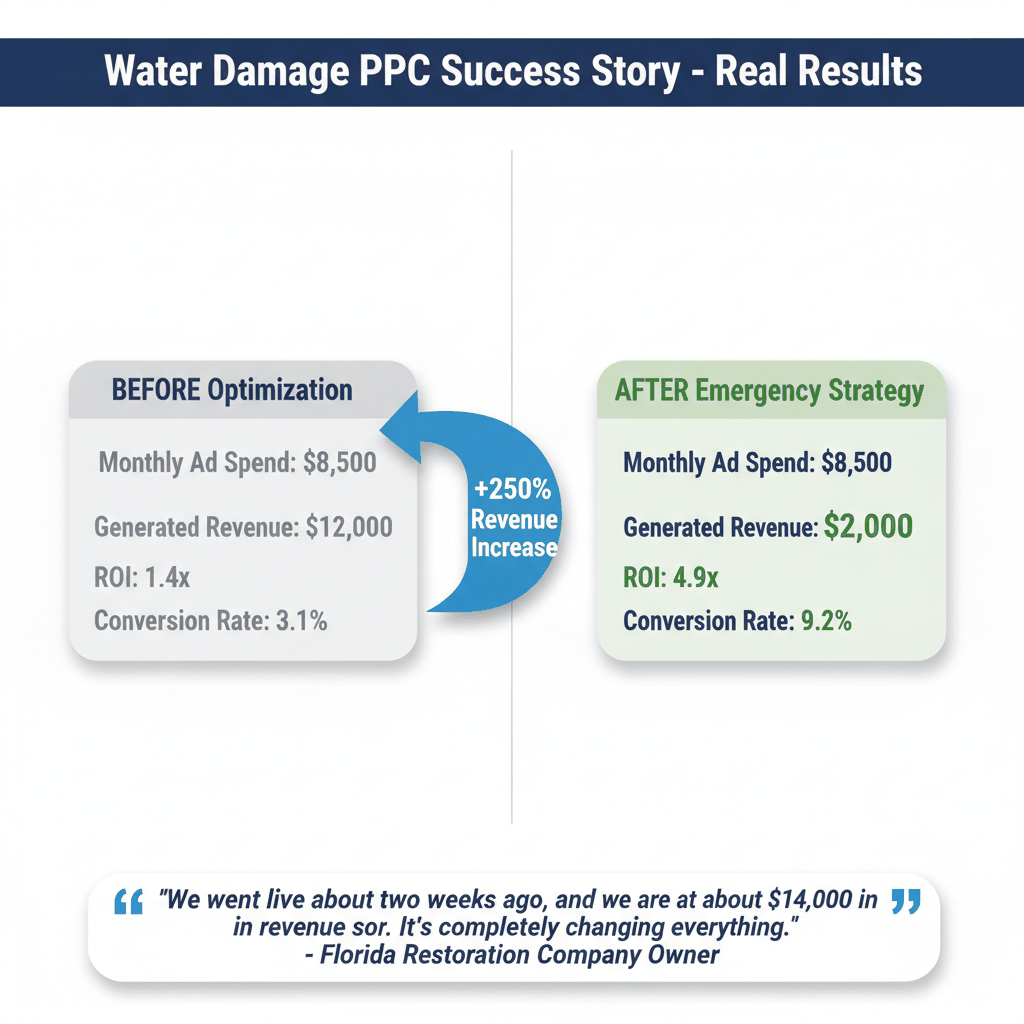
One water restoration company owner reported significant results: "We went live about two weeks ago, and we are at about $14,000 in revenue so far. Not even a full month yet. It's completely changing everything."
A West Palm Beach company increased conversion rates by 34% by excluding zip codes more than 25 miles away. They also increased bids by 20% for their immediate service area where they could respond fastest.
Emergency keywords cost more per click but convert at higher rates. A $60 click that turns into a $3,000 restoration job represents excellent ROI.
Calculate your target metrics:
Average job value divided by acceptable cost per lead
Minimum conversion rate needed for profitability
Maximum cost per click for each keyword group
Required monthly lead volume for growth targets
How much should I spend on water damage Google ads monthly?
Start with $3,000-$5,000 monthly for meaningful results in most markets. Competitive markets like Los Angeles or New York may require $10,000+ monthly budgets. Begin smaller and scale up based on profitable results.
What's the best bidding strategy for emergency restoration advertising?
Use "Maximize Conversions" or "Target CPA" automated bidding once you have 30-50 conversions monthly. Before that, use manual bidding with 20-30% increases during peak emergency hours (nights, weekends, holidays).
Should I run flood damage PPC campaigns 24/7?
Yes, emergencies happen around the clock. Run ads 24/7 but adjust bids based on performance. Increase bids during high-conversion hours and decrease them during slower periods while maintaining visibility.
How do Google Local Services Ads compare to regular water damage Google ads?
Local Services Ads often outperform PPC for emergencies because they appear above all results, charge per validated lead ($35-$100), and include the Google Guaranteed badge. Regular Google ads charge per click ($91-$250+) regardless of lead quality.
What keywords work best for emergency plumbing ads related to water damage?
Target urgent phrases like "emergency water removal," "24/7 flood cleanup," "burst pipe service," and "immediate water damage repair." Include your city name and use Phrase Match or Exact Match to control costs and improve relevance.
Ready to generate more emergency water damage leads with pay per call? Sign up for free with ResultCalls today!

Hello everyone! My name is Alex and I write these blogs to help educate small business owners on different ways to grow their business. My goal is to make lead generation as easy as possible for you. After reading these blogs, I hope you leave with some actionable steps that will get you closer to growing your business :)