Are you spending thousands on Google Ads but still struggling to find quality leads? You're not alone. Many electrical contractors report wasted spend and poor lead quality because campaigns are misaligned with service intent.
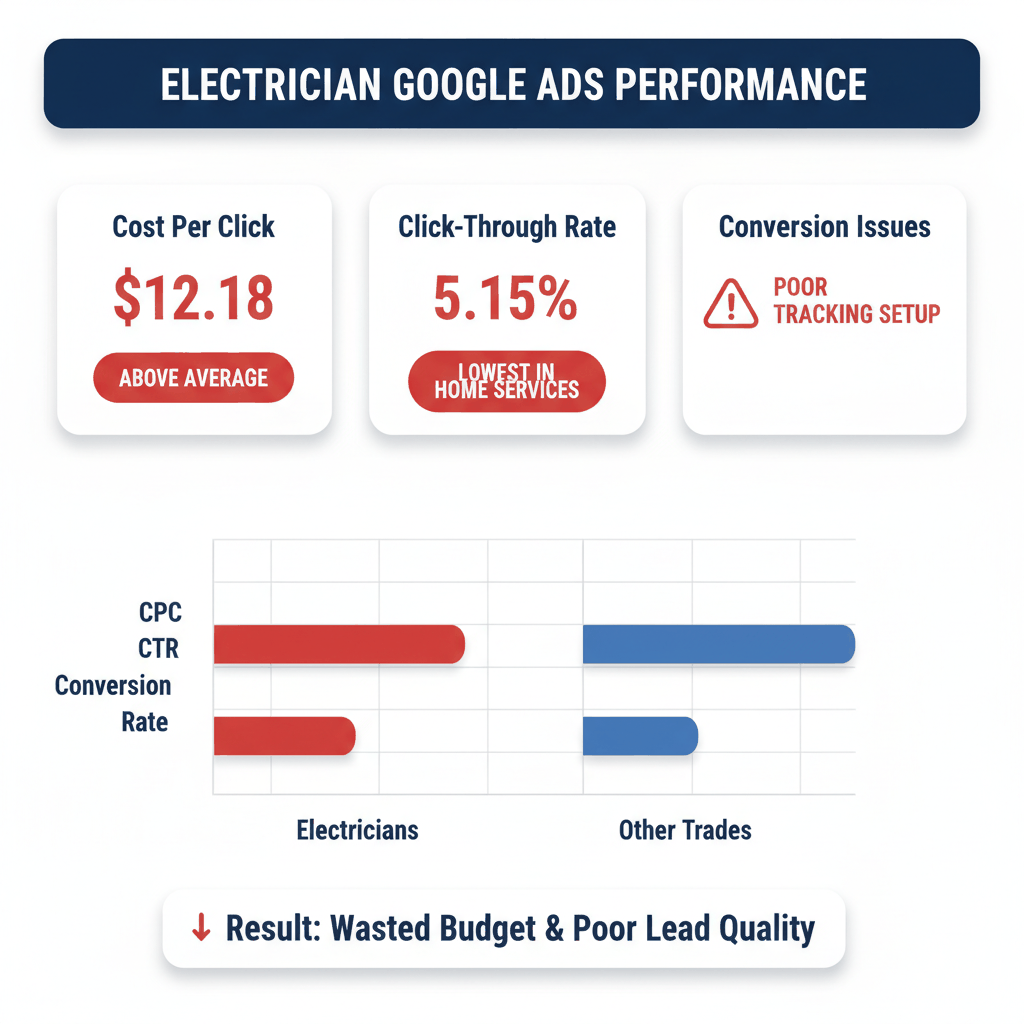
The truth is, electrician Google ads mistakes are costing contractors serious money. Recent data shows electricians pay $12.18 per click on average. Plus, electrical contractors have one of the lowest click-through rates at just 5.15%. This combination means you're paying premium prices for poor results.
Here's the good news. A disciplined approach to Google Ads for electricians fixes those gaps. It turns searches into booked jobs. You'll learn the five biggest electrician marketing mistakes that drain budgets. Plus, you'll discover proven strategies to maximize your return on investment.
What You'll Learn
Google Ads represents a critical advertising channel for electrical contractors. These ads place your services directly before potential customers. They're actively searching for electrical services online.
For example, someone in New Jersey typing "electrical repair" into Google could immediately see your ad. This connects you to a customer in need right at that moment.
The electrical services space is highly competitive. Industry data reveals electricians face some of the highest costs per click. You're paying $10 to $30 per click or more in many markets.
Compare this to other home service industries. Paint contractors pay $13.74 per click. Electricians pay $12.18 per click. Roofing contractors pay $10.70 per click. These high costs mean every mistake is expensive.
Many electrical contractors struggle with poor campaign performance. The average click-through rate for electricians is only 5.15%. This ranks among the lowest for all home service businesses.
Why does this matter? Low click-through rates signal to Google that your ads aren't relevant. This drives up your costs. You pay more for fewer clicks. Those clicks often come from unqualified prospects.
Even campaigns that appear active can quietly drain budgets. They don't produce meaningful business outcomes. Electrician lead generation services help identify these inefficiencies and apply targeted remedies.
Understanding these common mistakes can save you thousands in wasted ad spend. Each one directly impacts your bottom line.
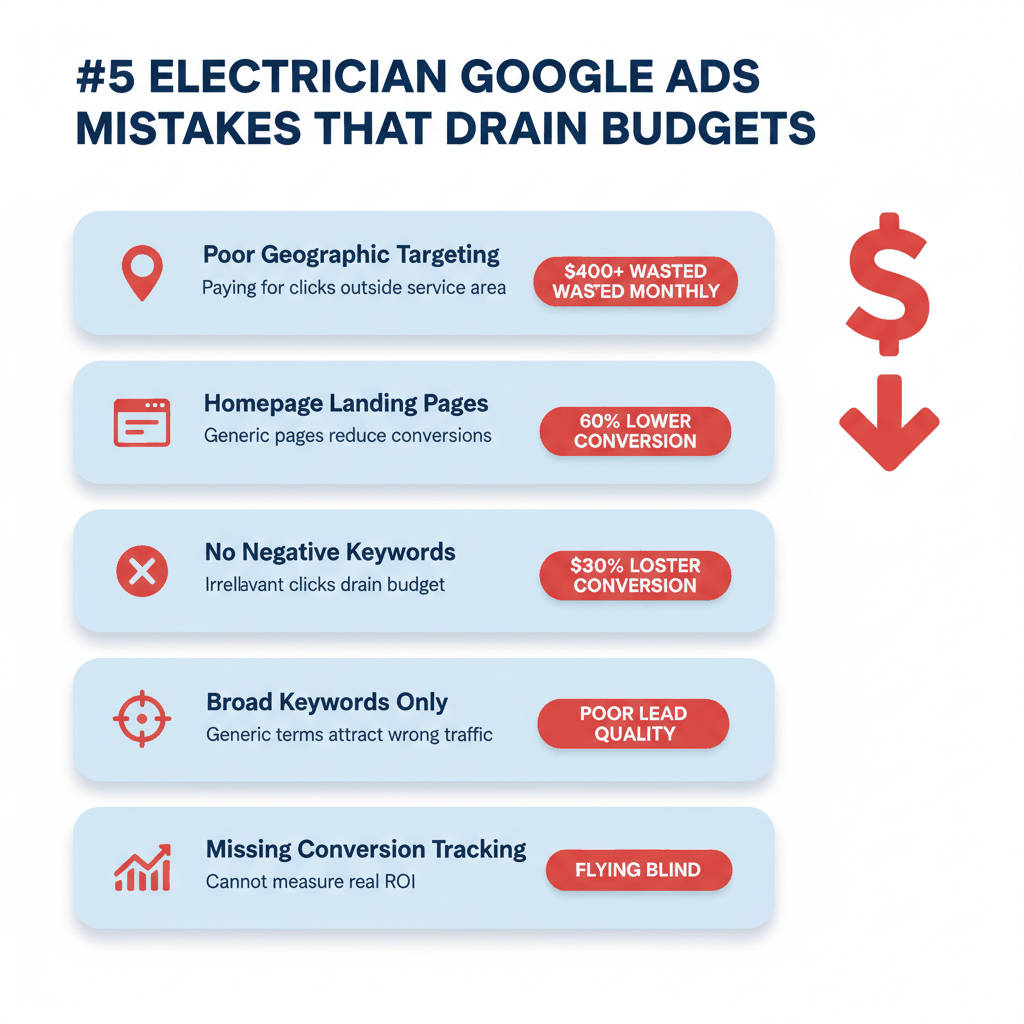
Ignoring local targeting wastes money fast. If you're paying for clicks outside your service area, you're literally throwing money away. This is one of the most expensive electrician Google ads mistakes.
Most electrical businesses serve a local area. Typically a 15-25 mile radius around their base. Google Ads lets you target specific cities, zip codes, or a custom radius. You only pay for clicks from potential customers in your service area.
Fix this by defining your service area precisely. Target specific cities like Providence, Warwick, and Cranston. Or set a radius around your location. ServiceTitan research shows proper geographic targeting can reduce wasted spend by up to 40%.
Your homepage is a dead end for someone searching "emergency electrician near me." It's too general. Instead, send them to a landing page that matches the ad. Make booking quick and easy.
Think about it this way. Your homepage introduces your company to potential customers. It's designed to appeal to people with different electrical needs. Whether that's light installation, emergency repair, or general wiring.
Someone searching for emergency electrical repair wants immediate help. They don't want to hunt through your general homepage. Create dedicated landing pages for your main services. Include clear contact information and booking options.
Without excluding irrelevant terms, you waste money on unqualified clicks. Company 119 data shows effective negative keyword management is crucial for maintaining high ROI.
Here are the key categories to exclude:
DIY-related terms: "how to", "DIY", "tutorial"
Training terms: "courses", "jobs", "training"
Product searches: "buy", "purchase", "wholesale"
Irrelevant services: "automotive electrical", "marine electrical"
Add these negative keywords at the campaign and ad group level. Review your search terms report monthly. Add new negative keywords as needed.
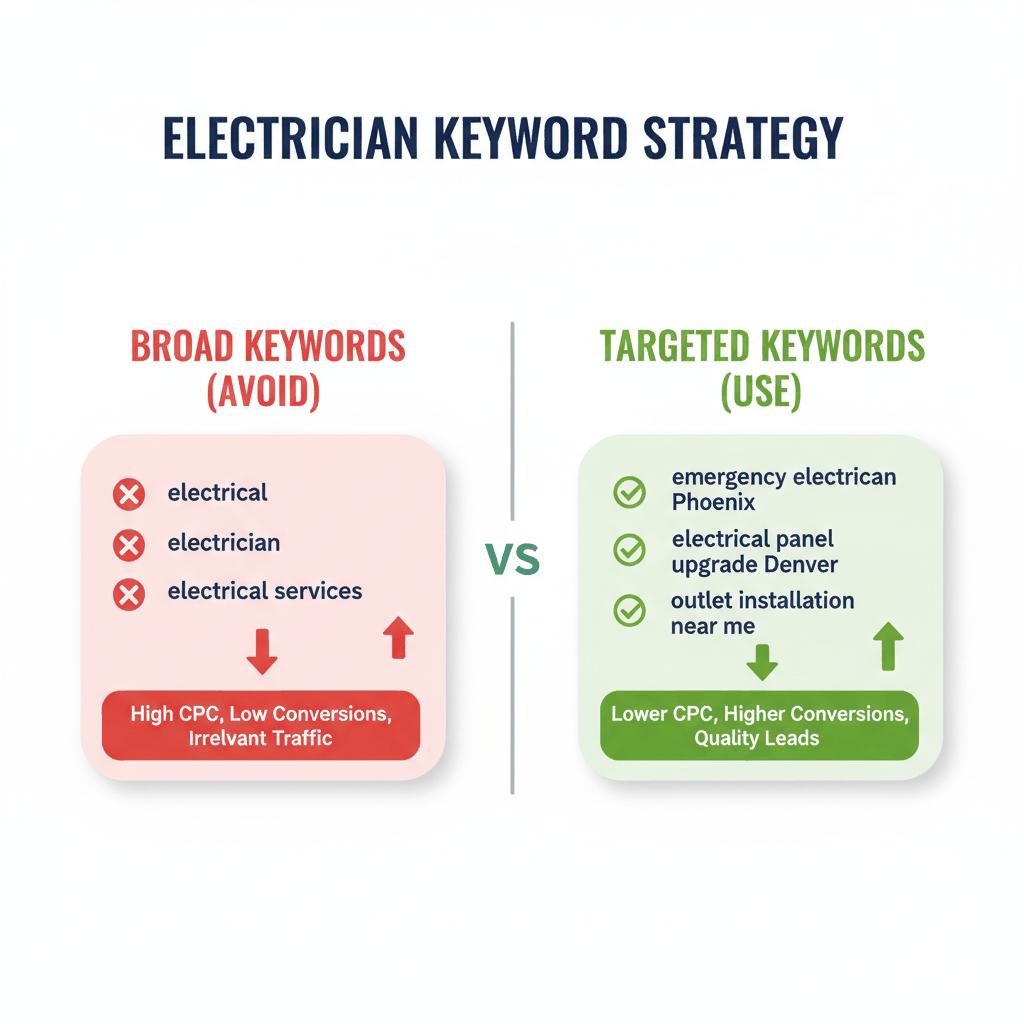
Broad or generic keywords often attract irrelevant traffic. This dilutes performance and wastes budget. Keywords like "electrical" or "electrician" are too general.
Instead, use service-specific keywords. Focus on what you actually do. Examples include "electrical panel upgrade," "outlet installation," or "emergency electrician."
Long-tail keywords work even better. Try "licensed electrician for panel upgrades in Phoenix" or "install outdoor lighting Denver." These keywords are cheaper. They often convert better because they match exactly what the customer is searching for.
Failing to track calls or form submissions means you don't know if your ads work. CyberOptik research indicates many contractors struggle with conversion tracking issues.
The problem gets worse when data is mismatched. Double-counted conversions interfere with bidding algorithms. This impacts your bottom line. Old conversion data can contaminate your results.
Set up proper conversion tracking from day one. Track phone calls, form submissions, and service scheduling. Use call tracking numbers to measure phone leads from ads. This data helps optimize your campaigns for real business results.
These strategies transform struggling campaigns into lead generation machines. Apply them systematically for best results.
Selecting the right keywords makes the difference between wasting your budget and generating quality leads. Focus on keywords that indicate buying intent and local need.
Start with these proven keyword categories:
Service-specific: "electrical panel upgrade," "outlet installation," "ceiling fan installation"
Emergency services: "24-hour electrician," "emergency electrical repair," "electrician open now"
Local modifiers: "electrician near me," "electrician in Dallas," "local electrical contractor"
Problem-focused: "power outage repair," "electrical troubleshooting," "breaker keeps tripping"
Long-tail keywords often deliver the best results. They're more specific, cheaper, and convert better. Someone searching "emergency electrician for power outage in Austin" knows exactly what they need.
Your ad copy must speak directly to customer needs. Address their pain points immediately. Include your unique selling points.
Here's a winning formula for electrical contractor ads:
Headline 1: Include the main keyword and location
Headline 2: Highlight your key benefit or differentiator
Headline 3: Include credibility indicators like "Licensed & Insured"
Description: Address the customer's problem and include a call-to-action
For example: "Emergency Electrician Denver | Same-Day Service | Licensed & Insured | Call Now for Fast Electrical Repair - 24/7 Response"
Your landing page must match your ad promise. If someone clicks an ad for "emergency electrical repair," they should land on a page about emergency services.
Essential landing page elements include clear headlines that match your ad, prominent phone numbers and contact forms, service benefits and credentials, and customer reviews and testimonials.
Beyond basic geographic targeting, use advanced location strategies. Bid higher in your primary service area. Reduce bids for edge locations where travel time is longer.
Consider day-parting for emergency services. Bid higher during peak emergency hours. This is typically evenings and weekends when other contractors might not be available.
Smart budget management and bidding strategies maximize your return on ad spend. Start conservative and scale based on performance.
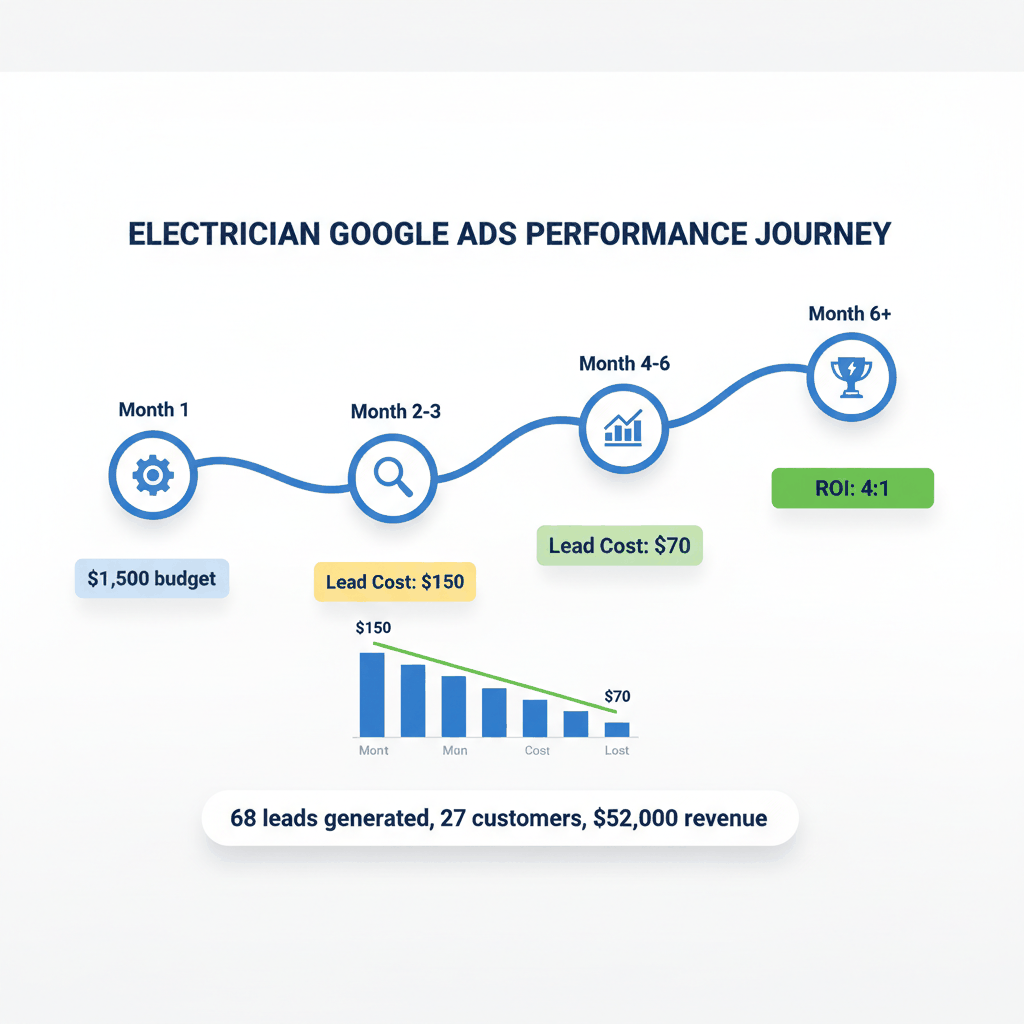
Most contractors see results starting at $1,000 to $2,000 per month. HouseCall Pro data shows larger companies may invest $3,000 to $5,000 monthly for dependable lead flow.
Expect costs per click ranging from $1.50 to $8.00 for search keywords. Setup fees typically run $500 to $2,000. Monthly ad budgets commonly range between $800 and $5,000.
Budget modeling should be scenario-driven. Account for seasonality and bid pressure. Electrical demand varies throughout the year. Peak months are more competitive but also more profitable.
Choose bidding strategies based on your campaign goals and tracking setup. For new campaigns, start with manual cost-per-click bidding. This gives you control while you learn what works.
Once you have conversion data, consider automated bidding. Target cost-per-acquisition works well when you know your ideal cost per lead. Maximize conversions can work with sufficient budget and conversion volume.
Regular monitoring prevents small issues from becoming expensive mistakes. Check your campaigns at least twice per week. Look for changes in click-through rates, cost-per-click, and quality scores.
Weekly tasks include reviewing search terms reports, adding negative keywords, adjusting bids based on performance, and pausing underperforming keywords or ads.
Monthly tasks include analyzing conversion data, adjusting geographic targeting, updating ad copy and landing pages, and reviewing budget allocation across campaigns.
Tracking the right metrics ensures your Google Ads investment pays off. Focus on business outcomes, not just click metrics.
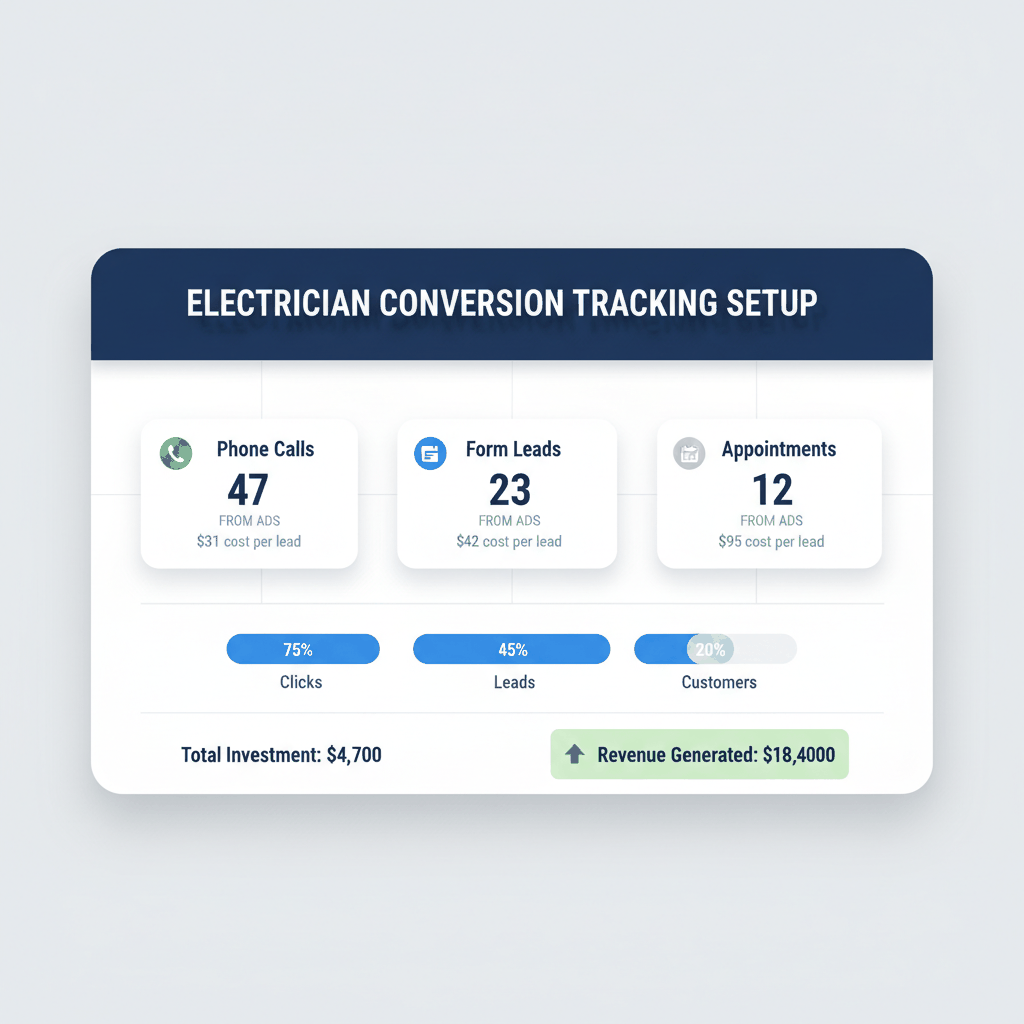
Track these essential metrics for electrical contractor campaigns:
Cost per lead: Total ad spend divided by number of leads generated
Lead conversion rate: Percentage of leads that become paying customers
Customer acquisition cost: Total marketing cost to acquire one customer
Return on ad spend: Revenue generated divided by ad spend
Average job value: Revenue per customer from Google Ads leads
Industry research shows electrical companies running Google Ads see a 7.5% conversion rate on average. This is higher than many other service industries.
Proper conversion tracking connects ad clicks to actual business results. Set up tracking for phone calls, form submissions, and appointment bookings.
Use call tracking numbers to measure phone leads from ads. Import conversion data from your CRM system. This creates a complete picture of your customer acquisition funnel.
Create a custom dashboard that combines Google Ads data with your CRM information. Track the full customer journey from click to completed service. This helps identify your most profitable acquisition channels and service types.
One Chicago client started with a $1,500 monthly Google Ads budget. After three months of optimization, they generated 68 electrical leads at $70 per lead. These converted into 27 customers worth $52,000 in electrical work.
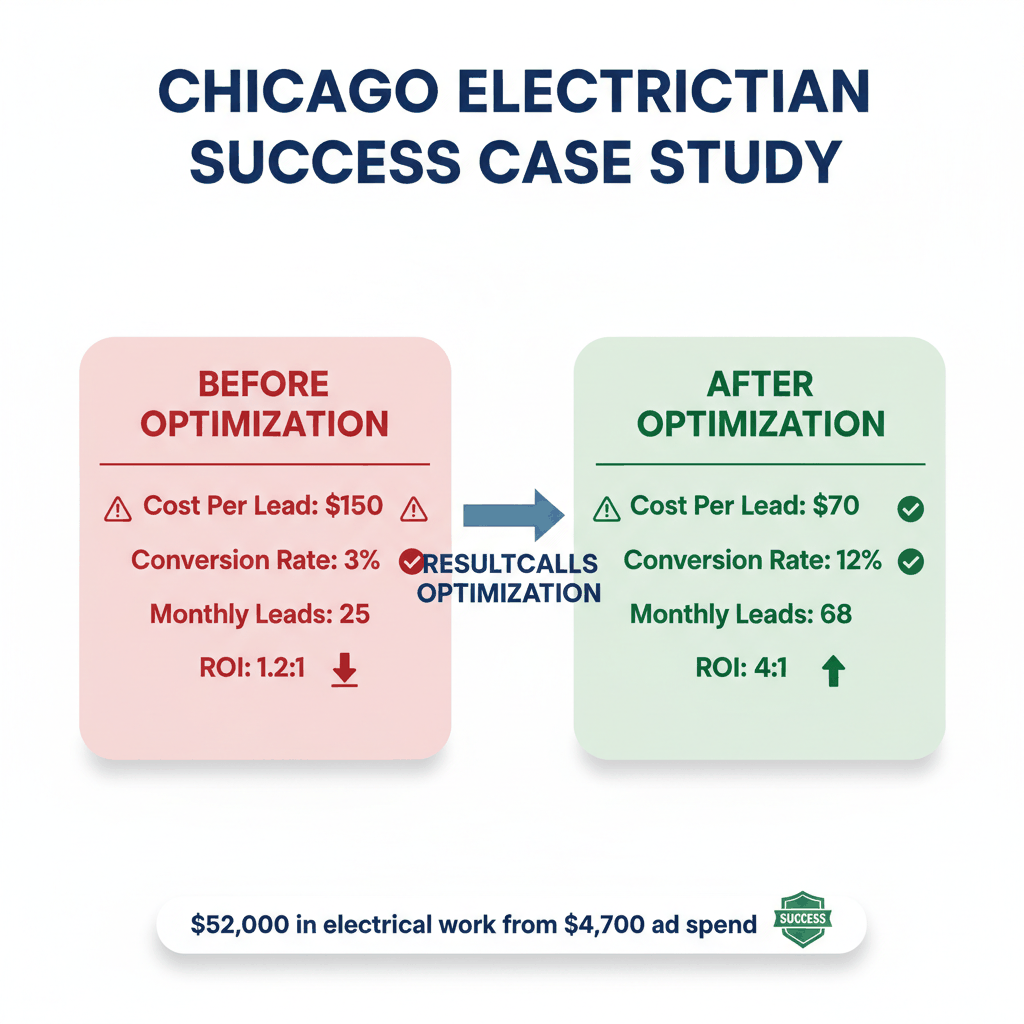
The key was proper keyword selection and landing page optimization. They focused on emergency services and panel upgrades. Their conversion rate improved from 3% to 12% over six months.
How much should electricians spend on Google Ads monthly?
Most electrical contractors start with $1,000 to $2,000 monthly for effective results. Larger companies often invest $3,000 to $5,000 monthly. Start conservative and scale based on performance and lead quality.
What's a good cost per lead for electrician Google ads?
Electrical contractor leads typically cost $50 to $150 each through Google Ads. Emergency service leads cost more but convert at higher rates. Focus on total customer value, not just initial lead cost.
How long before Google Ads generate electrician leads?
Well-optimized campaigns start generating leads within 1-2 weeks. However, it takes 60-90 days to fully optimize performance and achieve stable lead flow. Patience and consistent optimization are key.
Should electricians use Google Local Services Ads?
Yes, Local Services Ads work well for electricians. You only pay when someone calls your business, not for clicks. Combined with traditional Google Ads, this creates comprehensive local market coverage.
What's the biggest mistake electricians make with Google Ads?
Poor geographic targeting is the most expensive mistake. Paying for clicks outside your service area wastes money fast. Always define your service area precisely and exclude irrelevant locations.
Ready to get exclusive electrician leads? Sign up for free with ResultCalls today!

Hello everyone! My name is Alex and I write these blogs to help educate small business owners on different ways to grow their business. My goal is to make lead generation as easy as possible for you. After reading these blogs, I hope you leave with some actionable steps that will get you closer to growing your business :)