
Your pest control website gets visitors every day. But how many actually call or book service? If you're like most pest control companies, only 2-4 visitors out of every 100 become customers. That's money walking out the door.
Here's the problem: homeowners need pest control fast. They're dealing with termites, bed bugs, or rodents right now. But most pest control websites make it hard to take action. Poor mobile design, slow loading, and weak calls-to-action kill conversions.
The good news is simple changes can double your results. High-performing pest control sites convert 7-10% or more of their visitors. With an average customer worth $2,400 over their lifetime, each extra conversion means thousands in revenue.
In this guide, you'll learn proven pest control website design strategies that turn visitors into paying customers. We'll show you exactly what works and what kills conversions.
Table of Contents
Most pest control companies are losing money every day because their websites don't convert. Industry conversion rates average only 2-4% while high-performing sites achieve 7-10% or higher.
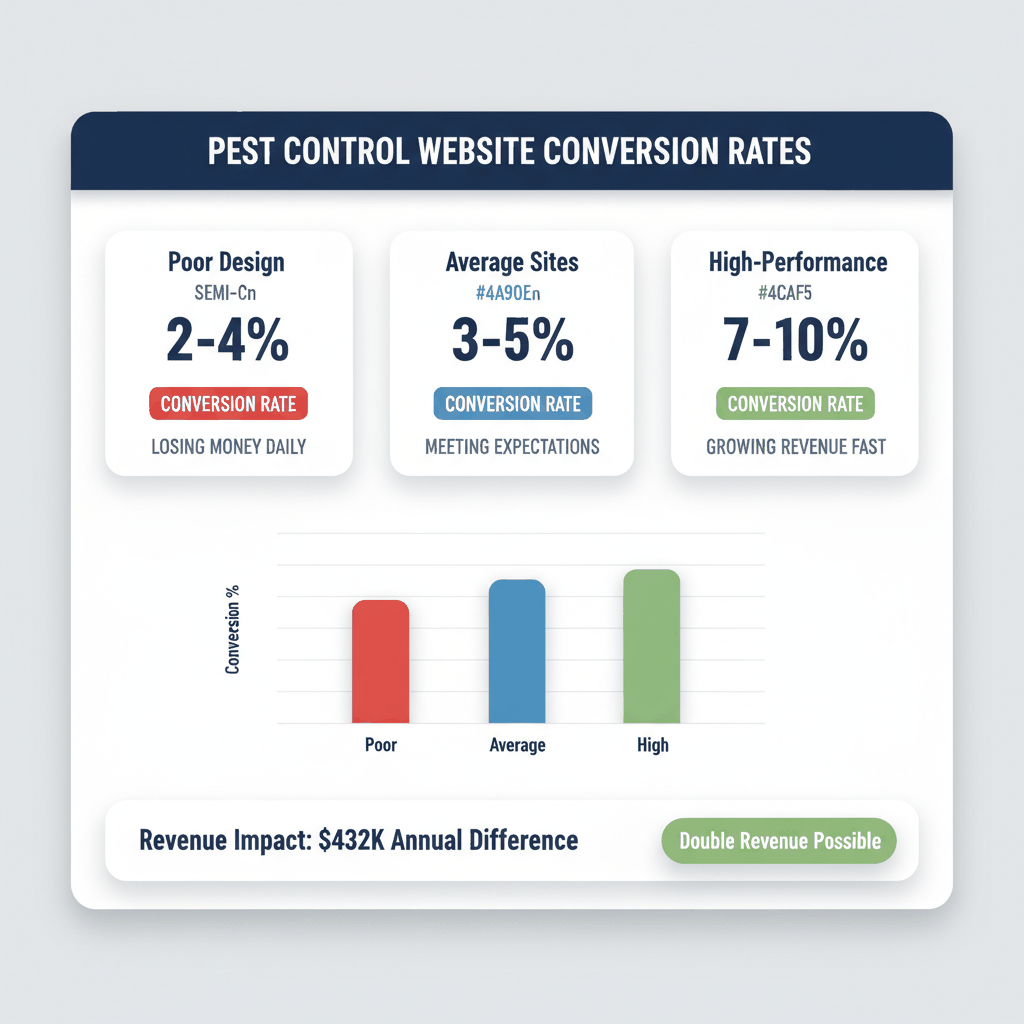
Here's what this means for your business. A pest control company getting 1,000 monthly visitors at 3% conversion generates 30 leads monthly. At a 50% close rate and $2,400 customer lifetime value, that's $36,000 monthly revenue.
Now imagine increasing conversion to 6%. Same traffic, but now you get 60 leads and $72,000 monthly revenue. That's an extra $432,000 per year from the same website traffic.
The biggest problem is treating your website like a brochure instead of a lead generation machine. Homeowners with pest problems want immediate solutions. They don't want to read about your company history or browse pretty pictures.
With over 70% of searches happening on mobile and 54% of homeowners picking a provider within four hours, your website has seconds to capture their attention.
Every visitor who leaves without calling represents lost revenue. If your site gets 2,000 monthly visitors and converts at 2%, you get 40 leads. Increase that to 5% and you get 100 leads. That's 60 additional customers worth $144,000 in lifetime value.
Want to start capturing more leads from your existing traffic? ResultCalls specializes in pest control lead generation for home service businesses like yours.
Mobile conversion rates for pest control average just 2.2% to 2.8%. Desktop rates hit 3.2% to 4.3%. This gap costs you real money every month.
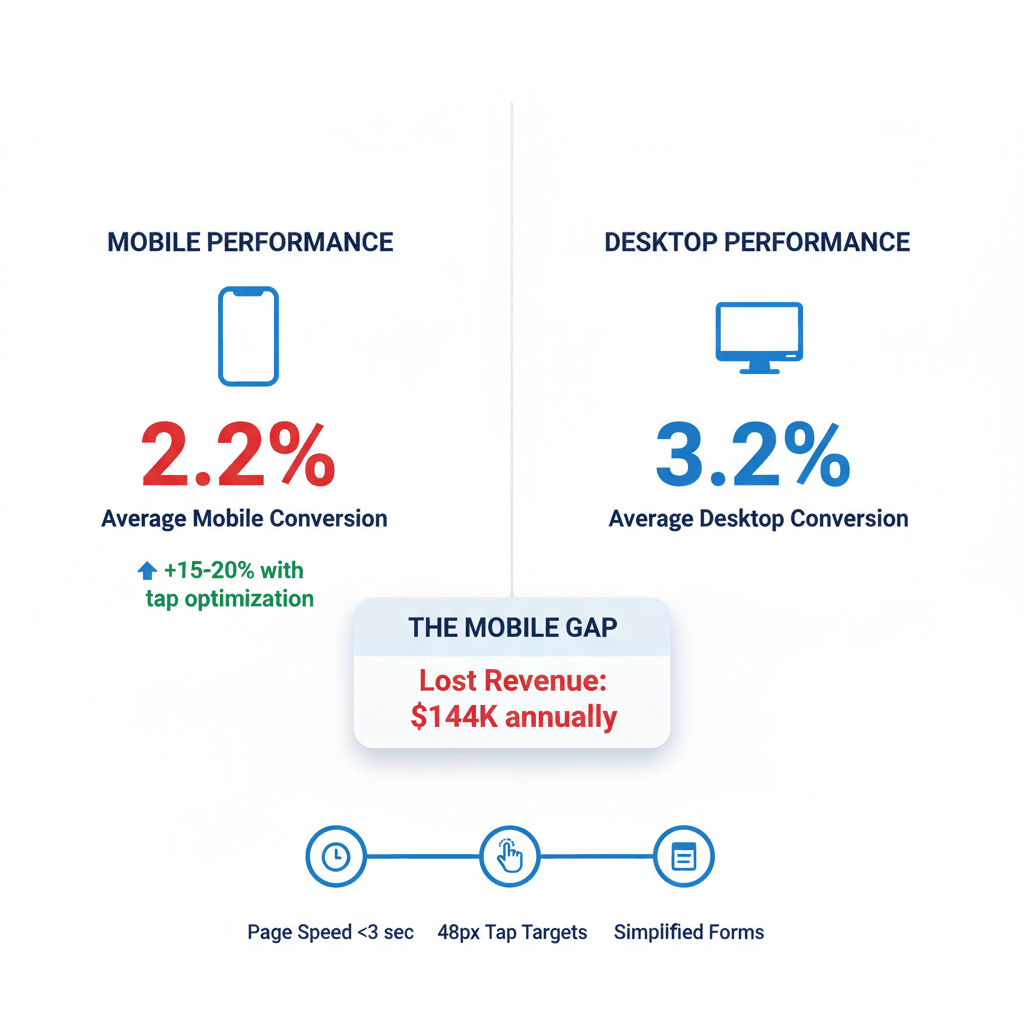
The problem isn't just mobile-friendly design. Your site needs to be mobile-first. That means designing for phones first, then adapting to desktop.
Your mobile site needs page speed under 3 seconds. Every additional second reduces conversions by 7-10%. Use Google PageSpeed Insights to test your current speed.
Make tap targets at least 48 pixels wide. Homeowners get frustrated when they can't easily tap your call button or contact form. This simple fix can boost mobile conversions by 15-20%.
Simplify your navigation to 3-5 menu items maximum. Mobile users don't scroll through long menus. Focus on Services, About, Contact, and Emergency Service.
Keep forms short on mobile. Ask for name, phone, pest type, and zip code only. Forms with three fields achieve 5.5% conversion rates. Adding more fields increases abandonment.
Use large, thumb-friendly buttons. Your "Get Free Quote" button should be at least 48 pixels tall and stand out with bright colors like orange or green.
Website speed directly impacts your bottom line. Every additional second of load time increases bounce rates by 32%.
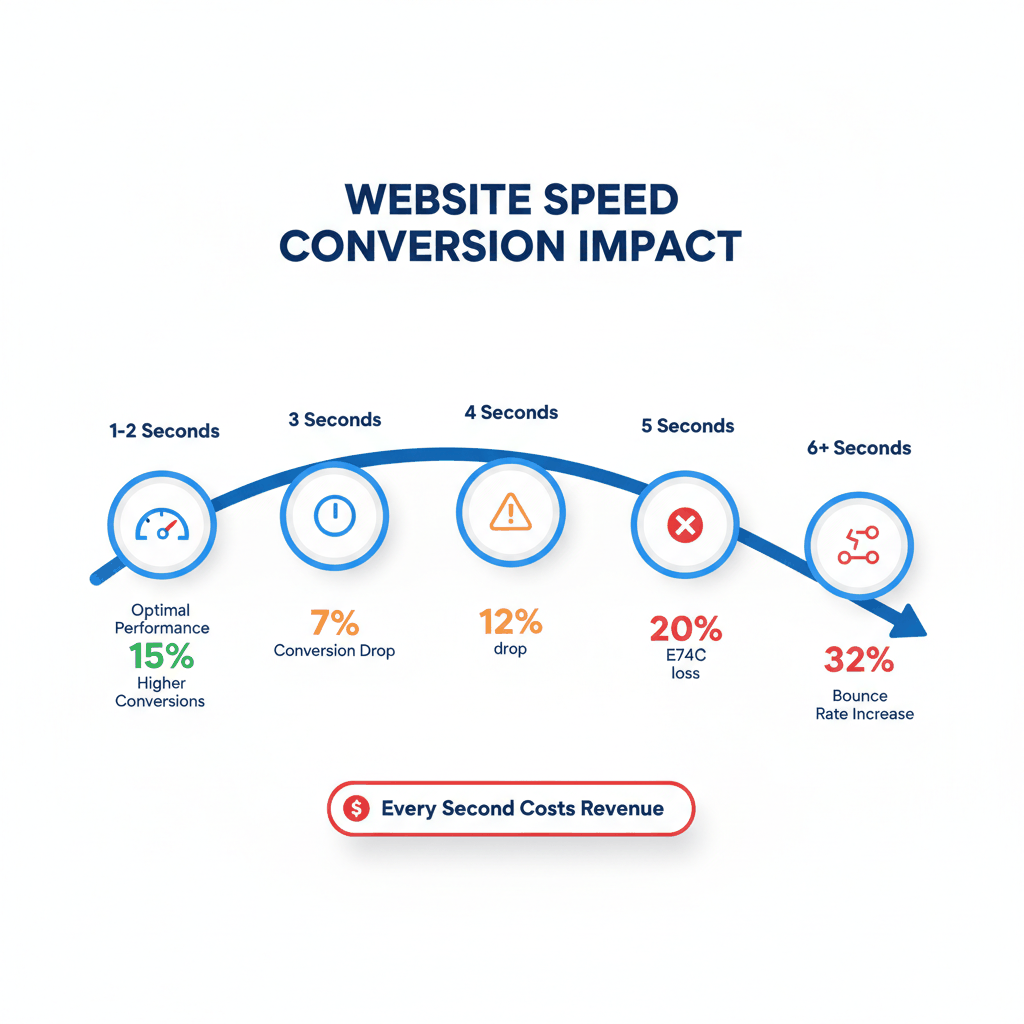
Websites loading in two seconds or less see 15% higher conversion rates. The first 5 seconds matter most. Conversion rates drop 4.42% with each additional second.
Optimize your images first. Large photos of pest damage or your team can slow loading. Compress images to under 100KB when possible. Use WebP format for faster loading.
Choose fast hosting for your pest control website. Cheap hosting costs you conversions. Invest in quality hosting that loads pages in under 2 seconds.
Remove unnecessary plugins and widgets. Every social media feed or chat widget adds loading time. Keep only essential features that directly help conversions.
Use Google PageSpeed Insights to test both mobile and desktop speed. Aim for scores above 85. GTmetrix provides detailed recommendations for improvement.
Test your speed regularly. Updates, new content, and plugins can slow your site over time. Monthly speed checks prevent conversion losses.
Most pest control websites bury their calls-to-action at the bottom of pages. Homeowners with urgent pest problems won't scroll down to find your contact information.
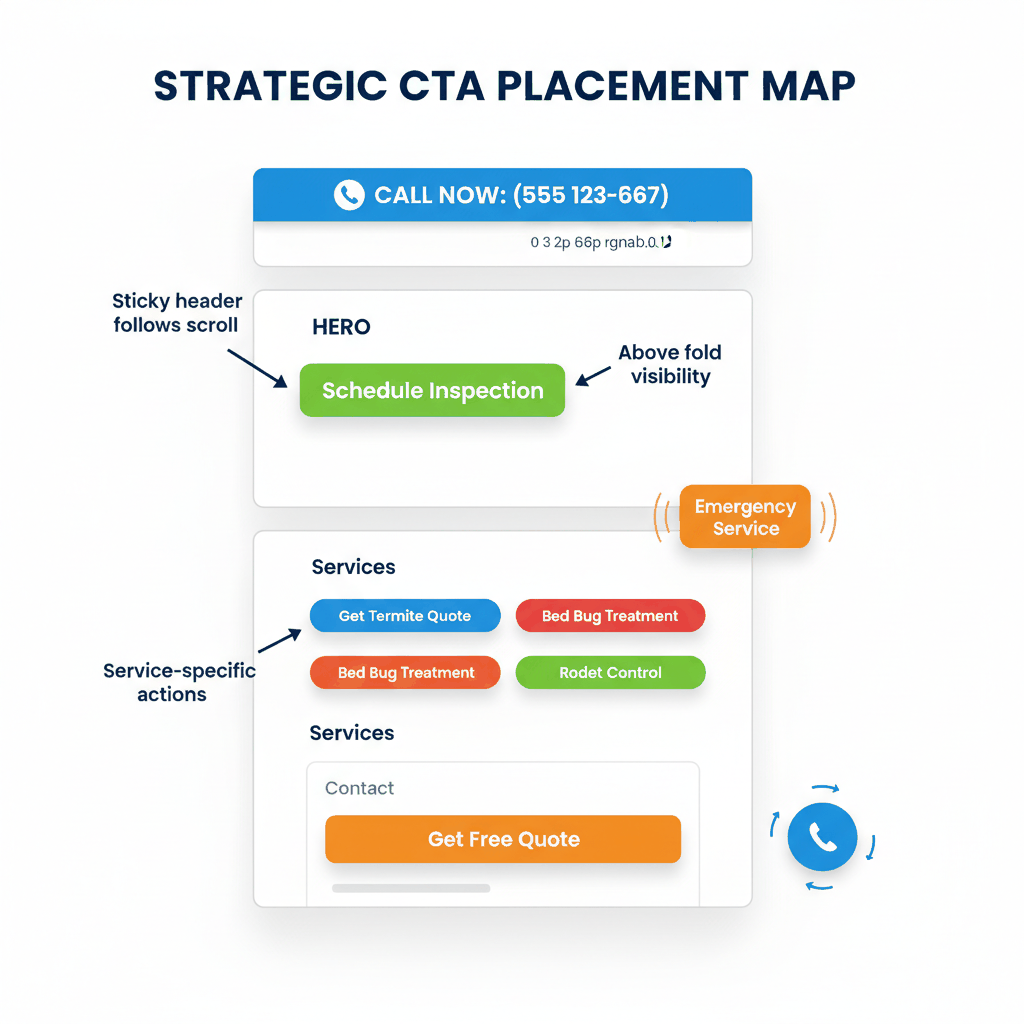
Effective pest control website design puts CTAs everywhere visitors might want to take action. Your goal is making it impossible to miss your contact options.
Use specific action words in your CTAs. "Schedule a Pest Inspection" converts better than generic "Contact Us." "Get Emergency Service" works better than "Learn More."
Place your phone number in a sticky header that follows users as they scroll. Click-to-call buttons can increase conversions by 200% on mobile devices.
Add a floating "Book Now" button that stays visible on every page. This simple addition can double your conversion rates by making action easy.
Include CTAs above the fold on every page. Visitors should see contact options immediately without scrolling.
Add service-specific CTAs on each pest page. Your termite page should say "Schedule Termite Inspection" not generic "Contact Us."
Use contrasting colors for CTA buttons. Bright orange, green, or red buttons stand out against white or blue backgrounds.
Homeowners invite pest control technicians into their homes. Trust is everything. 75% of people judge your business credibility based on your website design.
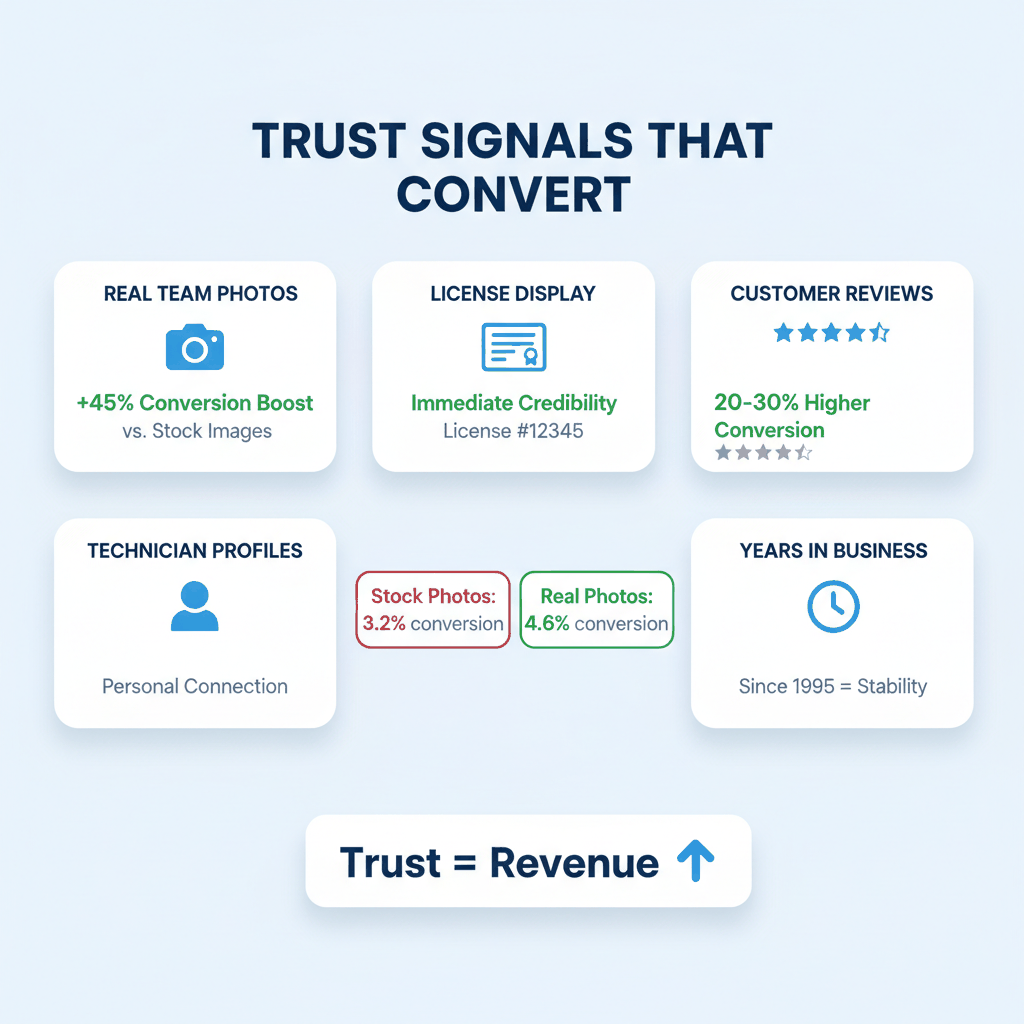
Stock photos kill trust. Real photos of your team and trucks increase conversions by 45%. Show your actual technicians, not generic pest control images.
Display your licensing information prominently. Include your pest control license number, insurance details, and certifications. This builds immediate credibility.
Show Google reviews and ratings on your homepage. Displaying customer ratings can increase conversion rates by 20-30%. Include recent reviews, not just your highest ratings.
Add technician profiles with photos and bios. Homeowners want to know who's coming to their house. Personal profiles build trust and comfort.
Include industry association logos like NPMA or state pest control associations. These show professional standards and ongoing education.
Display years in business prominently. "Serving [Your City] Since 1995" builds confidence in your experience and stability.
Show insurance and bonding information. "Fully Insured and Bonded" reduces homeowner concerns about property damage.
Don't lump all pest control services onto one page. Create dedicated pages for each major pest type: termites, bed bugs, rodents, ants, cockroaches, mosquitoes, and wasps.
Each service page should target specific keywords like "termite control [your city]" or "bed bug treatment [your city]." This captures high-intent local searches.
Start each service page with the problem the homeowner faces. "Found winged insects in your home? You might have termites." This immediately connects with their concern.
Explain your treatment process clearly. Use simple language, not technical jargon. "We inspect your home, identify the pest species, and create a custom treatment plan."
Include service-specific guarantees. "30-day bed bug elimination guarantee" is more powerful than generic satisfaction promises.
Create separate pages for each city you serve. "Termite Control in [City Name]" targets local searches and improves Google rankings.
Include local pest information on each page. "Termites are active in [Your City] from March through October." This shows local expertise.
Add location-specific testimonials. Reviews from customers in each city build local trust and improve search rankings.
Lead Magnets That Capture Prospects
Not every visitor is ready to book service immediately. Lead magnets capture contact information from people still researching pest control options.
Offer downloadable guides like "Top 5 Signs You Have a Termite Problem" or "Homeowner's Guide to Bed Bug Prevention." These provide value while collecting leads for follow-up.
Seasonal pest calendars work well. "When Pests Are Most Active in [Your State]" helps homeowners prepare and positions you as the local expert.
DIY prevention guides capture early-stage prospects. "10 Ways to Keep Ants Out of Your Kitchen" attracts people before they need professional service.
Inspection checklists appeal to detail-oriented homeowners. "Pre-Purchase Home Pest Inspection Checklist" targets real estate buyers.
Add lead magnet offers to your blog posts. If someone reads your termite article, offer your termite prevention guide.
Use exit-intent popups to capture leaving visitors. "Wait! Get our free pest prevention guide before you go."
Include lead magnets in your email signatures. Every email becomes a potential lead generation opportunity.
You can't improve what you don't measure. Conversion optimization requires the right tools to track visitor behavior and test improvements.
Google Analytics shows which pages convert best and where visitors leave your site. Set up conversion tracking for phone calls, form submissions, and chat interactions.
Call tracking systems measure phone conversions. Many pest control leads happen by phone, not forms. Track which pages and keywords generate calls.
Heat mapping tools like Hotjar show where visitors click and scroll. One pest control company discovered 62% of visitors clicked a decorative image expecting information. Adding functionality increased conversions by 27%.
A/B testing tools help optimize headlines, buttons, and forms. Google Optimize is free and integrates with Analytics.
Modern pest control software includes website features. PestPac offers website builders with SEO-optimized templates and lead capture forms.
GorillaDesk provides cloud-based platforms with automated routing and CRM tools that connect to your website leads.
FieldRoutes Marketing Suite offers automated follow-up campaigns for website leads, ensuring no prospect falls through the cracks.
Successful pest control websites share common elements. They prioritize speed, mobile optimization, and clear calls-to-action over flashy design.
One company had a CSS conflict making their click-to-call button non-functional on Android devices. This affected 15% of mobile calls from service pages, potentially costing over $50,000 annually.
A pest control company invested $8,000 in a new website plus $200 monthly maintenance. Within six months, the site generated 30 leads monthly. At a 35% close rate, that's 10 new customers monthly.
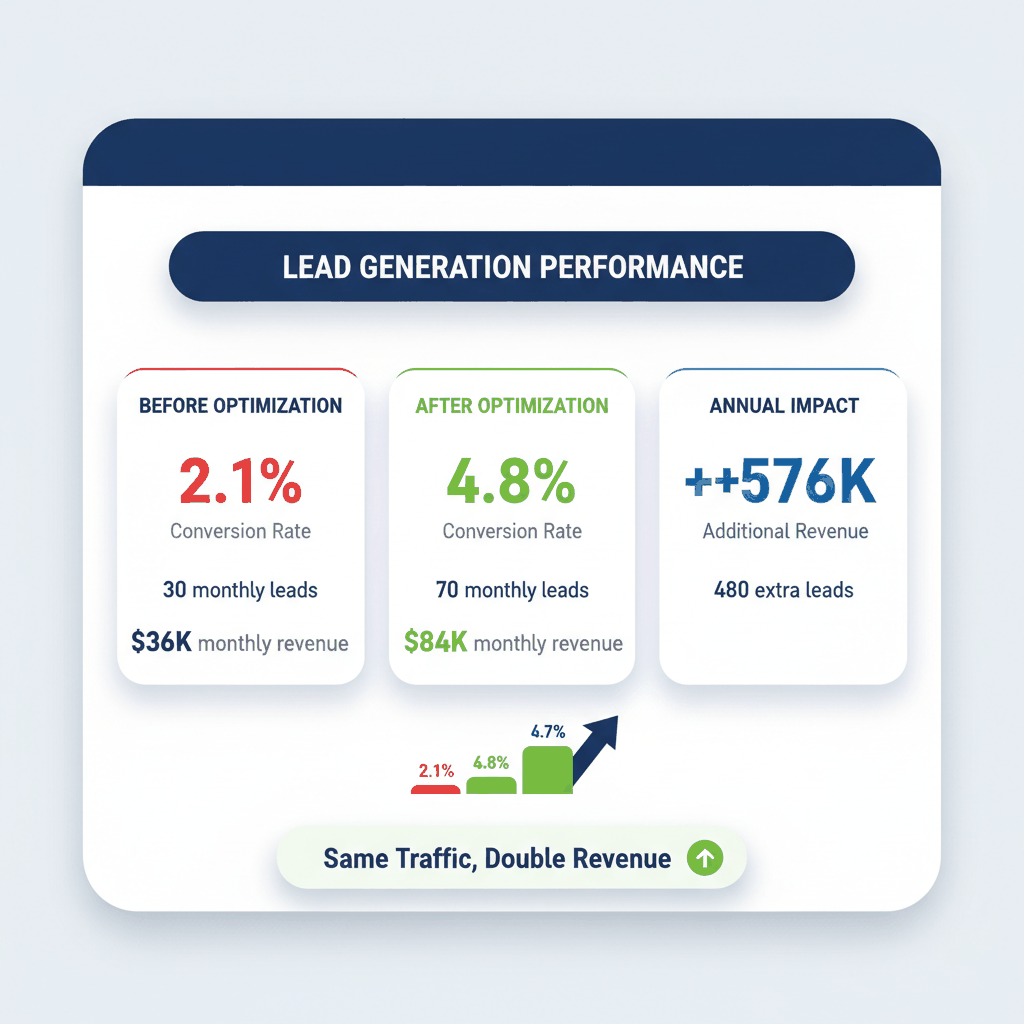
Another company increased conversions from 2.1% to 4.8% by simplifying their homepage, adding click-to-call buttons, and speeding up loading times. Same traffic, but double the leads.
High-converting sites feature real team photos instead of stock images. They use messaging that speaks to homeowner needs like "Put Pests In Their Place" instead of company-focused content.
Successful designs include bright "Get Help Now" buttons in multiple locations with prominent phone numbers. They make taking action obvious and easy.
Well-performing sites deliver leads at $15-$40 each through organic search and direct traffic. This beats $50-$150 per lead from paid advertising.
What makes a pest control website design effective?
Effective pest control website design focuses on fast loading speeds, mobile optimization, clear calls-to-action, and trust signals like real team photos. The goal is converting visitors into customers, not just looking pretty.
How much should conversion rates improve with better design?
Most pest control websites convert 2-4% of visitors. Well-designed sites achieve 7-10% or higher conversion rates. This improvement can double or triple your lead generation from existing traffic.
What's the biggest mistake in pest control web design?
The biggest mistake is poor mobile optimization. With 70% of searches on mobile, sites that don't work well on phones lose most potential customers. Slow loading and hard-to-use forms kill mobile conversions.
Should pest control websites have separate service pages?
Yes, create dedicated pages for each pest type like termites, bed bugs, and rodents. This improves SEO rankings and allows targeted messaging for each pest problem instead of generic information.
How long does it take to see results from website improvements?
Technical improvements like speed and mobile optimization can improve conversions within days. SEO improvements for new content and service pages typically show results in 3-6 months as search rankings improve.
Your pest control website should be your best sales tool, working 24/7 to convert visitors into customers. The difference between a 3% and 6% conversion rate could mean hundreds of thousands in additional revenue annually.
Focus on mobile optimization, fast loading speeds, and clear calls-to-action. Build trust with real photos and customer reviews. Create dedicated service pages for each pest type you handle.
Remember, small changes can create big results. Test improvements systematically and measure what works. Your website visitors are looking for solutions right now. Make it easy for them to choose your company.
If you want pay per call pest control leads today, sign up for free with ResultCalls today!

Hello everyone! My name is Alex and I write these blogs to help educate small business owners on different ways to grow their business. My goal is to make lead generation as easy as possible for you. After reading these blogs, I hope you leave with some actionable steps that will get you closer to growing your business :)