Are you tired of watching potential patients visit your website and leave without booking? You're not alone. The average dental website converts only 2-3% of visitors into leads. That means 97 out of every 100 potential patients disappear without taking action.
The problem isn't your dental skills or staff quality. The issue lies in your dental marketing materials. Many practices rely on generic templates and outdated strategies that fail to connect with today's patients. This approach wastes marketing dollars and leaves appointment slots empty.
This guide shows you how to create dental marketing materials that actually convert visitors into patients. You'll learn proven strategies, see real case studies, and discover the tools successful practices use to fill their schedules. By the end, you'll have a clear roadmap to transform your marketing approach and grow your practice.
Table of Contents
Most dental practices face the same conversion nightmare. Studies show the average dental practice schedules only 23% of new patient phone calls. This means if your marketing generates 100 phone calls, you'll only convert 23 into scheduled patients. The other 77 simply disappear.
Walk into most dental offices and you'll see the same boring brochures. Visit their websites and you'll read identical copy-and-paste content. This generic approach makes your practice invisible to potential patients. They can't tell what makes you different from the dentist down the street.
Successful practices create unique dental marketing materials. They tell their story, showcase their personality, and address specific patient concerns. This personalized approach builds trust and encourages people to choose your practice over competitors.
Many practices spend thousands on marketing without tracking results. They don't know which materials generate patients or which campaigns lose money. This blind approach guarantees wasted marketing budgets and missed opportunities.
The solution is simple measurement. Track every marketing channel. Monitor conversion rates. Test different messages and materials. This data-driven approach helps you invest in what works and eliminate what doesn't.
Successful dental practices use specific marketing strategies that consistently attract new patients. These methods combine digital and traditional approaches for maximum impact.
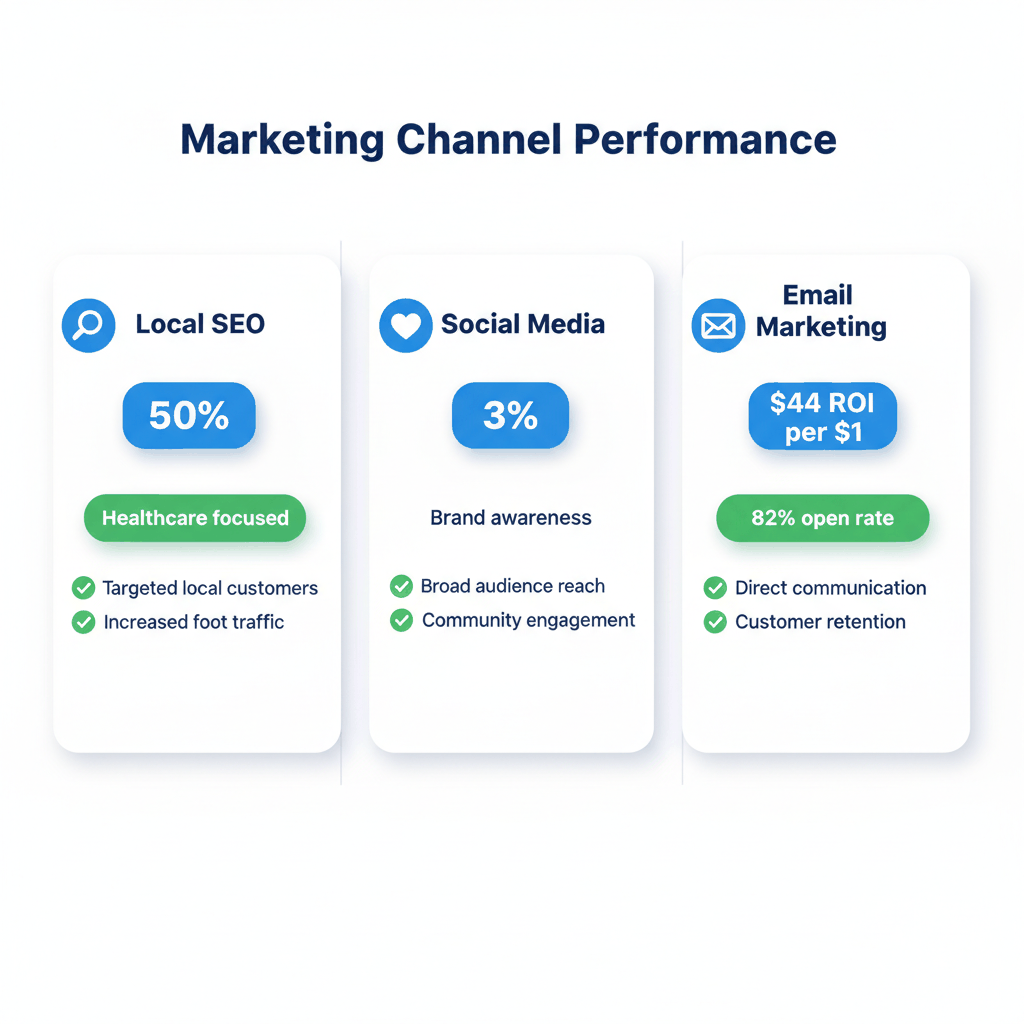
Research shows the conversion rate of local SEO for healthcare is nearly 50%. When people find you through local search, they convert at extremely high rates compared to 3% for social media.
Optimize your Google Business Profile completely. Include location-specific keywords in your website content. Encourage patients to leave Google reviews after appointments. These simple steps dramatically improve your local search visibility.
For example: Instead of targeting "dental implants," focus on "dental implants in [your city]." This specific approach attracts patients in your area who are ready to book appointments.
Smart practices don't rely on one marketing channel. Industry data shows about 80% of marketing budgets go to digital channels. However, traditional methods still deliver results. Direct mail response rates range from 2.9% to 5.3%, compared to 0.6% for email marketing.
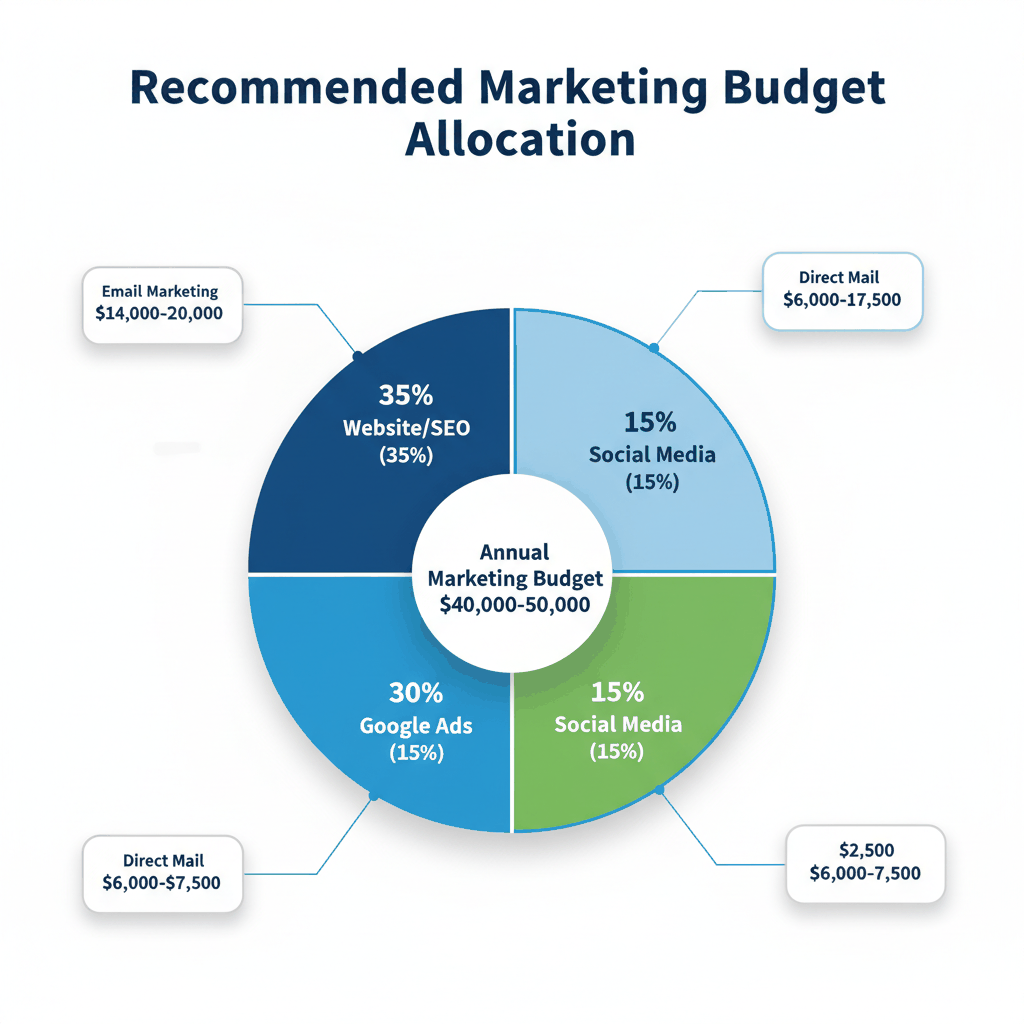
Allocate your marketing budget across proven channels:
Website and SEO (30-40% of budget)
Google Ads (25-35% of budget)
Social media marketing (10-15% of budget)
Direct mail campaigns (10-20% of budget)
Email marketing (5-10% of budget)
Beautiful websites mean nothing if they load slowly. Studies reveal 50% of consumers expect websites to load in 3 seconds or less. Site speed directly impacts conversion rates and patient acquisition.
Test your website speed using Google PageSpeed Insights. Optimize images, reduce plugins, and choose faster hosting. These technical improvements can increase conversions by 20% or more.
Patient acquisition requires targeted strategies that reach people actively seeking dental care. The most effective methods focus on capturing high-intent prospects and converting them into scheduled appointments.
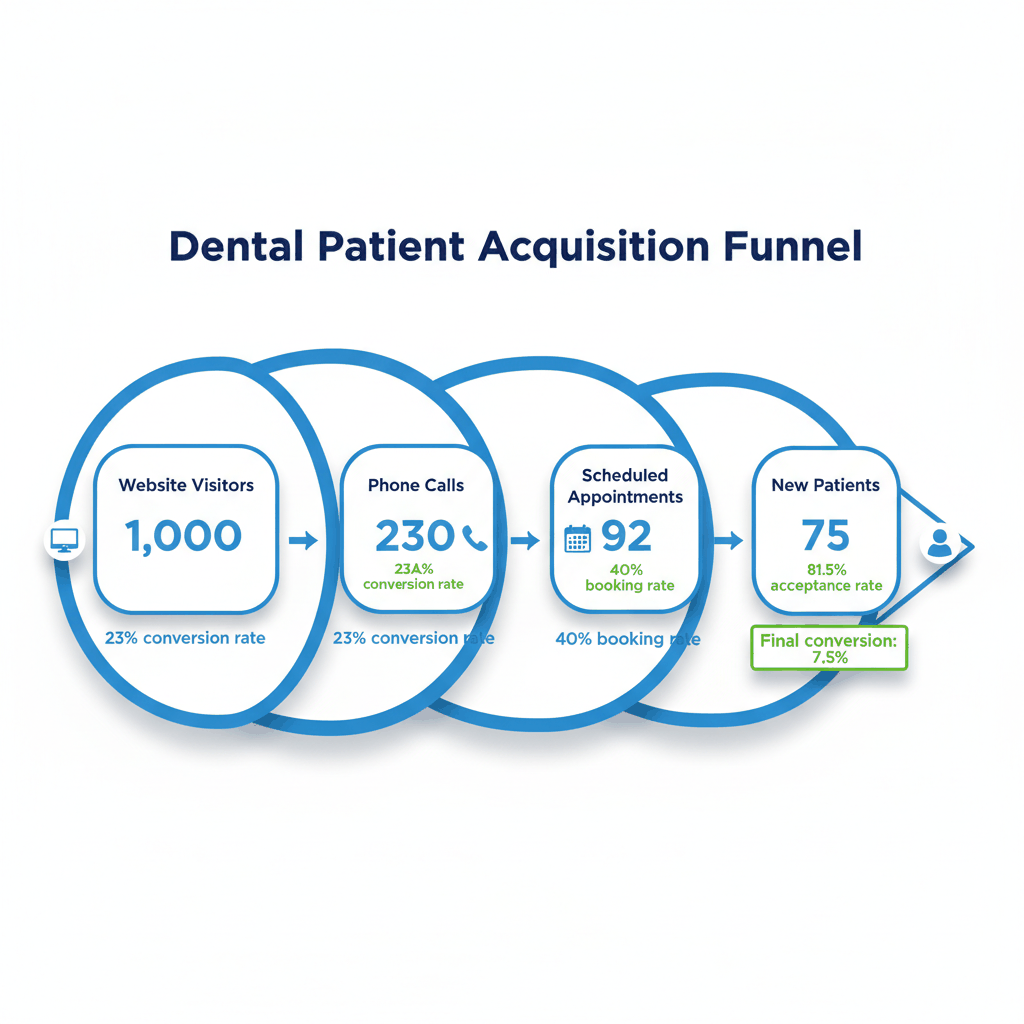
Marketing research shows referrals have the highest conversion rates at 3.74%. Existing patients who recommend your practice bring qualified leads who trust your services before they even call.
Create a systematic referral program. Ask satisfied patients to share their experience with friends and family. Offer small incentives like teeth whitening discounts for successful referrals. Make the referral process simple with digital tools and clear instructions.
Reviews boost your credibility online. 69% of people research dentists online before booking appointments. Positive reviews on Google, Yelp, and Facebook influence their decision-making process.
Email marketing delivers exceptional results when done correctly. Industry statistics show for every $1 spent on email marketing, there's a $44 return on investment. Welcome emails achieve an 82% open rate.
Send emails at optimal times for maximum engagement. The best time is morning hours between 7 a.m. and noon. Include images to boost open rates by 10%. Focus on appointment reminders, oral health tips, and treatment follow-ups.
Automate your email sequences for consistent communication. Set up welcome series for new patients, birthday greetings, and reactivation campaigns for inactive patients.
Most practices lose patients because they don't follow up effectively. Research indicates offices using automated follow-ups increase conversion rates by 47%.
Implement these automated touchpoints:
Immediate response within 5 minutes of website inquiries
Appointment confirmation calls 24 hours before visits
Post-treatment follow-up texts or emails
Quarterly check-in messages for preventive care
Birthday and holiday greetings with special offers
Essential Dental Marketing Tools
The right tools streamline your marketing efforts and improve results. These platforms help you manage patients, track campaigns, and automate repetitive tasks.
Dentrix connects every part of your dental practice business. From scheduling and imaging to billing and patient engagement, this platform handles daily operations while supporting marketing efforts.
Modern practice management systems integrate with marketing tools. They track patient acquisition sources, measure campaign performance, and automate communication workflows. This integration saves time and improves patient experience.
HubSpot offers HIPAA-compliant CRM specifically designed for healthcare practices. Virtual Dental Care saw a 20% productivity boost and saved 30% annually after switching to HubSpot.
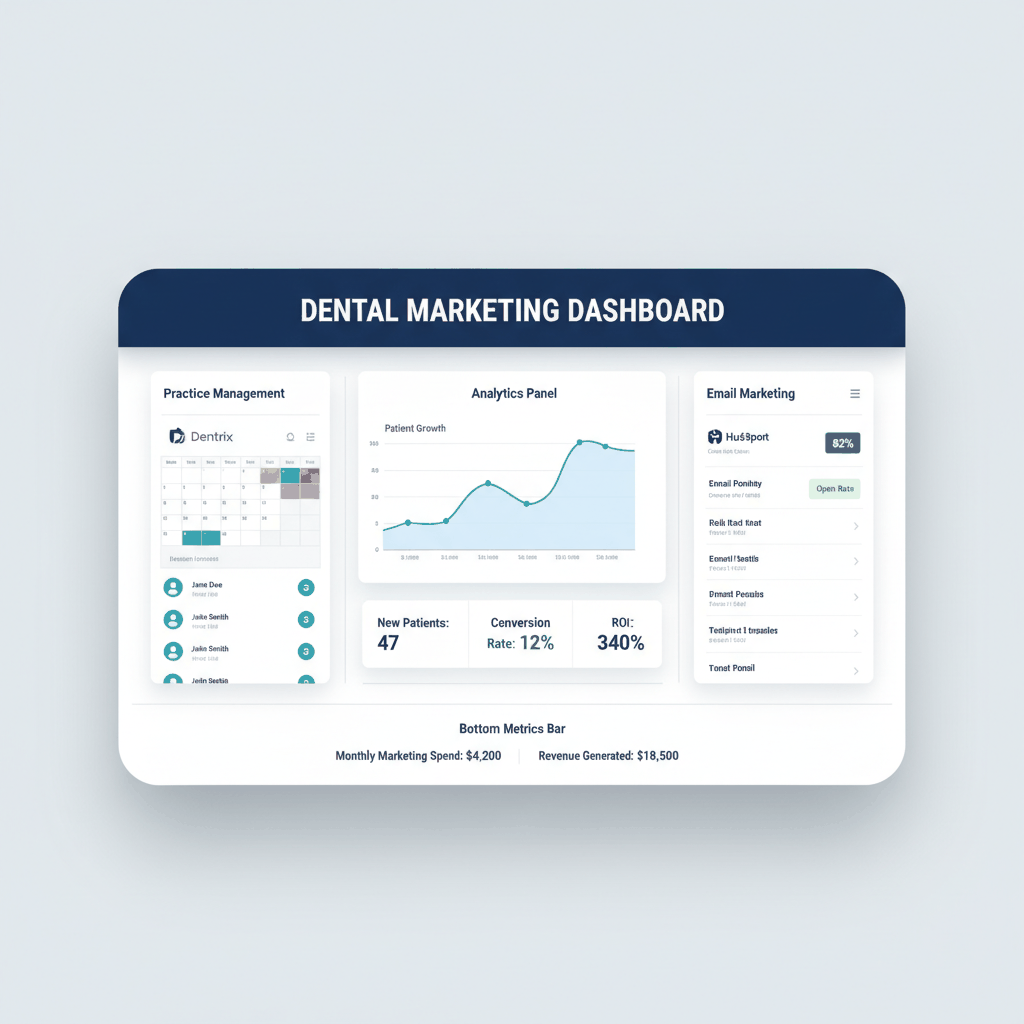
Understanding which marketing efforts generate patients is crucial for budget allocation. Lasso MD provides ROI dashboards that show exact revenue from every marketing-qualified lead that books appointments.
Track these key metrics across all marketing channels:
Cost per lead by source
Conversion rate from lead to appointment
Patient lifetime value by acquisition channel
Revenue attribution for each campaign
Return on investment for marketing spend
DenGro helps practices double their conversion rates within 6-12 months. Their proven system tracks conversion rates by treatment type and marketing source, helping practices maintain optimal performance over time.
Effective marketing requires appropriate budget allocation. Industry experts recommend spending 3-6% of collections on marketing activities. This includes internal staff time, external services, and marketing tools.
For aggressive growth, expect these annual investments:
Organic marketing: $10,000 to $50,000 annually
Paid advertising: $15,000 to $250,000 annually
Marketing tools and software: $2,000 to $10,000 annually
Content creation and design: $5,000 to $25,000 annually
These case studies demonstrate how effective dental marketing materials transform practices and generate measurable results.
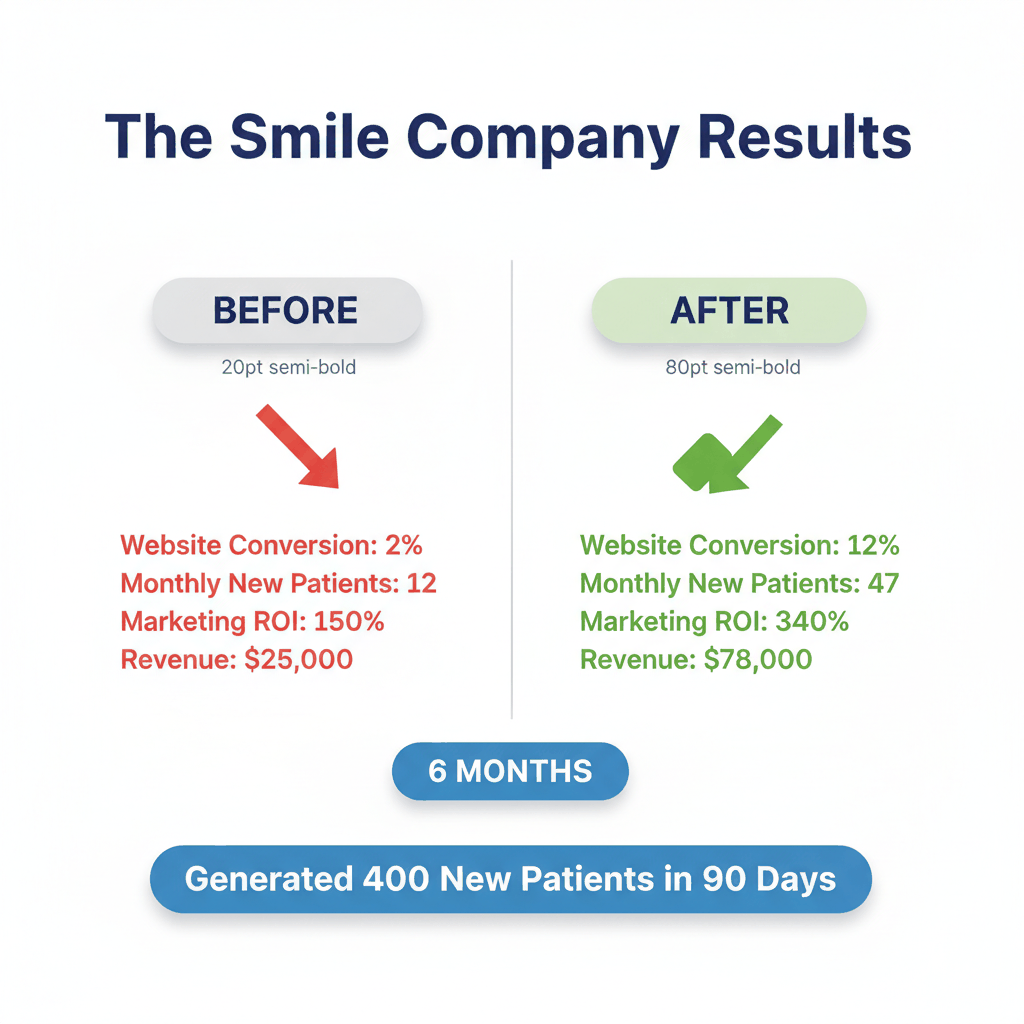
The Smile Company, a startup dental practice, used targeted Google Ads and remarketing campaigns to establish their presence. Within 90 days, they booked 400 new patients and built strong recognition in a competitive market.
Their success came from focused local targeting and compelling ad copy that addressed specific patient concerns. They emphasized convenience, modern technology, and gentle care to differentiate from established competitors.
One practice generated over $516,951 in revenue using postcard marketing campaigns. They achieved a 1000% return on investment by targeting specific neighborhoods and promoting high-value services like dental implants and cosmetic procedures.
The key was personalized messaging that addressed local community concerns. Instead of generic dental offers, they focused on solutions for specific problems like missing teeth or smile confidence.
Wood River Dental created 800 membership plans with patients paying $45 monthly. This generated $36,000 in monthly recurring revenue and $432,000 in annual recurring revenue.
The membership program reduced insurance dependence and provided predictable income. Members became marketing ambassadors who referred friends and family, creating organic growth that supplemented paid marketing efforts.
One practice achieved a 19% paid ad conversion rate by combining Google rankings, custom video ads, and remarketing strategies. They focused on high-value implant cases and created targeted landing pages for each service.
Their success factors included mobile-optimized landing pages, compelling video testimonials, and clear calls-to-action. They tested different headlines and offers to find the highest-converting combinations.
Successful dental marketing requires constant measurement and optimization. Track the right metrics to make informed decisions about your marketing investments.
Research shows 71% of people search online before scheduling dental appointments. This makes digital metrics crucial for understanding patient behavior and optimizing marketing materials.
Monitor these essential metrics monthly:
Website conversion rate (target: 10% or higher)
Phone call conversion rate (target: 40% or higher)
Cost per new patient by channel
Patient lifetime value
Return on marketing investment
Many practices struggle with marketing attribution. They can't connect marketing activities to patient revenue. This makes budget decisions difficult and wastes marketing dollars on ineffective channels.
Implement tracking systems that connect marketing touches to patient revenue. Use unique phone numbers for different campaigns. Create specific landing pages for each marketing channel. Track patients from first contact through treatment completion.
The dental marketing landscape continues evolving rapidly. AI-powered chatbots now convert 35% more inquiries into bookings. Video testimonials drive 60% higher treatment acceptance rates. Voice search optimization captures patients using smart speakers for local dental searches.
Successful practices focus on data-driven, AI-enhanced strategies for patient acquisition. They use clear analytics to target high-lifetime-value patients and optimize their marketing spend for maximum return.
What dental marketing materials work best for new practices?
New practices should focus on local SEO, Google Business Profile optimization, and targeted Google Ads. Direct mail to surrounding neighborhoods and social media presence help establish credibility quickly. Start with a professional website and consistent online reviews.
How much should I spend on dental practice marketing annually?
Invest 3-6% of your annual collections in marketing activities. For aggressive growth, budget $25,000 to $100,000 annually across digital advertising, SEO, marketing tools, and content creation. Track ROI to optimize spending across channels.
What's the average conversion rate for dental marketing materials?
Successful dental practices achieve 10% website conversion rates and 40% phone call conversion rates. Local SEO converts at nearly 50% for healthcare. Email marketing delivers $44 return for every $1 invested when done correctly.
How do I create dental brochures that actually convert patients?
Focus on patient benefits rather than clinical procedures. Use before-and-after photos, patient testimonials, and clear pricing information. Address common concerns like pain management and insurance acceptance. Include compelling calls-to-action and contact information.
Which digital marketing channels work best for dental patient acquisition?
Google Ads and local SEO generate the highest conversion rates. Social media builds trust and showcases results. Email marketing provides excellent ROI for patient retention. Combine multiple channels for maximum effectiveness and reach.
Ready to buy dental leads? Sign up for free with ResultCalls today!

Hello everyone! My name is Alex and I write these blogs to help educate small business owners on different ways to grow their business. My goal is to make lead generation as easy as possible for you. After reading these blogs, I hope you leave with some actionable steps that will get you closer to growing your business :)