
Your solar company spends thousands acquiring each customer. Meanwhile, your happy customers talk to friends and neighbors every day. What if you could turn those conversations into qualified leads?
Solar companies face brutal customer acquisition costs averaging $10,000 per sale. These costs consume 25% of total installation expenses. The problem keeps getting worse as competition increases for the same pool of eligible homeowners.
Smart solar companies use referral programs to flip this challenge. Instead of chasing expensive leads, they turn satisfied customers into their best sales force. The results speak for themselves: referral leads convert at 30% compared to just 13-17% for typical solar leads.
You'll learn how to design a solar referral program that generates high-quality leads, reduces acquisition costs, and creates predictable growth. Plus, we'll share proven strategies from companies generating millions in referral revenue.
Table of Contents
Solar referral programs solve the industry's biggest problem: expensive customer acquisition. When satisfied customers refer friends, you get pre-qualified leads with built-in trust.
The numbers prove referrals work better than any other lead source. Customer acquisition costs reached $0.87/Wdc in Q4 2024. Compare this to referral programs with zero direct acquisition costs.
Trust makes all the difference in solar sales. Nielsen research shows 92% of people trust recommendations from family and friends more than any other marketing. Your referral leads arrive ready to listen instead of skeptical about solar salespeople.
Typical solar leads convert between 13% and 17%. Referral leads perform much better. One solar company reports 30% conversion rates on referral leads from top to bottom.
The reason is simple. Referred customers already heard positive experiences from someone they trust. They call you to learn more, not to be convinced solar works.
Bought leads get sold to multiple companies. Referral leads come straight to you. No competing against 3-5 other solar companies for the same prospect.
This exclusive access means you control the sales conversation. You're not fighting to overcome bad experiences with aggressive solar salespeople who contacted them first.
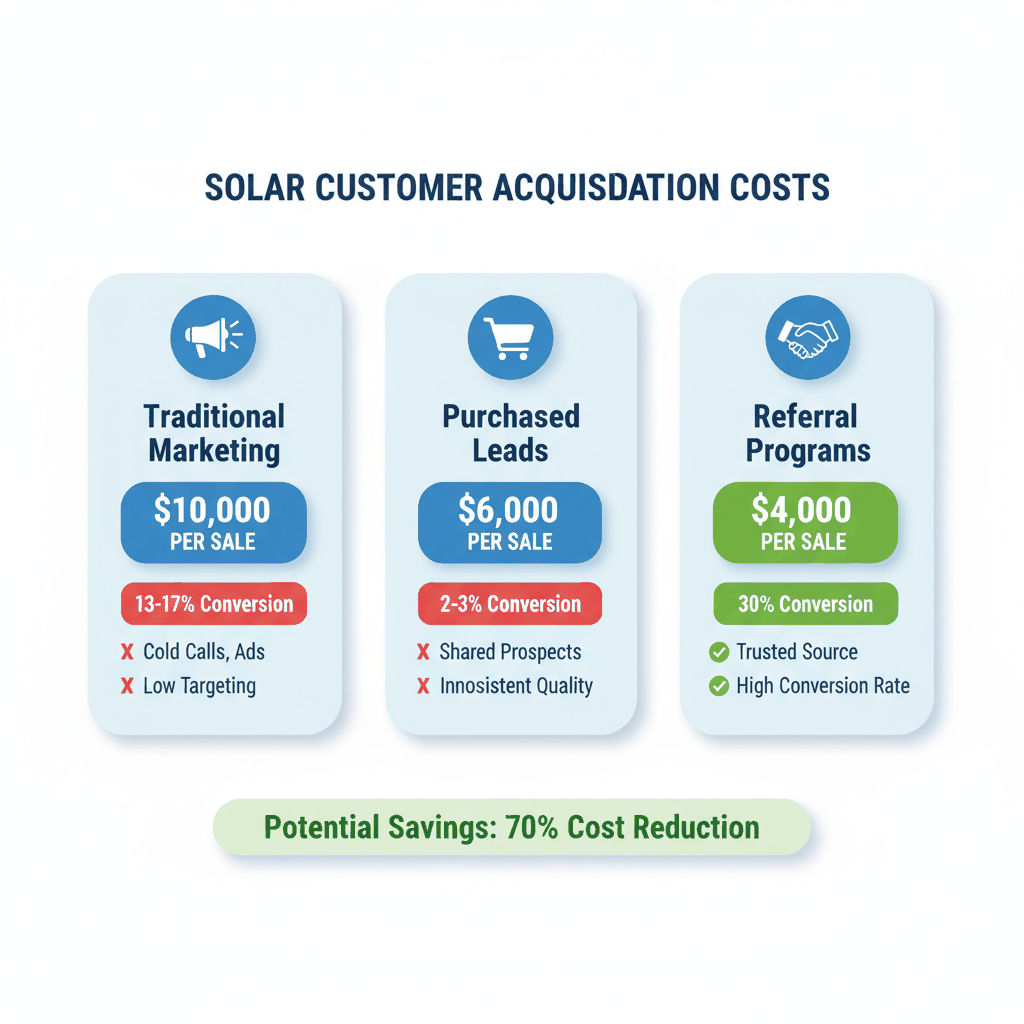
Solar companies struggle with expensive, low-quality leads that rarely convert. Understanding these challenges helps you see why referral programs work so well.
Solar customer acquisition costs hit record highs. Residential costs reached $0.85/W in H1 2023, a 13% increase from the previous year. For a typical 7kW system, that's almost $6,000 in acquisition costs alone.
These costs consume 25% of your total installation budget. Every dollar spent on expensive leads is money that could improve your profit margins or customer experience.
McKinsey research shows solar customer acquisition costs have 70% reduction potential through strategic marketing innovation. Referral programs represent your biggest opportunity to achieve these savings.
The solar market faces a fundamental challenge. Customers need good credit, own their home, and have unshaded roofs. Only about 8% of US homeowners currently have solar installed.
This creates fierce competition for qualified prospects. You're competing with dozens of other solar companies for the same limited pool of eligible customers.
Referral programs help you reach customers before competitors. When your existing customer recommends you to their neighbor, you get first access to that prospect.
Purchased leads deliver terrible results. 93-97% of bought leads never close. Your sales team spends time chasing unqualified prospects instead of helping serious buyers go solar.
Cheap leads often come from aggressive marketing tactics. These prospects feel tricked or pressured. They're skeptical about solar companies before you even make contact.
Referral leads arrive pre-qualified and interested. They already want solar. Your job becomes education and project design rather than overcoming objections.
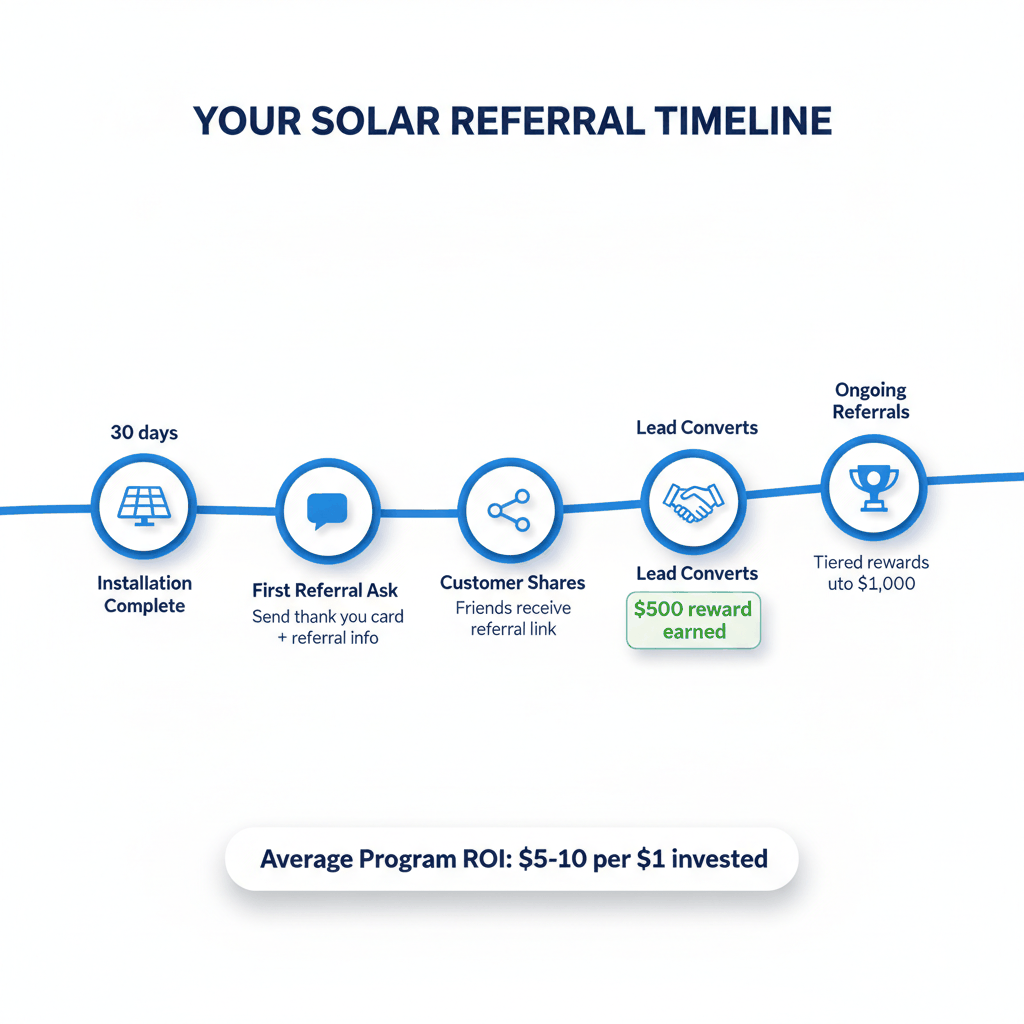
Successful solar referral programs use specific strategies that motivate customers and generate consistent results. Here are the proven approaches top companies use.
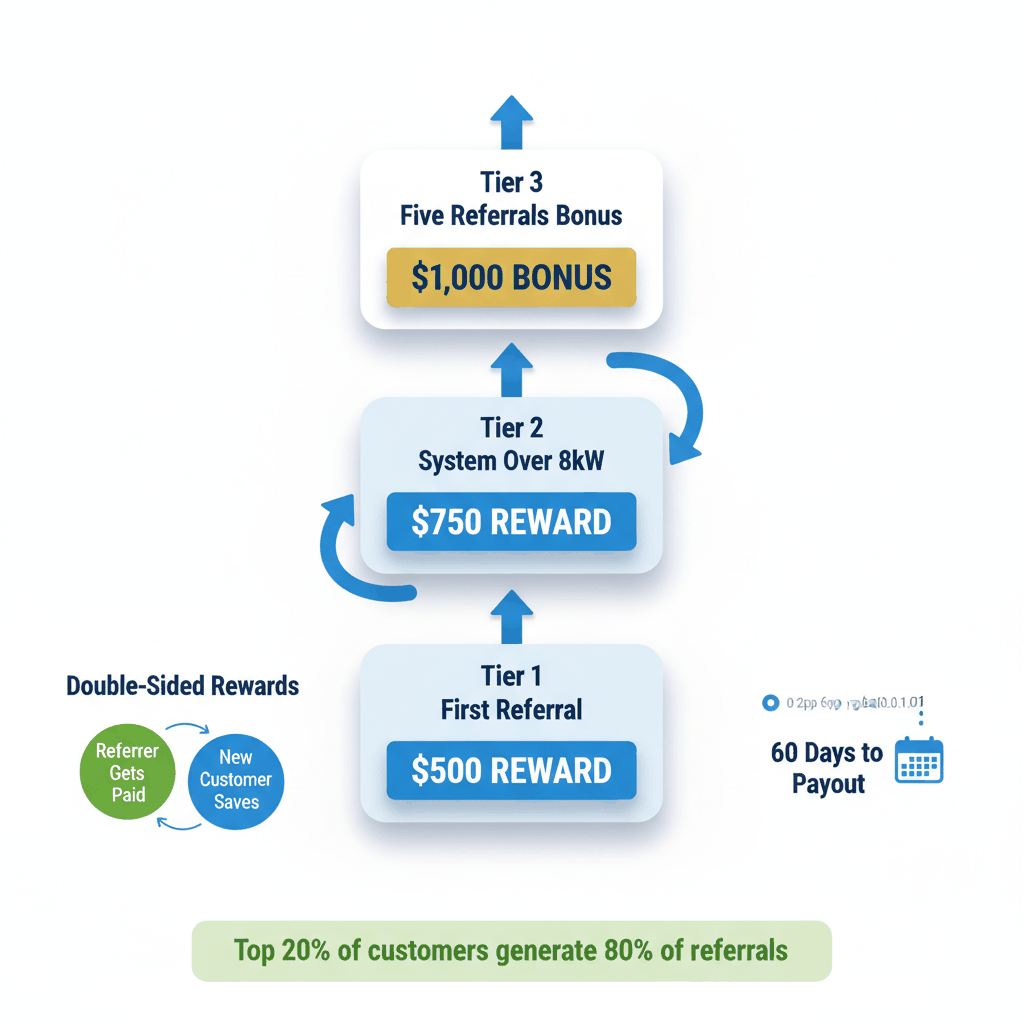
Tiered rewards motivate customers to make multiple referrals. Option One Solar uses this approach effectively. Customers earn $500 for small system referrals and $1,000 for large systems. Plus, they get $1,000 bonus for every five referrals.
This structure encourages ongoing participation. Customers don't just make one referral and stop. They keep sharing because bigger rewards await.
Consider your average system size when setting reward levels. The reward should feel significant to customers but remain profitable for your business.
The best solar referral programs reward both the referrer and new customer. This approach removes barriers for both parties.
Solar Holler pays $200 to both the referring customer and referred customer within 60 days of project completion. Everyone wins, which makes the referral easier to make.
New customers appreciate immediate value. Existing customers feel good about helping friends save money. This positive experience encourages more referrals.
Ask for referrals when customers feel most excited about solar. These moments happen throughout the customer journey, not just at project completion.
Perfect timing includes:
Right after installation when panels look great
When they receive their first reduced electric bill
During routine maintenance visits
After resolving any service issues quickly
One successful company sends thank you postcards one week after installation. The postcard includes complete referral program details when customers still feel excited about their new solar system.
Complicated referral processes kill participation. Customers need simple tools and clear instructions for referring friends and family.
Modern referral platforms create custom landing pages with unique URLs for each customer. Customers just share the link. The platform handles tracking and reward processing automatically.
Provide multiple sharing options. Some customers prefer texting links to friends. Others want to share on social media. Give them choices that match how they naturally communicate.
The 80/20 rule applies to solar referrals. Approximately 80% of your referrals will come from just 20% of your customers. Identify these referral champions and nurture relationships with them.
Track which customers make multiple referrals. Give them special attention, exclusive communication, and potentially enhanced rewards. These customers become your most valuable marketing asset.
Your referral champions often share specific characteristics. They love talking about solar, have large social networks, and genuinely enjoyed their installation experience.
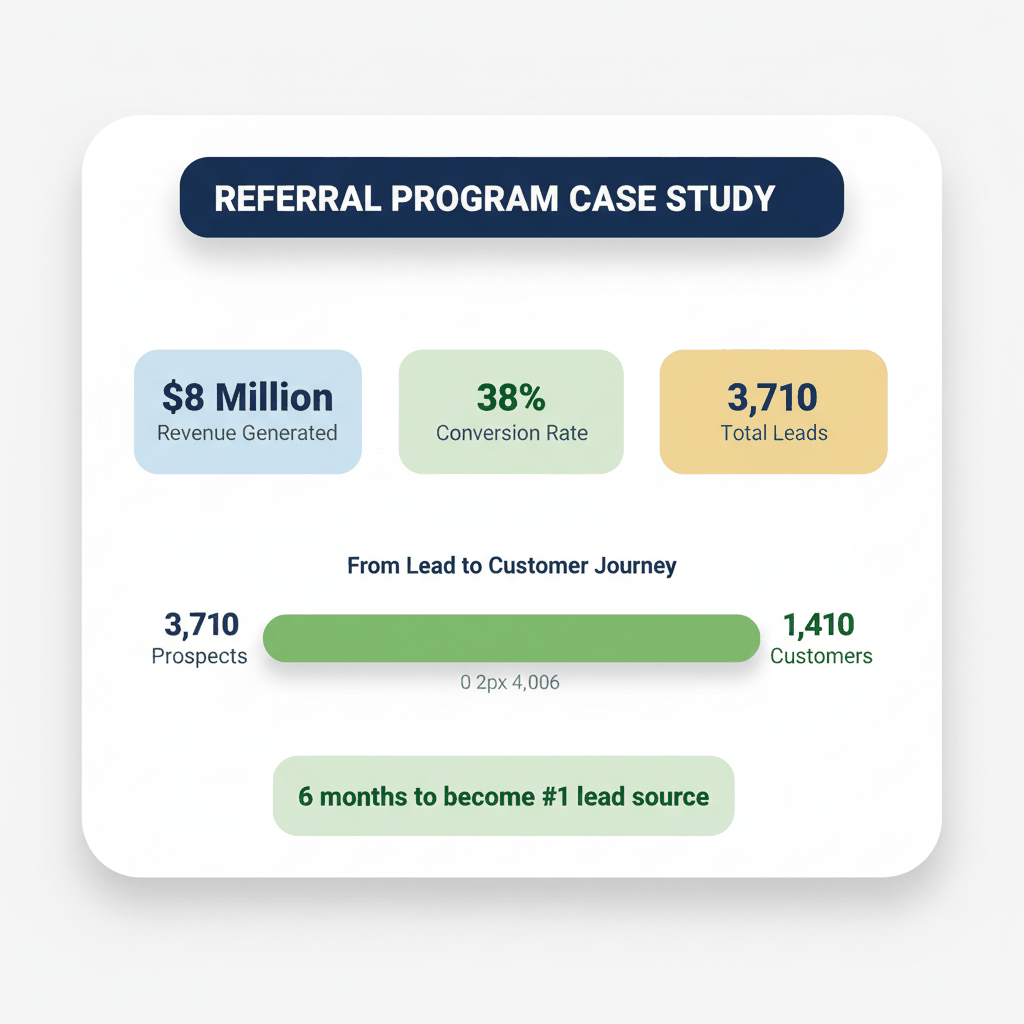
Real solar companies achieve remarkable results with well-designed referral programs. These case studies show what's possible when you implement referral strategies correctly.
One Australian solar company generated over $8 million in revenue through referrals in just over one year. Their results demonstrate the massive potential of referral programs.
The program generated 3,710 potential customers. They converted 1,410 of these prospects. That's a 38% conversion rate, much better than any other customer acquisition method they tried.
Within six months, referrals became their number one source of new customers. Their approach included $500 rewards for referrers, 10% discounts for new customers, and tracking dashboards so referrers could monitor their progress.
The key was making referrals easy and rewarding for everyone involved. Customers could track their referrals online and see exactly when they'd receive rewards.
SunPro Solar increased their referral closing ratio approximately 7x after implementing professional referral software. This improvement came from better tracking and follow-up processes.
Before using referral software, they struggled to track referrals and ensure rewards got paid promptly. Customer complaints about delayed payments hurt the program's effectiveness.
The software automated reward processing and gave customers real-time updates on referral status. This transparency increased customer confidence and participation in the program.
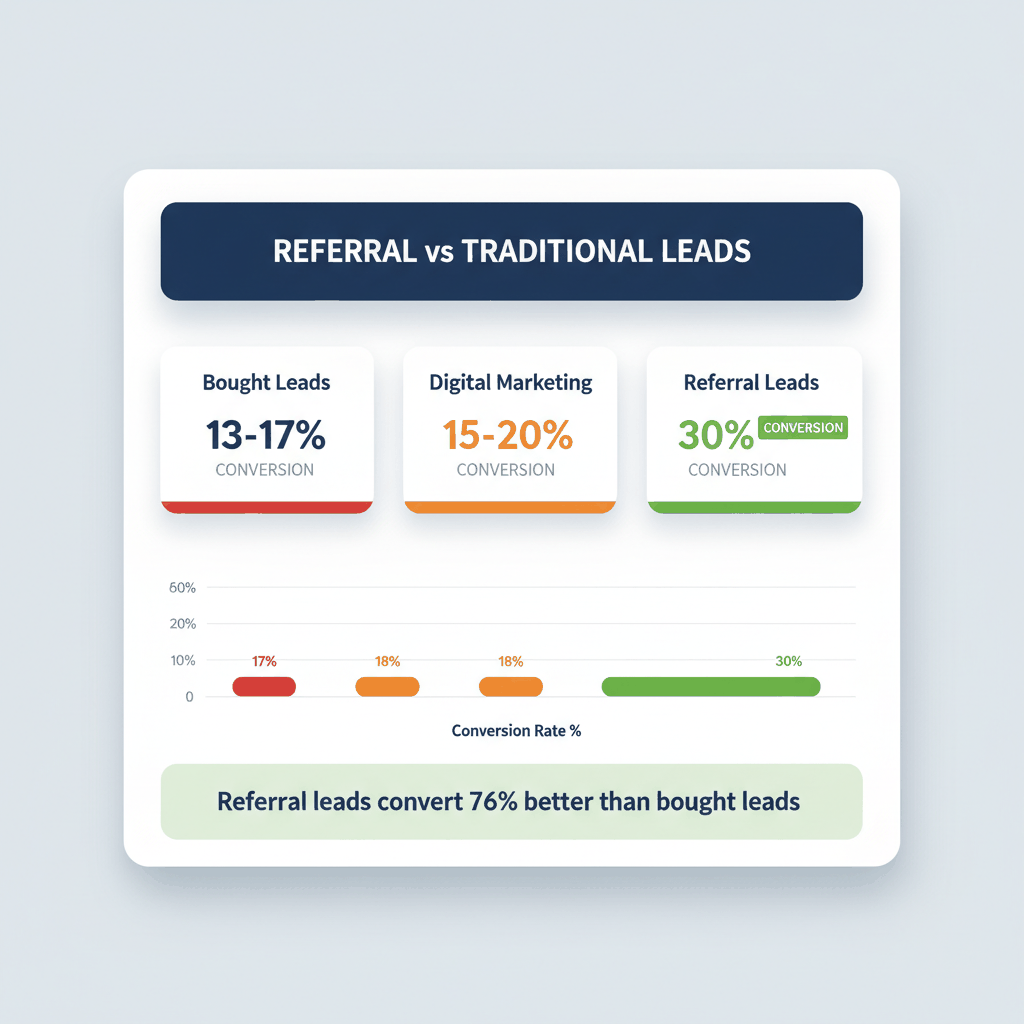
Ipsun Solar converts about 60% of leads to appointments and 28% of appointments to sales. Their overall conversion rate is 17% from initial contact to closed sale.
However, their referral leads close at 30% from top to bottom. This dramatic improvement in conversion rates makes referrals their most profitable lead source.
The company focuses on increasing referrals because the math is simple. Higher conversion rates mean lower customer acquisition costs and better profit margins on every sale.
Buddy Solar operates entirely on referrals with exactly $0 customer acquisition costs. They perform every job excellently and live by referral recommendations.
Their approach requires exceptional service quality on every installation. Customers become enthusiastic advocates because the experience exceeds expectations consistently.
This model works best for smaller companies focused on service quality over rapid growth. It proves referrals can completely replace paid marketing when executed properly.
The right tools make solar referral programs easier to manage and more effective at generating qualified leads. Here are the platforms successful solar companies use.
Locorum creates customized referral programs with dedicated landing pages and unique URLs for each customer. The platform streamlines the referral process and automates reward management.
One solar company using Locorum reports saving 4 hours of admin time per deal. The automation handles tracking, notifications, and reward processing without manual intervention.
ReferralRock integrates with CRM systems to automate manual processes. This connection ensures referrals get tracked properly and sales teams follow up quickly with new leads.
Get The Referral (GTR) helped SunPro Solar achieve their 7x improvement in referral closing ratios. The platform focuses specifically on the solar industry's unique needs.
Connect your referral program to customer relationship management software. This integration ensures referrals get tracked from initial contact through closed sale.
Include referral source fields in your CRM. Track which customers make referrals and how those leads progress through your sales process.
Automated workflows can notify sales teams immediately when new referrals arrive. Speed matters in solar sales, and quick follow-up improves conversion rates.
Create dedicated portals where customers can access all information about their solar installation project. Include referral program details and tracking tools in these portals.
Customer portals improve referral participation by keeping your company top-of-mind. When customers log in to check their energy production, they see referral opportunities.
These portals also demonstrate professionalism and customer service quality. Impressed customers become more likely to recommend your company to friends.
Track the right metrics to optimize your referral program performance. Focus on measurements that directly impact revenue and customer acquisition costs.
Track lead generation volume from your referral program. Count how many qualified leads the program produces each month compared to other marketing channels.
Calculate referral conversion rates by dividing converted referrals by total referred leads.
Measure customer acquisition costs for referral leads versus purchased leads. Include program costs, rewards, and staff time in your calculations.
Track program impact on total revenue. Calculate how much business comes directly from referral customers and their lifetime value.
Determine referral program ROI by comparing total program costs to revenue generated. Include reward payments, software costs, and management time.
Most successful programs generate $5-10 in revenue for every $1 spent on rewards. Factor in the higher conversion rates and lower acquisition costs of referral leads.
Consider lifetime value of referred customers. Satisfied referral customers often become referral sources themselves, creating compound returns.
Use tracking data to improve program performance. Identify which customers make the most referrals and focus additional attention on similar customer profiles.
Test different reward amounts and structures. Some customers respond better to cash rewards, while others prefer account credits or gift cards.
Monitor seasonal patterns in referral activity. Solar installation seasons affect when customers feel most excited about their systems and likely to make referrals.
How much should solar companies pay for referral rewards?
Most successful solar referral programs offer $500-1,000 per referral, depending on system size. This amount feels significant to customers while remaining profitable compared to typical $10,000 customer acquisition costs. Consider offering tiered rewards based on system value for maximum motivation.
When is the best time to ask solar customers for referrals?
Ask for referrals when customers feel most excited about solar. Perfect timing includes right after installation, when they receive their first reduced electric bill, or during positive service interactions. Send thank you postcards with referral details one week after installation completion.
How do solar referral programs compare to buying leads?
Referral leads convert at 30% compared to 13-17% for typical purchased leads. Plus, 93-97% of bought leads never close. Referral programs eliminate competition with other solar companies and provide pre-qualified prospects with built-in trust from personal recommendations.
What tools help manage solar referral programs effectively?
Use specialized referral software like Locorum or ReferralRock to automate tracking and reward processing. Integrate with your CRM system to ensure quick follow-up on new referral leads. Customer experience portals keep referral programs visible and encourage ongoing participation.
How long does it take to see results from solar referral programs?
Most solar companies see initial referrals within 30-60 days of launch. Significant results typically develop over 3-6 months as more customers complete installations and begin referring friends. The solar sales cycle takes 3+ months, so factor this timing into program expectations.
Ready to buy solar leads? Sign up for free with ResultCalls!

Hello everyone! My name is Alex and I write these blogs to help educate small business owners on different ways to grow their business. My goal is to make lead generation as easy as possible for you. After reading these blogs, I hope you leave with some actionable steps that will get you closer to growing your business :)