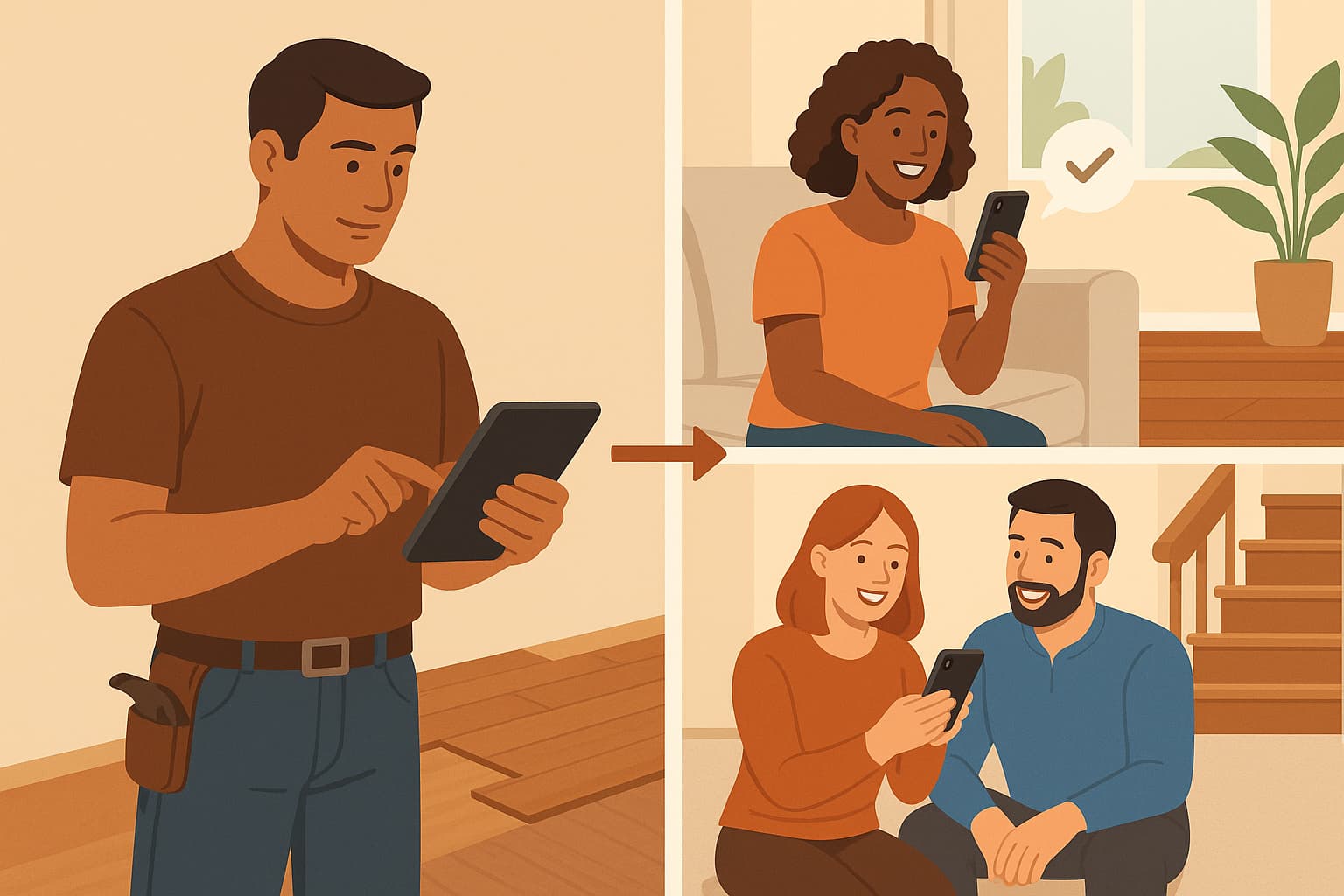
You're sitting on a goldmine. Most garage door businesses never tap into it. Your satisfied customers are your most powerful marketing tool. Yet most garage door contractors focus all their energy on expensive pay per click ads and search engine optimization SEO battles. They ignore the customers who already love their work.
This strategy guide shows you how to build a referral system. It turns happy customers into your best salespeople. You'll learn how to create a steady stream of high-quality garage door leads. Plus, you'll cut your marketing costs. These referred customers convert 30% better than leads from other sources.
By the end of this guide, you'll have a complete roadmap. You'll know how to build a Customer Loyalty Rewards System. This system transforms one-time customers into lifelong advocates.
Why Digital Marketing Falls Short for Garage Door Services
Current Garage Door Marketing Challenges
Building Customer Loyalty First
Designing Your Garage Door Lead Generation Pipeline
Email Marketing and Digital Tools You Need
How to Promote Your Garage Door Marketing Program
Measuring Your Success
Real Success Stories
Word-of-mouth marketing is the secret weapon for garage door businesses. Here's why it works so well for garage door repair services.
92% of people trust recommendations from friends and family more than any other advertising. This trust matters even more for garage door repair services. You're working on their home security. You're asking for significant money. A recommendation from someone they know removes most worry about choosing the wrong company.
For garage door repair, this trust becomes even more critical. These jobs often involve security and significant financial outlay. A recommendation from a known source removes most risk for potential customers.
When a neighbor says "These guys fixed my garage door perfectly and charged a fair price," that carries more weight than any Google ad.
Word-of-mouth marketing isn't just trusted. It's extraordinarily effective. It drives five times more sales than paid advertising. It can improve your overall marketing results by up to 54%.
Referred customers convert 30% better than leads from other marketing channels. They're already pre-sold on your quality before you talk to them. This means less time convincing and more time serving.
Getting new customers through referrals costs much less than traditional advertising. This directly improves your bottom line. You reduce customer acquisition costs. You maintain steady lead flow. For garage door companies working with tight marketing budgets, referrals offer the best return on investment.
Garage door installation and repair is a local business. Customers search for providers in their immediate service area. Referrals from neighbors and local friends carry huge weight.
A positive experience shared by someone in the same neighborhood is often the most convincing endorsement. This is especially true for services involving home security and major investments.
Most garage door businesses face the same lead generation problems. Understanding these challenges helps you see why referrals are so valuable.
Many garage door companies rely on random referrals instead of systematic programs. This passive approach leaves tons of potential untapped. Without structure, you get inconsistent lead flow. This makes it hard to predict revenue and manage resources in real time.
Your satisfied customers want to help you. They just need an easy way to do it.
Small garage door businesses struggle to compete online against bigger companies and lead generating platforms that dominate search results. These competitors appear prominently despite your local expertise.
Build a comprehensive lead generation strategy that includes referrals by learning how to get more garage door repair leads: an ultimate guide that combines multiple approaches for maximum results.
Even with digital marketing and search engine optimization SEO investments, many local contractors can't get prominent search visibility. A strong referral program cuts through this digital noise. It provides a direct path to qualified leads without expensive advertising battles.
People trust traditional advertising less than ever. This makes personal recommendations more valuable. In a crowded marketplace, a trusted recommendation stands out and gets action.
This shift makes referral programs not just marketing tactics but strategic requirements for building trustworthy local brands.
A successful referral program starts with loyal customers. Before customers will refer your garage door service to others, they need to feel valued and appreciated.
Customer loyalty is more than repeat business. It's about creating customers who actively advocate for your garage door business. For garage door contractors, loyalty means customers who will recommend you to friends and neighbors.
A loyalty program offers benefits for continued business. These usually include discounts, exclusive offers, or other perks earned through repeat purchases or specific actions.
Modern loyalty programs focus on these key elements:
Personal Touch: Generic offers don't work anymore. Customers expect programs tailored to their service history and needs. For garage door repair services, this might mean offering relevant discounts based on past repairs.
Quick Rewards: Today's customers expect immediate benefits. Rewards that offer instant value see higher engagement than delayed benefits.
More Than Money: While discounts matter, customers also want recognition and community belonging. This could mean exclusive maintenance tips or priority scheduling for garage door companies.
Simple Experience: Participation should be easy and fit naturally into the customer journey. Complex sign-ups or difficult redemption kill engagement.
Well-designed loyalty and referral programs offer multiple benefits:
Higher Revenue: Loyalty programs increase customer lifetime value. They encourage repeat business and referrals. This leads to more frequent engagement and higher-tier service purchases.
Stronger Relationships: Loyalty programs create additional positive touchpoints. They foster appreciation and strengthen relationships beyond the immediate service call. This is crucial in garage door marketing where trust differentiates you from competitors.
Competitive Edge: In competitive local markets, unique loyalty programs can be significant differentiators. They give customers compelling reasons to choose and stick with your company over others.
Better Word-of-Mouth: Loyal, satisfied customers naturally become brand advocates. Formal programs provide structure and incentive for active referrals.
Remember: excellent customer service creates the foundation. Loyalty programs build on existing satisfaction. They don't create happiness from nothing.
Creating an effective referral pipeline for your garage door business requires following core principles that maximize participation and impact. This lead generation strategy works better than traditional methods.
Keep It Simple: Your referral program must be easy to understand and use. Any complexity in rules, submission, or reward redemption will stop participation. The entire process should be intuitive and require minimal effort.
Offer Real Value: Incentives must feel genuinely valuable to both the person making the referral and the new customer. If rewards feel small or irrelevant, motivation disappears.
Make It Visible: Information about your referral program must be easy to find and frequently communicated through various customer touchpoints.
Build Trust: All terms, conditions, and timelines should be clearly stated and consistently applied. This builds and maintains customer trust.
A well-structured reward strategy drives successful referral programs. For garage door businesses, multiple reward approaches work best.
Dual-Sided Rewards
This is the most effective strategy. Both the person making the referral and the new customer receive rewards. This "win-win" approach significantly increases appeal.
For example, offer a $50 discount to the new customer and a $50 gift card to the referrer. This immediately benefits the new customer while rewarding the existing customer's effort.
Effective reward types include:
Cash or Gift Cards: Tangible rewards like Visa or Amazon gift cards appeal broadly. For garage door installation, which might be a one-time need, direct financial benefits can be very persuasive.
Service Discounts: New customers get discounts on their first service. Referrers get discounts on future services, encouraging repeat business and building long term relationships.
Free Services: Referrers can receive complimentary services like garage door tune-ups or safety inspections as valuable, relevant rewards.
Ongoing Reward Systems
To motivate multiple referrals, consider these approaches:
Tiered Rewards: Escalating rewards for multiple referrals. For example:
First referral: $25 gift card
Third referral: $75 gift card or significant service discount
Fifth+ referral: Premium reward like free annual maintenance
Points Systems: Customers earn points for each successful referral. Points can be redeemed for various rewards. This gamifies the process and offers flexibility.
Contests: Occasional contests for "most referrals" within specific periods can inject excitement and drive activity surges.
Easy referral processes directly correlate with program success.
Simple Sharing: Provide customers with unique, easily shareable referral links or codes. These should work via email, social media, text, or QR codes on physical cards.
Clear Instructions: Steps for making referrals and claiming benefits must be exceptionally clear and concise.
Minimal Effort: The process should demand very little time or effort. One-click access links streamline the process significantly. Less friction means higher participation.
Seamless experiences extend beyond customer-facing processes. Your business needs internal ability to accurately track referrals and attribute them correctly. This ensures proper reward distribution and effective ROI measurement.
Successfully launching and managing referral programs requires robust tracking, management, and promotion tools. Email addresses and customer data are the foundation of any digital marketing system.
Customer Relationship Management systems organize customer data and interactions. Many modern CRMs offer referral program support.
ServiceTitan
Popular in trades, ServiceTitan can track referral sources and automate program aspects like email invitations. Its reporting helps monitor revenue impact from referred customers.
ReferPro integrates seamlessly with ServiceTitan. It offers automated referral attribution, reward payouts for customers and employees, and campaign management via text and email.
Jobber
Jobber offers a specific "Referrals" add-on. This feature automates incentive delivery through fixed amounts or percentage discounts on future invoices. It facilitates program promotion through email campaigns and provides detailed tracking dashboards for garage door repair leads.
Housecall Pro
This CRM includes a "Customer Portal Referral Program." Customers can share unique referral links. The system tracks referral relationships, making them visible on customer profiles.
For businesses wanting specialized referral management, dedicated software presents strong alternatives to CRM features.
ReferralRock
Frequently recommended for small businesses, ReferralRock provides tools for creating unique referral links, comprehensive management dashboards, and performance analytics. Its "One Click Access links" ensure high customer participation.
Friendbuy
This platform offers advanced features including A/B testing of offers and messaging, flexible reward options, and robust analytics for measuring ROI and customer lifetime value.
Other Options
Referral Factory emphasizes code-free program setup. GrowSurf targets startups. Both offer specialized referral marketing solutions.
How referrals are tracked affects accuracy and ease of use.
Unique Referral Links: Generally preferred method. Each customer receives a unique URL to share. When prospects click and take action, the system automatically attributes the referral. This minimizes manual entry and tracking errors.
Referral Codes: Unique codes given to referrers for sharing. New customers must manually enter codes during sign-up or service. This method is more error-prone as codes can be forgotten, mistyped, or not applied.
Dedicated landing pages serve as central hubs for referral programs. They should clearly communicate value and make participation effortless.
Key elements include:
Clear Headlines: Immediately explain the program's purpose (e.g., "Refer a Friend & You Both Get $50!")
Incentive Outlines: Detail what referrers earn and what referred friends receive
Social Proof: Include testimonials from customers who successfully referred others
Simple Forms: Keep referral submission forms short and ask only for essential information
Strong Calls to Action: Use clear, action-oriented buttons like "Refer a Friend Now"
FAQ Sections: Address common questions to reduce uncertainty
Investing in proper technology isn't just an expense. It's a critical enabler of referral program success.
Enhance your lead capture strategy beyond referrals by learning how to get garage door repair leads with a lead magnet that provides value while collecting prospect information.
Well-designed referral programs only work if customers know about them and feel motivated to participate. Effective promotion and clear communication are essential.
Make It Visible: Your referral program shouldn't be hidden. Promote it actively across multiple customer touchpoints. This includes prominent website placement, email addresses in signatures, social media bios, invoices, and regular newsletters.
Explain Benefits Clearly: Concisely explain how the referral program works. Detail rewards for both referrers and referred friends. Outline exact steps customers need to take for successful referrals. Confusion kills participation.
Email remains powerful for promoting referral programs and nurturing advocates.
Program Announcement Email
Send dedicated emails to your entire customer list announcing the new referral program. These emails should be enthusiastic, clearly explain benefits, and provide direct links to referral landing pages.
Use compelling subject lines like: "Share the Love & Earn Rewards with [Your Company]'s New Garage Door Marketing Program!"
Post-Service Referral Requests
After successful service calls and customer satisfaction confirmation, send personalized emails. Thank customers for their business, reiterate service commitment, then gently invite referral program participation.
Timing is key here. Capitalize on positive experiences. Use subject lines like: "Happy with Your Garage Door Repair? Share [Your Company] & Get Rewarded!"
Automated Confirmations
Implement automated emails acknowledging referrals. Send emails to referrers when friends sign up or complete services. Send another when rewards are processed. This keeps referrers engaged and informed.
Garage door technicians are uniquely positioned to promote referral programs. They interact directly with customers at service completion, often when satisfaction peaks.
Comprehensive Training
Technicians must understand referral program details: how it works, rewards for both parties, and participation methods. Train them to identify appropriate moments and suitable customers to approach.
Identifying the Right Time
The best time for referral requests is when customers are demonstrably happy and satisfied. This could be immediately after successful repairs, following positive feedback, or during maintenance visits where technicians reinforce service value.
Providing Simple Tools
Equip technicians with physical referral cards including QR codes linking to referral landing pages. Alternatively, provide easy methods for sharing digital referral links via text or email on the spot.
Effective Scripts
While scripts should adapt to technician styles and specific interactions, frameworks can increase confidence and consistency.
Example script: "I'm really glad we could get your garage door working smoothly again today. We pride ourselves on good service, and happy customers like yourself are our best advertisement. If you know any friends, family, or neighbors who could use reliable garage door service, we have a great referral program where you both get a $50 gift card. I can leave you a card with the details if you're interested."
Dedicated Landing Pages: These serve as central hubs for all referral information and activity. All promotional efforts should drive traffic here.
Social Media Engagement: Regularly post about referral programs on business social media channels. Share success stories or testimonials from customers who benefited from the program. Use engaging visuals and clear calls to action directing followers to referral landing pages.
Local SEO: While "garage door repair referral program" might have low search volume, ensure main service pages are optimized for local SEO. Referral landing pages can be optimized for terms like "[Your Company] referral program" or "refer a friend [Your City] garage door service."
Strengthen your overall lead generation foundation by learning how to get more garage door leads with SEO content that attracts new customers who can become future referral sources.
Promotional strategies should be multi-channel and strategically timed. Automated email campaigns provide consistent reminders and easy sharing tools. Personal asks from technicians capitalize on immediate satisfaction moments.
You need to track data to understand how well your referral program works. The right metrics show you what's working. They help you improve continuously. They reveal program performance, cost-effectiveness, and business growth impact.
Participation Rate: This measures how many existing customers sign up for your referral program. Low participation might mean people don't know about it. Or your incentives aren't attractive enough.
Referral Rate: This tracks how many referrals each participant makes. You can also measure it as a percentage of total customers. This shows how willing participants are to advocate for your brand.
Referral Conversion Rate: This is a critical metric. It shows the percentage of referred leads who become paying customers. High conversion rates mean two things. Your referred leads are high quality. Your sales process works well.
Cost Per Acquisition via Referrals: Calculate this by dividing total referral program costs by new customers acquired through referrals. This should be much lower than other marketing channels.
Compare your referral costs with other lead generation methods by learning how to get more garage door repair leads using Google Ads to understand the full marketing mix ROI.
Customer Lifetime Value of Referred Customers: Studies consistently show something important. Referred customers tend to be more loyal and have higher lifetime value compared to customers from other sources. This shows long-term financial benefits.
Program ROI: This is the ultimate financial success measure. Calculate as (Revenue from Referred Customers - Total Program Costs) / Total Program Costs x 100%.
Understanding ROI clearly is crucial. You need this to justify referral program investment.
ROI Formula: (Total Revenue from Referred Customers - Total Program Costs) / Total Program Costs x 100%
Identifying Costs: Include several things. Software subscriptions. Actual reward costs. Marketing materials specifically for the program. Staff time portions dedicated to program management.
Tracking Revenue: Accurately track revenue from customers who came through referrals. CRM systems like ServiceTitan and Jobber help with this. Dedicated referral software also helps track this attribution.
Marketing research consistently shows something important. Referred leads have superior quality:
Referred leads convert 30% better than leads from other marketing channels
Referral marketing can achieve conversion rates 3 to 5 times higher than other channels
For garage door businesses, leads from trusted friends or neighbors are much more likely to result in booked jobs than leads from generic online ads
This higher conversion rate directly helps lower your customer acquisition costs.
Referral programs work at the intersection of customer acquisition and retention:
Acquiring new customers can be 5 to 25 times more expensive than keeping existing ones
Referral programs use satisfied, kept customers to get new customers. This makes them exceptionally efficient for new customer acquisition.
By rewarding existing customers for loyalty and advocacy, referral programs help with customer retention
Just a 5% increase in customer retention can lead to 25-95% profit increases
Looking at successful referral programs helps you learn what works. Here are real examples from garage door businesses and related home services.
Garage Door Ninja
This company has a simple referral program. Referred friends get $50 discounts on services. Existing customers get $50 premiums. Both sides win.
Their marketing focuses on simplicity and convenience. They emphasize mutual benefits. They want to strengthen their community of satisfied homeowners. Many positive customer testimonials show strong customer satisfaction. This foundation is required for successful referral programs.
CR Garage Doors
A case study about CR Garage Doors shows impressive results. They got a 108% increase in conversion rate and 39% reduction in cost per conversion through improved Google Ads and landing pages.
This wasn't a referral program study. But it shows how effective lead generation works. Strong referral systems could make these gains even better. They convert newly acquired, satisfied customers into advocates.
Quality Comfort Services (HVAC)
This company employs tiered monetary reward systems using Mastercard or Amazon gift cards. Reward values depend on referred customer service types.
New system installation referrals yield $100 gift cards for referrers. Service agreement sign-ups result in $25 gift cards. They actively promote through dedicated "Refer A Friend Hotlines" and provide clear terms and conditions.
Holtkamp Heating & Air (HVAC)
Their program offers $100 Visa gift cards to referrers if friends buy new systems, and $25 Visa gift cards if friends book any service or repair.
This is another example of dual-tiered rewards based on referred sale nature.
Plumbing Business Statistics
Stats for plumbing businesses show powerful results. Referred customers convert five times faster and spend 16% more on average. Plumbing businesses with formal referral programs grow 30% faster than those using only other marketing methods.
Jobber Case Study
A major case study about Jobber shows clear benefits. When they started a referral program, something interesting happened. Referred customers had 4.86% higher lifetime value and 18.15% higher average selling prices compared to non-referred customers. This proves that well-managed referral programs deliver real financial benefits.
Successful home service referral programs have common features. They use dual-sided rewards and simple participation processes. This answers "what's in it for me?" for both referrers and new customers. It boosts the chance of engagement.
These case studies show something important. Referral programs work best when built on solid foundations. You need exceptional service quality and high customer satisfaction first. Referral programs don't create brand advocates from unhappy customers. They amplify and reward satisfaction that already exists.
Local trust and community building matter a lot. This is especially true for locally focused garage door service businesses.
Most garage door repair businesses miss a huge opportunity. They don't use satisfied customers as lead generation sources. This represents significant untapped potential.
Building formal Customer Loyalty Rewards Systems is smart business. These systems create strong "Service-to-Referral Pipelines." This isn't just marketing tactics. It's a strategic requirement for sustainable growth. You get enhanced brand reputation and improved profitability in competitive home service markets.
The journey to successful referral programs involves several connected strategies:
Understanding Value: Word-of-mouth is the most trusted and cost-effective advertising form. This is especially true for local, trust-based services like garage door repair.
Building on Loyalty: Foster customer loyalty through excellent service and personalized experiences. This creates referral foundations.
Designing Effective Incentives: Use clear, valuable reward structures. Often dual-sided or tiered rewards work best. They motivate both referrers and new customers.
Ensuring Ease of Use: Make referral processes simple and seamless. Use user-friendly landing pages and sharing mechanisms.
Leveraging Technology: Use CRM systems or dedicated referral software. This enables efficient tracking, management, and automation.
Proactive Promotion: Actively market referral programs through multiple channels. Empower technicians as frontline advocates during peak customer satisfaction moments.
Data-Driven Optimization: Consistently track key performance indicators. Use this data to refine and improve systems over time.
Want to turn this research into real results for your garage door business? Follow this step-by-step plan:
Define Clear Goals: Set specific, measurable goals for your referral program. For example, aim to get 10 new customers per month through referrals within the first six months. Or try to achieve 25% referral conversion rates.
Design Incentive Structure: Pick an incentive model. Dual-sided rewards work great for getting started. Try "$30 off first service for new customers, $30 gift cards for referrers." You can add simple tiered systems later.
Choose Tracking Software: Look at your current CRM capabilities. If you use systems like Jobber, check out "Referrals" add-ons. If your current CRM isn't good enough, research dedicated referral marketing software like ReferralRock.
Develop Promotional Materials: Create dedicated, user-friendly landing pages. Explain programs, benefits, and how to participate. Write email templates for announcements, post-service requests, and thank-you notifications. Design simple referral cards for technicians.
Train Your Team: Run training sessions on program mechanics. Cover referral importance, opportunity identification, and provided scripts and tools. Emphasize appreciative, non-pushy approaches.
If you want to get more pay per call garage door repair leads, sign up for free with ResultCalls today!

Hello everyone! My name is Alex and I write these blogs to help educate small business owners on different ways to grow their business. My goal is to make lead generation as easy as possible for you. After reading these blogs, I hope you leave with some actionable steps that will get you closer to growing your business :)