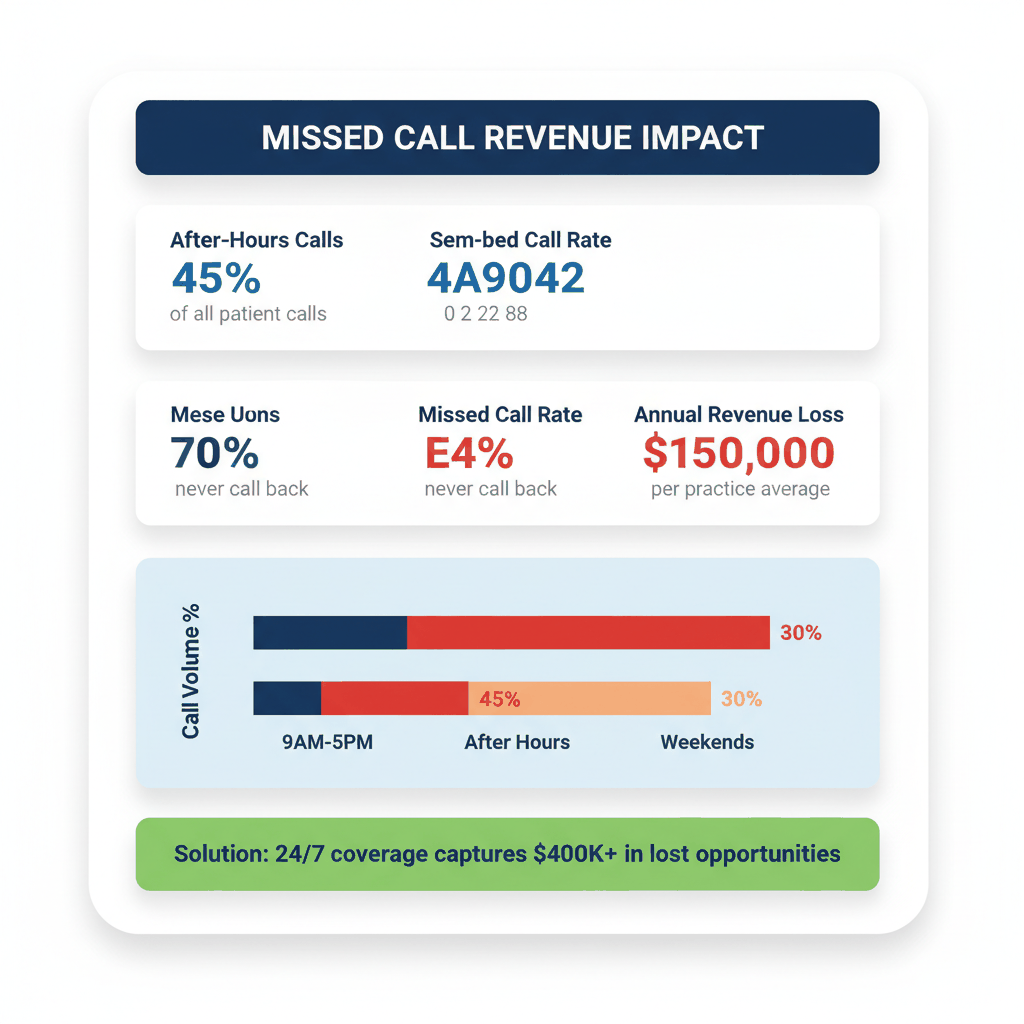
Here's the painful truth: 45% of calls to dental practices happen outside standard business hours. Patients call during lunch breaks, after work, and on weekends. They call when they're in pain. When your phone goes straight to voicemail, 70% of those patients call the next dentist on Google.
A smart dental office phone system changes everything. It captures every call, routes emergencies properly, and turns missed opportunities into booked appointments. The technology exists today to answer every call within two rings, 24 hours a day.
This guide shows you exactly how to implement an after-hours phone strategy that captures more patients and grows your practice revenue.
Table of Contents
A modern dental office phone system does more than handle calls. It manages your entire patient communication workflow during and after business hours.
Traditional phone systems fail dental practices. They rely on your staff to answer every call manually. When your receptionist is helping a patient verify insurance, that incoming call goes to voicemail. The caller moves on to your competitor.
Smart phone systems solve this problem. They use call routing, AI assistance, and professional answering services to capture every opportunity. Your practice can maintain 90% answer rates without adding staff.
Your dental office phone system must include these core features:
Call routing that directs emergencies to on-call dentists
Professional voicemail with clear next-step instructions
Integration with your practice management software
Mobile app access for dentists and staff
Call recording for training and quality assurance
24/7 coverage through AI or answering services
These features work together to create seamless patient experiences. Emergency calls reach a human immediately. Routine calls get professional handling with clear follow-up procedures.
Over 85% of dental practices now use cloud-based phone systems instead of traditional landlines. The reason is simple: flexibility and functionality.
Cloud systems let your team answer practice calls from anywhere. During lunch breaks, staff can forward calls to mobile phones. After hours, calls route to answering services automatically. Traditional landlines can't offer this flexibility.
Every missed call costs your practice real money. The numbers are shocking when you calculate the actual revenue impact.
The average dental practice misses 300 calls per month. Even during business hours, 32% to 38% of incoming calls go unanswered. Each missed new patient call represents $850 in immediate lost revenue.
But the real cost is lifetime patient value. A single new patient generates an average of $8,000 in lifetime revenue. Miss 50 new patient calls per month? You just lost $400,000 in potential revenue.
Certain times create predictable call volume spikes that overwhelm your staff:
Monday mornings when patients call about weekend emergencies
Lunch hours when patients call during their own breaks
After 5 PM when working patients finally have time to call
Weekends during dental emergency situations
Research shows that 63% of dental emergencies happen outside standard business hours. These urgent calls have zero patience for voicemail. Patients in pain call the first practice that answers.
Most practices rely on voicemail for after-hours calls. This strategy fails completely.
Studies of dental patient behavior show that 70% of patients won't leave voicemail when they're experiencing pain. They immediately call the next dentist on their Google search results.
Even for non-emergency calls, 60-70% of first-time callers never call back after reaching voicemail. They assume you're too busy and move on to a more available practice.
Successful after-hours coverage requires a systematic approach. You need different protocols for emergencies versus routine calls.
The key is intelligent call routing. Modern systems can detect emergency keywords like "severe pain," "knocked out tooth," or "bleeding" and immediately escalate those calls to your on-call dentist.
AI receptionists represent the newest solution for after-hours coverage. They answer every call within two rings and can book appointments directly into your practice management software.
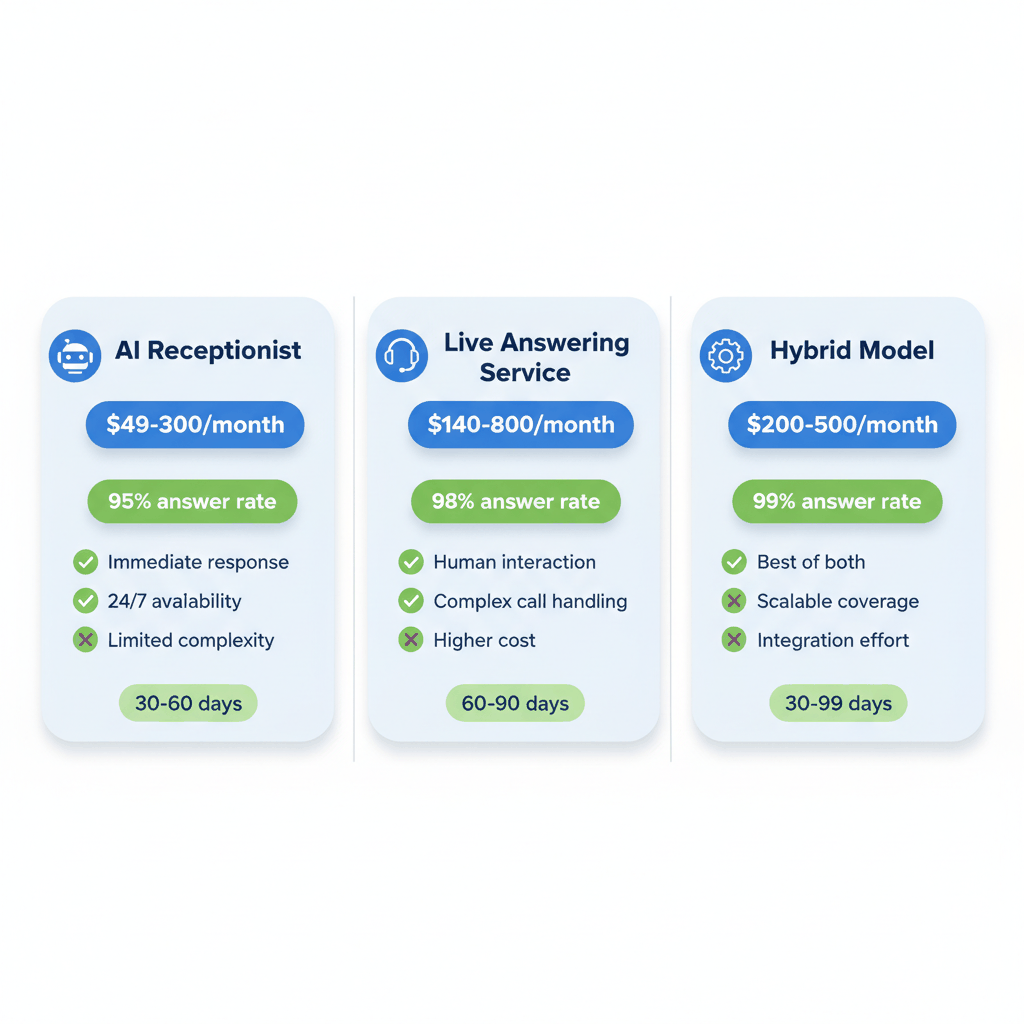
These systems cost between $50 to $300 monthly depending on call volume. Compare this to hiring additional staff at $55,000+ annually including benefits.
For example: Trillet's AI system costs $49 per month with 150 included minutes. It handles routine appointment scheduling, provides emergency escalation, and integrates with most practice management systems.
Live answering services provide human interaction for patients who prefer speaking with real people. Services like ResultCalls specialize in dental practice communication.
Professional services typically cost $140-$800 monthly depending on call volume. They provide:
HIPAA-compliant call handling
Emergency call escalation protocols
Appointment scheduling integration
Bilingual support when needed
Detailed call reports and analytics
The ROI is immediate. Practices using professional answering services report 9.6x ROI within 30-90 days of implementation.
Many successful practices use hybrid models combining multiple coverage strategies:
AI handling routine calls and basic scheduling
Live answering service for complex situations
Direct escalation to on-call dentist for emergencies
Professional voicemail as final backup
This approach ensures every call type gets appropriate handling while controlling costs.
Dental emergencies require immediate human response. Your phone system must identify and escalate these calls instantly.
Emergency situations include severe pain, knocked-out teeth, facial swelling, uncontrolled bleeding, and broken dental work causing injury. Research shows that proper emergency handling reduces patient anxiety and improves treatment outcomes.
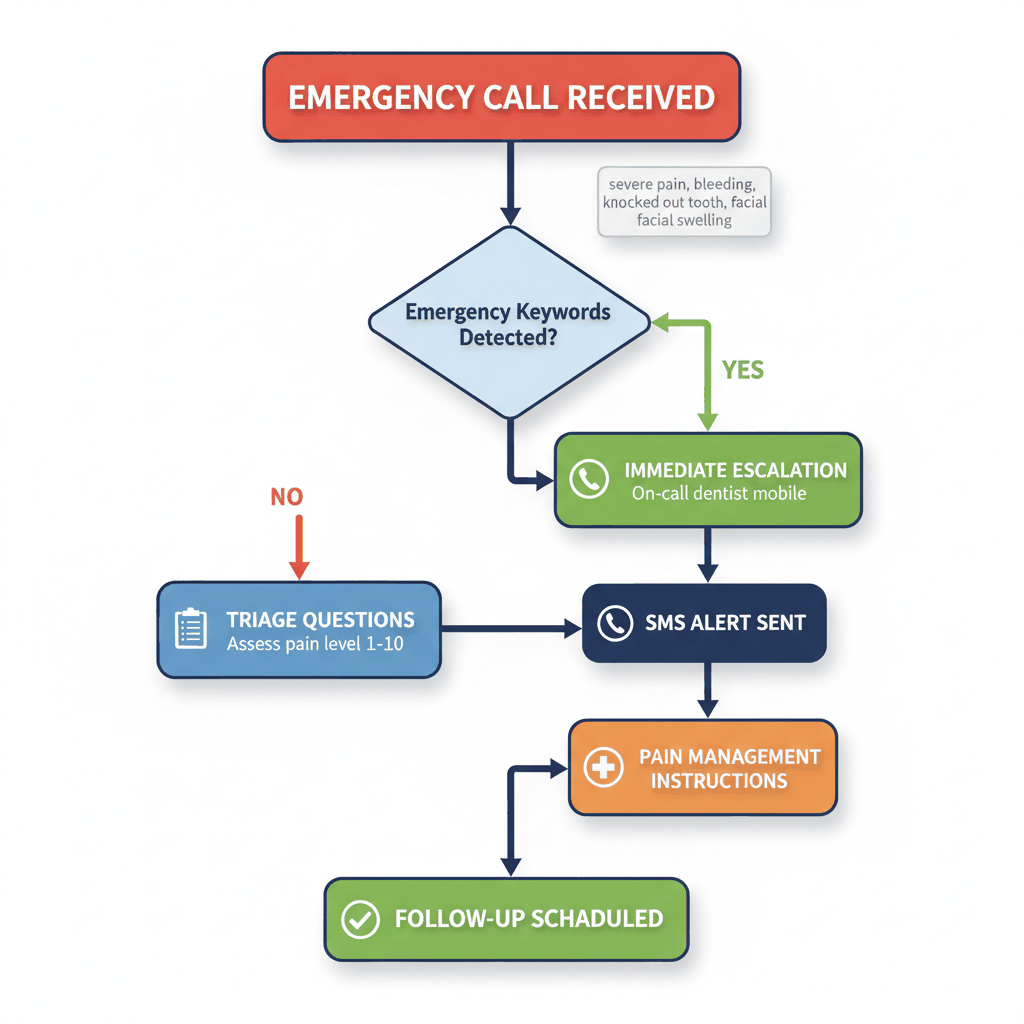
Modern AI systems can identify emergency situations through voice analysis and keyword detection. When patients use phrases like "severe pain" or "knocked out tooth," the system immediately transfers to your emergency protocol.
Effective emergency routing includes:
Immediate connection to on-call dentist mobile phone
SMS alert to backup dentist if primary doesn't answer
Basic triage questions to assess severity
Clear instructions for pain management while waiting
Direction to emergency room for life-threatening situations
This protocol ensures emergency patients get help quickly while protecting you from liability.
Your after-hours system should provide immediate pain relief guidance following ADA guidelines for emergency care. This helps patients while they wait for treatment.
Standard instructions include over-the-counter pain medication dosages, cold compress application, and foods to avoid. This reduces patient anxiety and demonstrates professional care even after hours.
Multiple technology options exist for dental office phone systems. Your choice depends on practice size, budget, and coverage requirements.
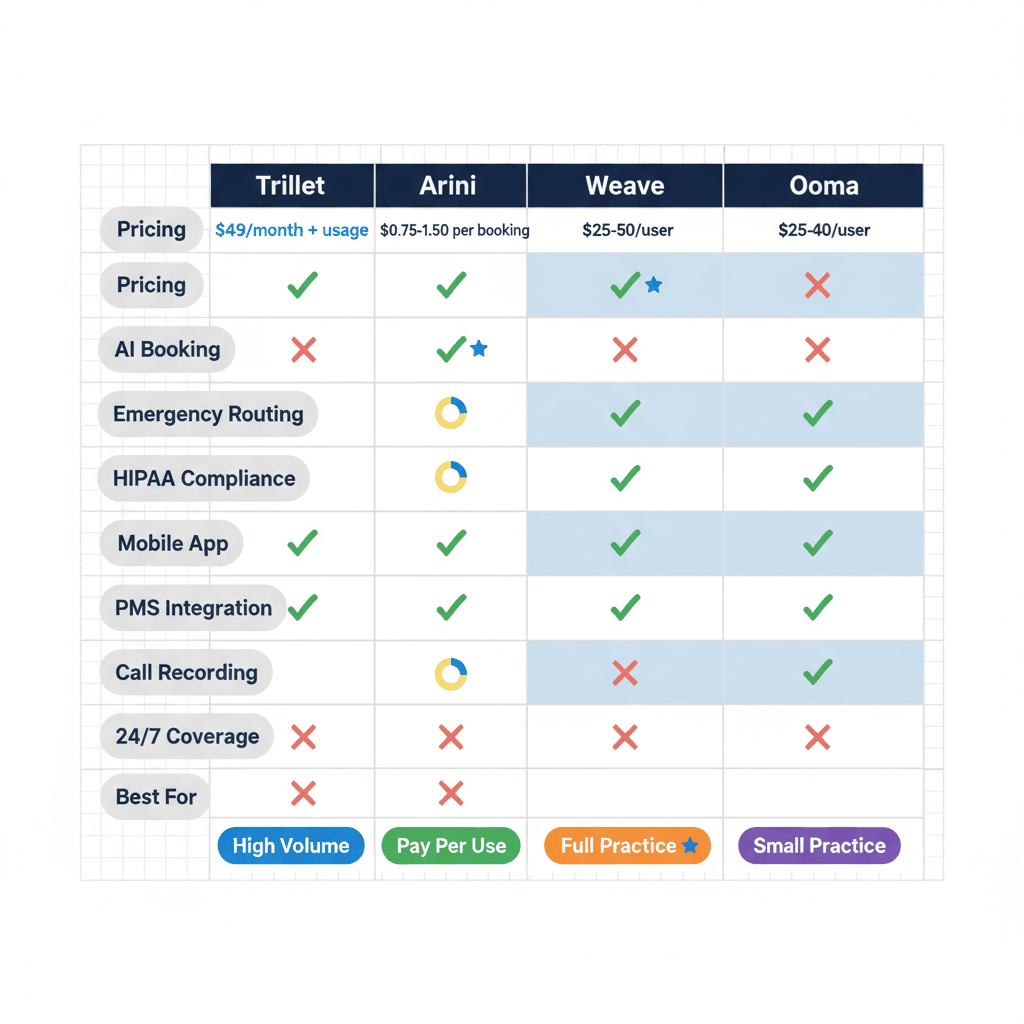
AI-powered systems offer the most cost-effective coverage for routine calls:
Trillet: $49/month with 150 minutes included, $0.20 per additional minute
Arini: $0.75-$1.50 per appointment booked, no monthly fees
UpFirst: $200-$500 monthly for comprehensive coverage
These systems excel at appointment scheduling and basic patient questions. They integrate with most practice management software and provide detailed call analytics.
Cloud-based phone systems offer more comprehensive communication features:
Weave: Integrated practice management with communication tools
Ooma: Specialized dental features with HIPAA compliance
Quo (formerly OpenPhone): AI voice agent for after-hours booking
VoIP systems typically cost $25-$50 per user monthly. They provide call recording, mobile apps, and integration with existing dental software.
Human answering services provide the highest quality patient interaction:
Abby Connect: 24/7 virtual receptionist service with dental specialization
Reach: Coverage 7 days a week from 5 AM to 9 PM
ResultCalls: HIPAA-compliant with emergency protocols
Professional services cost more but provide superior patient satisfaction and complex call handling capabilities.
When comparing options, calculate the revenue protection value:
AI systems: Best for high-volume routine calls
VoIP platforms: Ideal for comprehensive communication needs
Live services: Optimal for complex patient interactions
Hybrid approaches: Maximum coverage with controlled costs
Most practices see positive ROI within 60 days regardless of which solution they choose. The key is matching your patient communication needs with the right technology mix.
Successful implementation requires careful planning and staff training. Your new system must integrate seamlessly with existing workflows.
Start with these essential configuration steps:
Program emergency keywords and escalation protocols
Create professional greeting messages for different scenarios
Integrate with your practice management software
Set up mobile apps for dentists and key staff
Test emergency routing during off-hours
Configure call recording and reporting features
Work with your chosen provider to customize the system for your specific practice needs. Most platforms offer free setup assistance and training.
Your team needs training on the new call handling procedures. Focus on these areas:
How to transfer calls to after-hours coverage
Emergency escalation protocols and contact numbers
Using mobile apps for call management
Accessing call records and patient messages
Quality standards for professional communication
Proper training ensures smooth transitions and maintains consistent patient experiences across all communication channels.
Track these key metrics to measure system effectiveness:
Call answer rate (target: 90% or higher)
Average response time (target: 3 rings or less)
New patient conversion rate from phone calls
Emergency call resolution time
Patient satisfaction with phone interactions
Revenue increase from captured calls
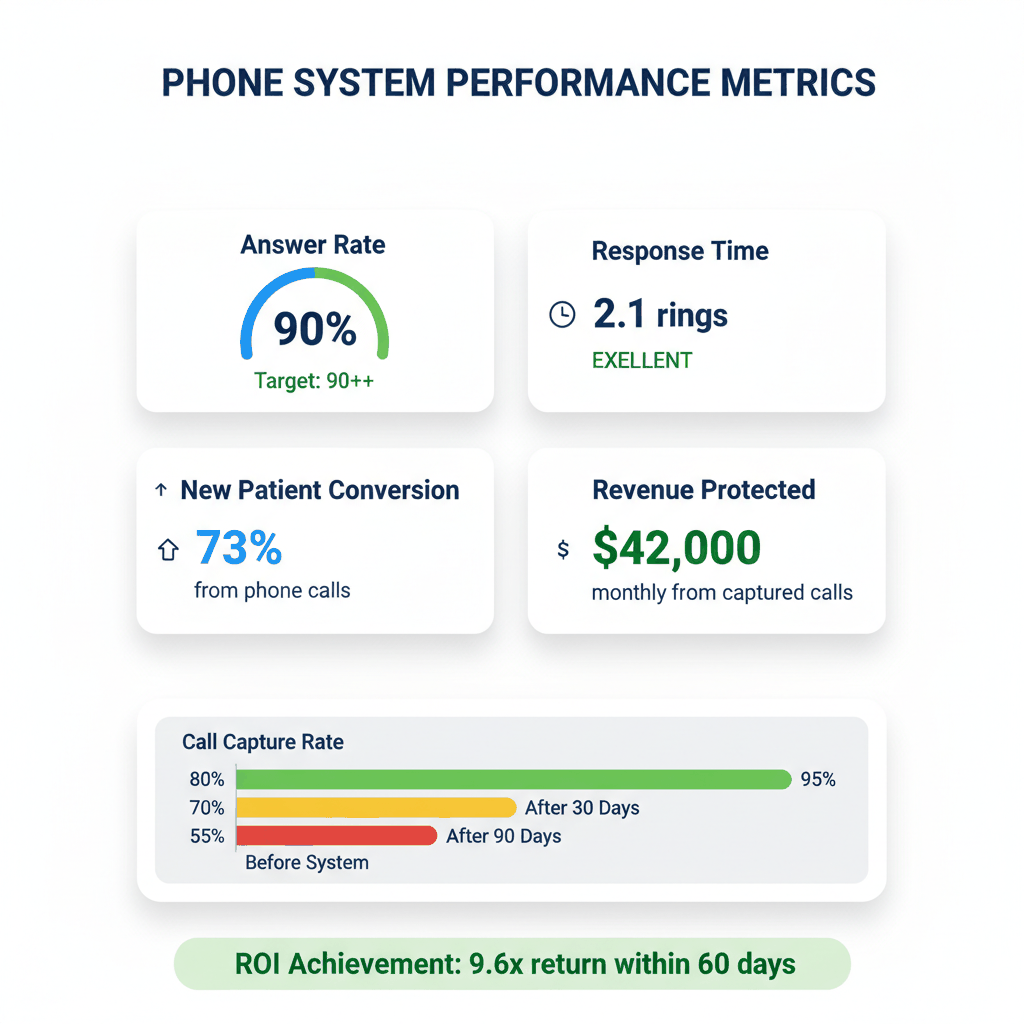
Review metrics monthly and adjust protocols as needed. Most practices achieve 50-70% reduction in missed calls within the first 90 days.
How much does a dental office phone system cost monthly?
AI systems start around $49 monthly, while comprehensive VoIP platforms cost $25-$50 per user. Professional answering services range from $140-$800 monthly depending on call volume. Most practices see positive ROI within 60 days.
Can AI handle dental emergency calls properly?
Modern AI systems excel at identifying emergency keywords and immediately escalating to on-call dentists. They provide basic triage questions and pain management instructions while connecting patients to human help.
What's the best dental appointment scheduling system for after-hours?
AI receptionists like Trillet and Arini integrate directly with practice management software to book appointments 24/7. They confirm availability in real-time and send confirmation messages automatically.
How do you handle HIPAA compliance with phone systems?
Choose systems specifically designed for healthcare with built-in HIPAA compliance. Most dental-focused platforms include encrypted communications, secure call recording, and proper data handling protocols.
What's the ROI timeline for after-hours dental phone coverage?
Most practices see measurable results within 30-90 days. The average ROI is 9.6x when you factor in revenue from captured calls that would otherwise go to competitors.
Ready to get dental leads today? Sign up for free with ResultCalls!

Hello everyone! My name is Alex and I write these blogs to help educate small business owners on different ways to grow their business. My goal is to make lead generation as easy as possible for you. After reading these blogs, I hope you leave with some actionable steps that will get you closer to growing your business :)