Are you tired of chasing new customers every month just to maintain your revenue? Most pest control business owners struggle with the same frustrating cycle. One-time treatments bring quick cash but leave you constantly hunting for the next job. This approach keeps your business on a revenue roller coaster.
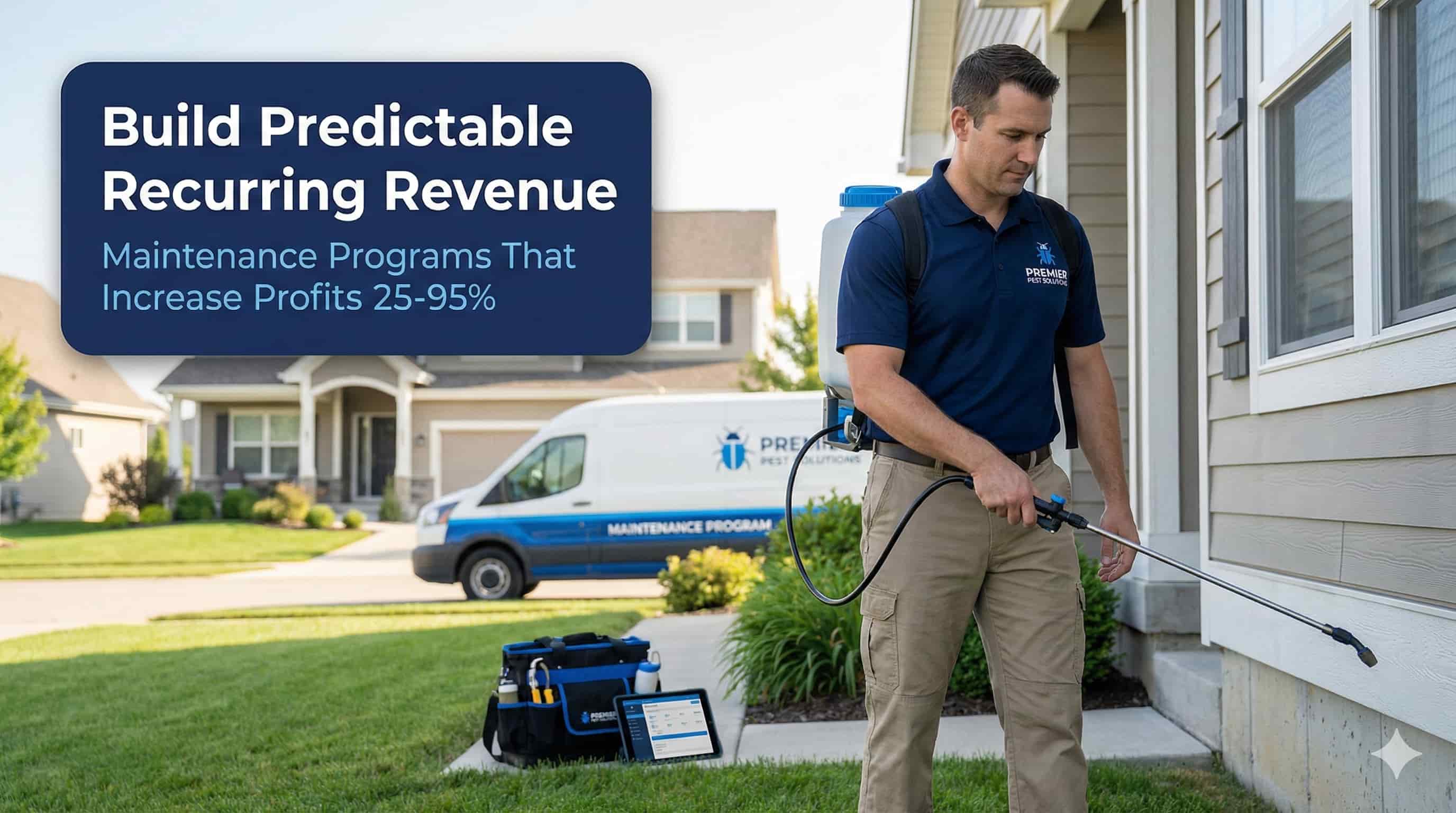
The solution lies in building a pest control maintenance program. This shifts your business from reactive treatments to proactive prevention. Companies with recurring pest control services report profit increases ranging from 25% to 95% when they improve customer retention by just 5%.
Smart pest control owners are discovering that maintenance programs create predictable income streams. These programs generate higher customer lifetime value and reduce the constant pressure of finding new clients. Plus, your business becomes worth significantly more when it's time to sell.
In this guide, you'll learn exactly how to build a pest control maintenance program that transforms your business. We'll cover proven strategies that successful companies use to create steady recurring revenue.
Table of Contents
Why Pest Control Maintenance Programs Work
Common Challenges and Smart Solutions
Five Proven Revenue-Building Strategies
Technology Tools for Success
Measuring Your Program's Success
The pest control industry is perfect for recurring revenue models. Customers need regular service to prevent infestations. Pests don't disappear after one treatment. They return seasonally and require ongoing prevention.
Businesses with over 80% of their revenue from subscription plans have company valuations that are 50-75% higher than those reliant on one-time jobs. This predictable income stream enhances stability and creates long-term growth opportunities.
Here's a real example that shows the power of recurring revenue. You get two calls on the same day. One customer wants a one-time termite treatment for $200. Another customer renews their quarterly pest control subscription for $800 annually.
The recurring customer generates 12 times more revenue over three years. That's the difference between chasing jobs and building wealth through your business.
Research by FieldRoutes shows that 77% of customers never switch pest control companies when they receive consistent service. This demonstrates the inherent stickiness of well-delivered pest control maintenance programs.
Customers prefer the convenience of scheduled service over remembering to call when problems arise. They value the peace of mind that comes with proactive protection.
Most pest control businesses experience dramatic revenue swings throughout the year. Spring and summer generate 60-70% of annual revenue. Winter often brings significant income drops as pest activity decreases.
Maintenance programs solve this by spreading payments evenly across twelve months. Customers pay the same amount whether it's peak season or winter. This creates steady cash flow year-round.
Finding new customers costs five times more than keeping existing ones. Yet many pest control companies focus primarily on attracting new clients instead of retaining current ones.
A well-structured maintenance program turns one-time customers into long-term revenue sources. Instead of spending marketing dollars to replace lost customers, you invest in keeping the ones you already have.
Many companies undervalue their services by competing solely on price for one-time treatments. This approach attracts price-shopping customers who leave for cheaper alternatives.
Maintenance programs let you price based on value rather than competing on cost. Customers pay for peace of mind, convenience, and ongoing protection rather than just individual treatments.
Offer three to four membership tiers with different service levels. This approach lets customers choose protection that fits their needs and budget. Most successful programs include basic, standard, and premium options.
Basic tier might include quarterly exterior treatments. Standard adds interior treatments and additional pest coverage. Premium includes emergency calls and specialty services like wildlife exclusion.
Price these tiers between $125-$175 quarterly based on your market. This pricing generates predictable revenue while remaining competitive with quality-focused competitors.
Shift your messaging from reactive extermination to proactive protection. Instead of "we kill bugs you see," promote "we prevent hidden threats causing expensive damage."
Use email marketing to educate customers about seasonal pest patterns. Send timely information about termite swarming season, ant activity, and rodent migration patterns. This positions your company as the trusted expert.
For example, send an email one month after a termite treatment. Explain how termites can return and highlight your annual protection plan's value. This approach converts 20-30% of one-time customers into recurring subscribers.
Create loyalty programs that reward customers for staying enrolled. Offer discounts for annual payment, bonus services for multi-year customers, or priority scheduling for maintenance plan members.
Carolina Pest Control successfully implemented a points-based program. Customers earn points for every service completed. They redeem points for discounts on future services or complimentary treatments. This approach significantly increased their retention rates.
Consider offering a "pest-free guarantee" where you return for additional treatments at no charge if pests appear between scheduled visits. This builds confidence in your service quality.
Implement systematic communication that keeps customers engaged throughout their service cycle. Use automated appointment confirmations, technician arrival notifications, and post-service follow-ups.
Send 72-hour appointment confirmations via email. Follow with 24-hour SMS reminders. Notify customers when your technician is en route. Complete the cycle with satisfaction checks 24-48 hours after service.
This communication pattern reduces cancellations and demonstrates your professionalism. Customers feel informed and valued throughout their experience.
Add complementary services that generate revenue during traditional off-seasons. Wildlife exclusion works perfectly for winter months when traditional pest activity slows down.
Your technicians already have the skills for exclusion work. It commands premium margins and peaks naturally when pest control demand drops. Other seasonal additions include gutter cleaning, attic insulation checks, and moisture control services.
Bundle these services into your premium maintenance tiers. This increases average customer value while providing year-round revenue opportunities.
Modern pest control software streamlines operations and improves customer experience. Leading platforms include FieldRoutes, PestPac, and Briostack. These systems handle scheduling, billing, customer communications, and route optimization.
FieldRoutes offers drag-and-drop scheduling, intelligent route optimization, and automated customer communications. Their reporting dashboard provides real-time business data for better decision-making.
Bay Pest Control increased productivity significantly after switching to automated scheduling. They eliminated double-booking issues and reduced administrative time by 40%.
A quality CRM system tracks customer interactions, service history, and communication preferences. This information helps you identify upselling opportunities and prevent cancellations.
Use your CRM to send personalized seasonal offers. Track which customers might be at risk of canceling based on service frequency or payment patterns. Proactive outreach prevents many cancellations before they happen.
Recurring revenue requires reliable payment processing. Integrate automated billing that charges customers' preferred payment methods on schedule. Offer multiple payment options including credit cards, ACH transfers, and digital wallets.
Customers prefer the convenience of automatic payments. This reduces late payments and eliminates the need for manual invoicing each month.
Track these essential metrics to measure your maintenance program's effectiveness:
Customer retention rates (target: 85% or higher annually)
Revenue per technician (target: $150,000-$200,000 annually)
Recurring revenue percentage (target: 80% or higher)
Customer lifetime value increases
Cancellation rates (target: under 10% annually)
High-performing pest control businesses generate $150,000 to $200,000 per technician annually. If you're significantly below this range, focus on improving routing efficiency, service pricing, or technician productivity.
Customer retention rates for successful pest control services typically range from 70% to 90%. Top performers consistently hit above 85% retention. Calculate your retention rate by dividing year-end customer count by year-start customer count.
Monitor how your maintenance program affects overall business growth. Track monthly recurring revenue growth, new subscriber acquisition, and average contract values. These metrics show whether your program creates sustainable growth.
Set quarterly goals for converting one-time customers to maintenance plans. Target converting 25-35% of one-time customers within 60 days of their initial service.
What's the ideal price range for pest control maintenance programs?
Most successful pest control maintenance programs charge between $125-$175 per quarterly service. This pricing balances affordability for customers with profitable margins for your business. Adjust based on your local market conditions and service complexity.
How long does it take to see results from recurring pest control services?
Most businesses see significant improvements within 6-12 months of implementing maintenance programs. Revenue stabilizes first, followed by improved cash flow and higher customer retention rates. Full program benefits typically appear within 18 months.
What's the best way to convert one-time customers to maintenance plans?
Follow up with educational content 30-60 days after initial service. Explain seasonal pest patterns and prevention benefits. Offer incentives like service guarantees or loyalty program enrollment to encourage pest control subscription model adoption.
How do maintenance programs improve pest control customer retention?
Regular scheduled service creates habit-based relationships with customers. They appreciate convenience and proactive protection. This "set-it-and-forget-it" approach reduces cancellation rates compared to reactive service models.
What services should I include in preventive pest control programs?
Include exterior perimeter treatments, interior monitoring, seasonal adjustments, and emergency callbacks in basic programs. Premium tiers can add specialty services like wildlife exclusion, moisture control, and extended warranties for comprehensive protection.
Ready to get marketing pest control leads? Sign up for free with ResultCalls today!

Hello everyone! My name is Alex and I write these blogs to help educate small business owners on different ways to grow their business. My goal is to make lead generation as easy as possible for you. After reading these blogs, I hope you leave with some actionable steps that will get you closer to growing your business :)